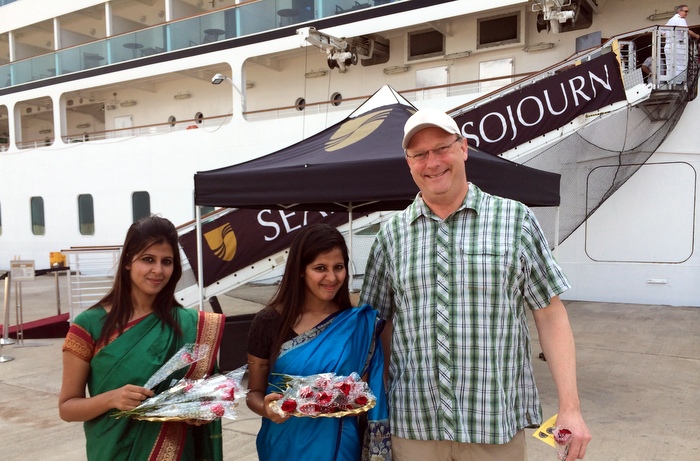
 We arrived into the port of Mormugí£o, in the state of Goa, India, via the Seabourn Sojourn while on its 2014 World Cruise. The locals greeted us with a warm welcome.
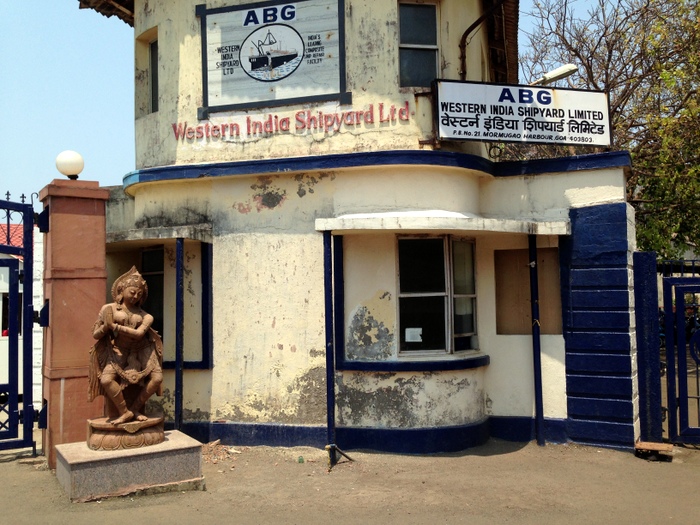 Having done a little research on Goa in advance of our visit, we decided to explore on our own rather than to take one of the ship’s tours. At the port entrance, there was a major gaggle of taxis that we walked through, along with a number of police with big bamboo sticks. (Riot control, we assumed.) We keep walking past until we reached the road and realized it wasn’t really a good place to walk.
We approached one of the taxis on the road that had a larger-sized taxi with a driver who spoke easy-to-understand English.
As we were negotiating a rate, a Tony Soprano-like character came out of the port and said, “No, you have to take the taxi that was here first.”
I expressed that I wanted to pick my own taxi, one with good air-conditioning and lots of head-room. He whistled a taxi up. It was a small car and the very young driver was talking on his cell phone.
I said, “No, I want a taxi with headroom and a good driver.”
To his credit, the Tony Soprano guy smiled and said, “Okay!” He whistled up another driver and after confirming a rate that translated to about $30 U.S. dollars (we paid in Indian rupees) for 3 hours, we were off.
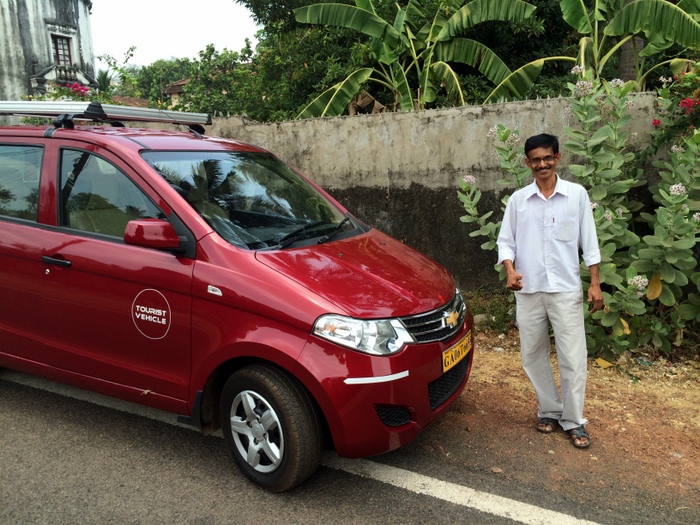 In Goa, it’s key to negotiate for what you want. Our driver had a taxi with spacious headroom and legroom, good air conditioning, and he was a terrific guy. We agreed to head to Old Goa first.
The driver’s name is Pradip Naik. His card has two phone numbers but no email address: 09422453773 or 09527057687.
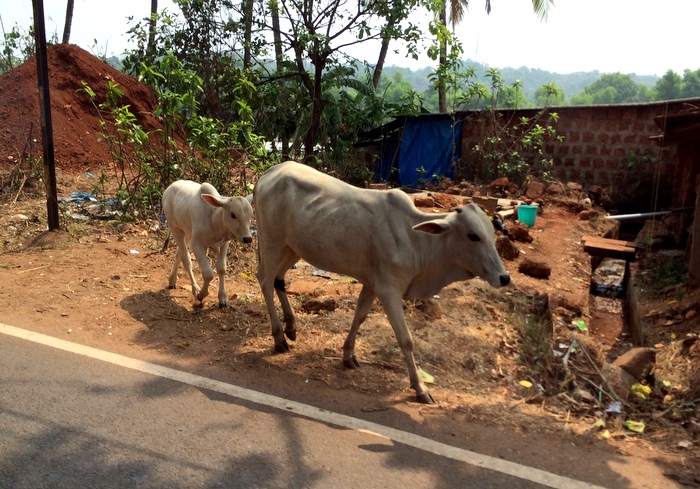 We knew that Goa is the smallest but richest state in India, and had been a part of Portugal until 1961. While the roads in Goa are in good shape, they looked similar to other port cities in India with free-roaming cattle and lots of trash.
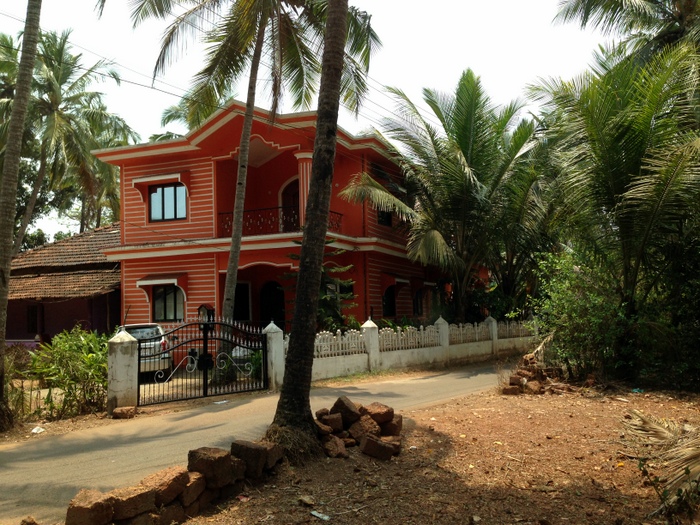 There was a mix of really nice houses intermingled with trashy dumps. Evidence of the Portuguese past can be seen in the architecture.
 Our drive from Mormugí£o to Old Goa exposed us to the various aspects of the port, airport and rail hub. Mormugí£o is the leading iron ore exporting port of India. We also saw oil storage, ship building and repair, and all forms of transportation.
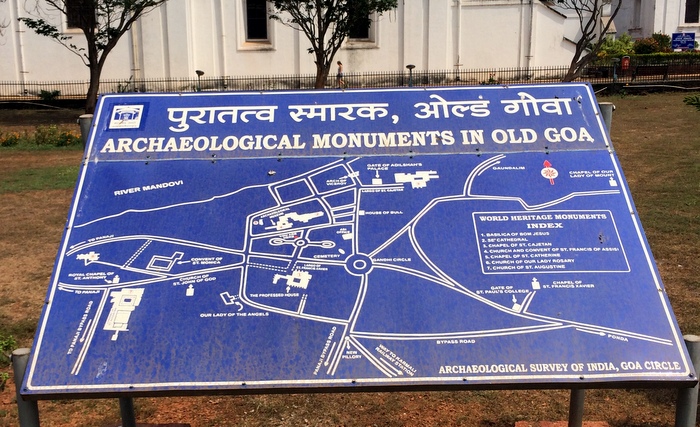 To the Portuguese conquerors who sailed up the Mandovi river in 1510, what is now ‘Old Goa’ was built into “Golden Goa”, a city of 200,000 people built to rival Rome with its cathedral and churches. Malaria and cholera epidemics ravaged this city in the 17th century, causing it to be downsized to a remaining population of only 1,500 by 1775.
Today, Old Goa is UNESCO World Heritage Site.
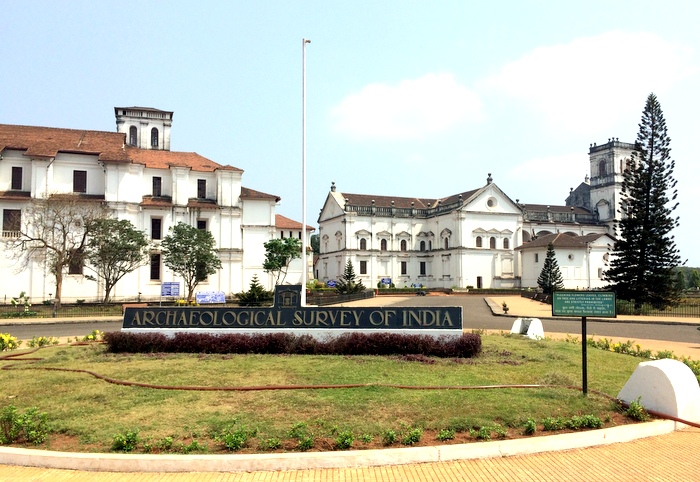 We first headed to this complex in Old Goa that includes the Archaeological Museum, the Church of St. Francis of Assisi, the Archbishop’s Palace, and the Se Cathedral, too much to see within an hour.
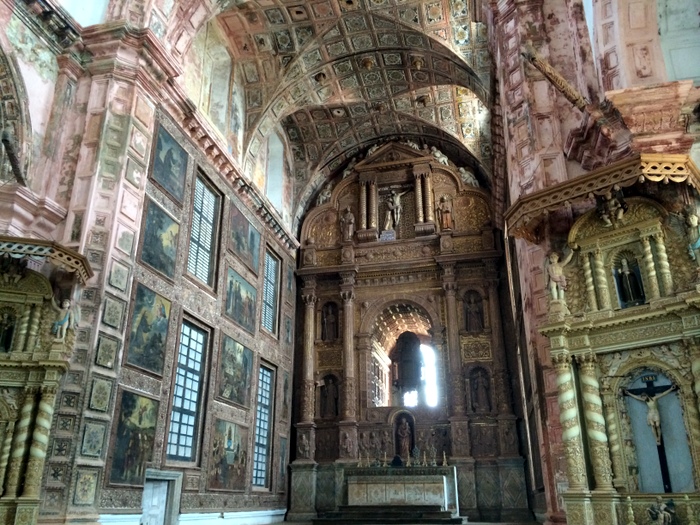 First, we took a quick walk through the Church of St. Francis of Assisi. The church is amazing, but appears to need major structural repairs. This is the oldest building in Old Goa, and incorporates an even older mosque. It was built by the Franciscan friars who traveled with Portuguese explorer Afonso de Albuquerque when he took Goa by surprise in 1510, and later rebuilt in 1661.
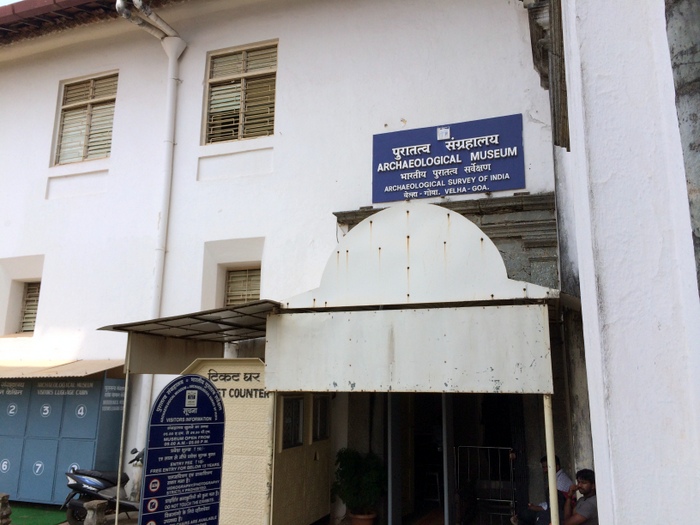 Next we paid admission and headed into the Archaeological Museum and Portrait Gallery situated in the convent section of the Church of St. Francis of Assisi. The Portraits of the rulers and military heads of Goa throughout the years where interesting. We also headed across the street to look into the Basilica of Bom Jesus, before meeting back up with our driver.
 Our next stop was at the Church of St. Cajetan, which was built in the 1600’s and modeled after the original design of St. Peter’s in Rome. The grounds are beautifully landscaped at this site, which also had a former convent.
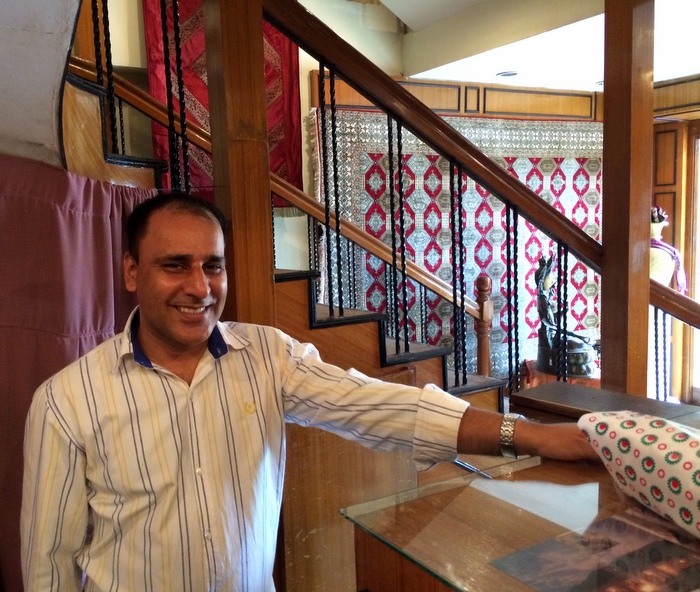 As we headed to the last site in Old Goa, our driver strongly pleaded with us to stop and look at this shop. Because he was so nice, we agreed. Habitat was the name of the gift and rug shop and Nisar (pictured above) was also very pleasant, and not overly pushy. We bought two small mementos and headed on our way. We were anxious to see one of Goa’s well-regarded beaches, and to cool off with a cold Kingfisher.
Our driverPradip advised us the beach would take longer and we agreed to a higher fare.
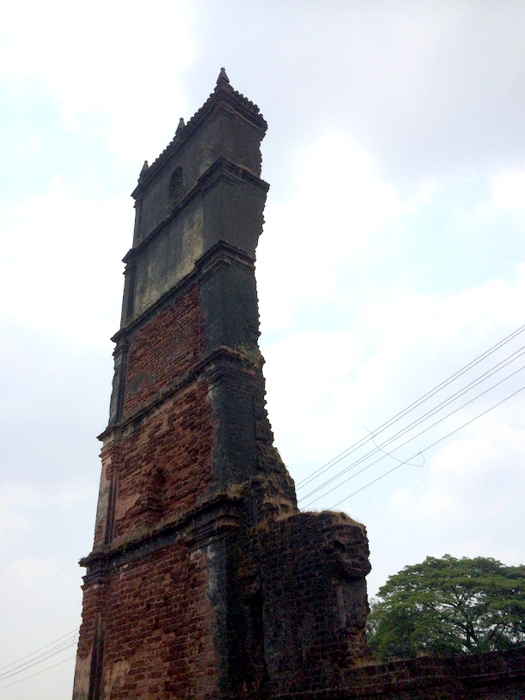 Our last stop in Old Goa was a photo stop at the remains of the St. Augustine Tower that overlooked the city.
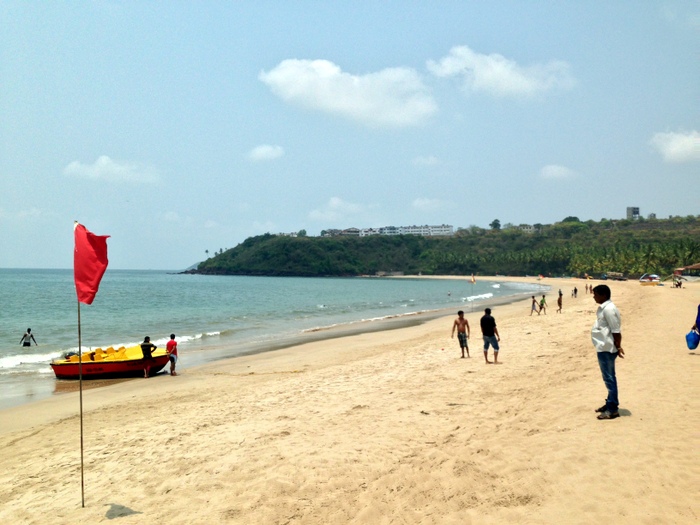 Our driver took us past the Naval Museum and Navy base to Bogmalo beach, one of the closest beaches to the port. Planes are taking off from the airport/navy base on the land above the beach.
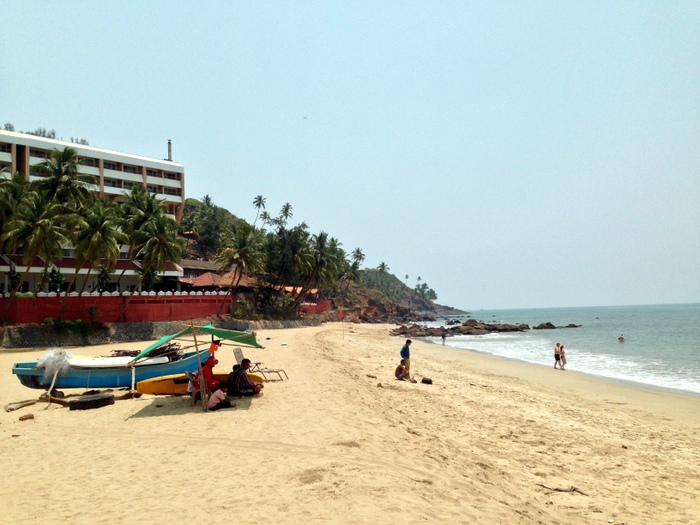 In the background, you can see the Bogmallo Beach Resort, said to be one of the very first luxury 5-star resorts in Goa.
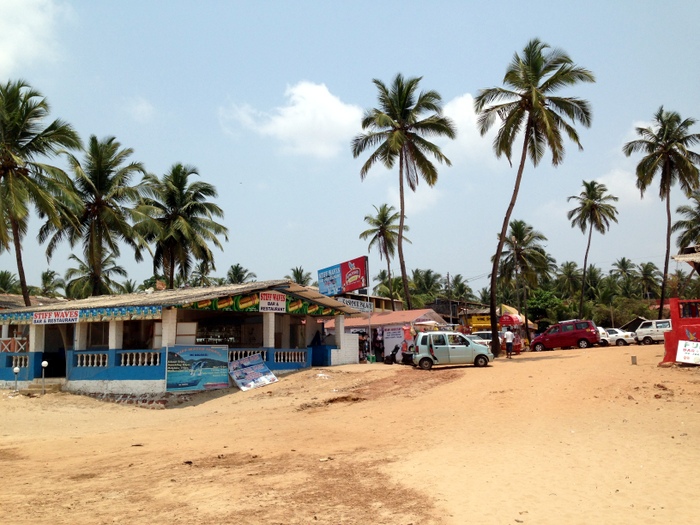 The beach area features a number of restaurants and shops.
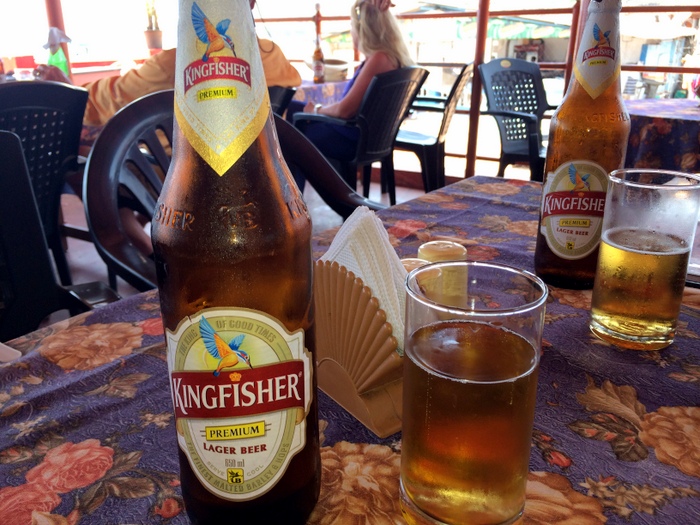 We headed to the Full Moon Bar and Restaurant, where we enjoyed a cold Kingfisher beer. (We like the hummingbird on the label.)
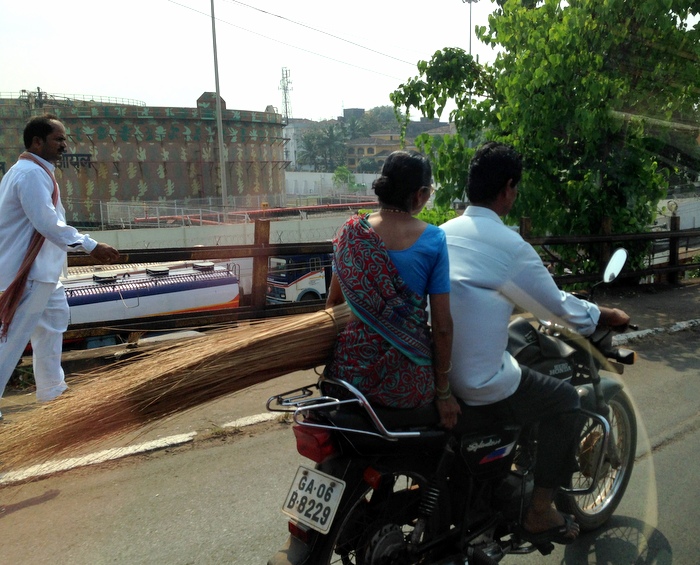
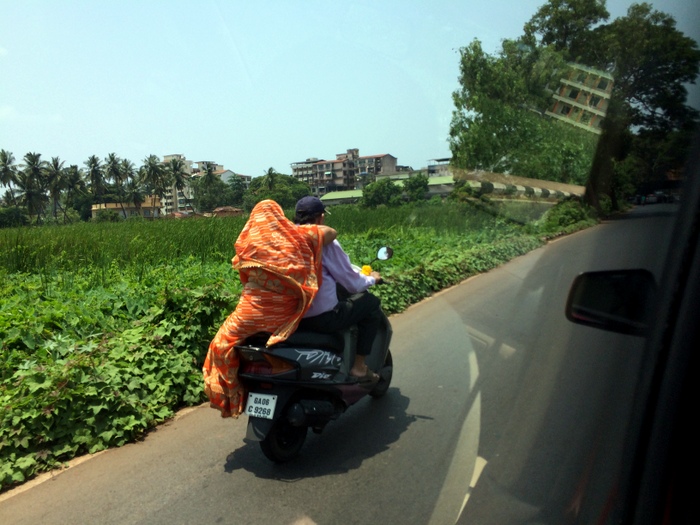 As we headed back to our ship, we passed this couple. (I don’t think I could ride side-saddle on a motorcycle in Goa in a sari and stay on the bike, but many seemed to travel this way.)
We enjoyed our day in Goa, and exploring by taxi.
Have you visited Goa, India? What was your impression?
Check out these other posts about our adventures cruising on the Seabourn Sojourn:
- Setting Sail from Singapore on the Seabourn Sojourn
- A Day by Day Look at Cruising 11-Days on the Seabourn Sojourn
- Thai Gastronomy at the Blue Elephant Cooking School in Phuket, Part 1
- Thai Gastronomy at the Blue Elephant Cooking School in Phuket, Part 2
- Thai Gastronomy at the Blue Elephant Cooking School in Phuket, Part 3
- Experiencing the Life and Lore of Colombo, Sri Lanka
- 7 Favorite “Naughty” Pleasures on the Seabourn Sojourn
Follow us on Twitter or interact with us on Facebook