In 2014, just before my first visit to Haiti, I shared these 20 Interesting Facts About Haiti.

While I have been to Haiti twice, I have not experienced the country beyond its beaches at Labadee.
Earlier this week, I received a well-written email on Haiti from Global Ties KC that motivated me to learn more. After going down many internet rabbit holes, here are some of the facts that I found most interesting about Haiti.
24 Additional Interesting Facts to Know about Haiti

1. Haiti is a small country with a large population. As you can see on the map above, Haiti covers a slightly smaller area than the U.S. state of Maryland. When comparing populations however, 5.2 million more people live in Haiti than live in Maryland.
2. With an estimated population of 11.2 million in 2021, Haiti is the most populous country in the Caribbean.

3. The city of Port-au-Prince is Haiti’s capital as well as its largest city with an estimated 2.84 million residents in 2021.
4. Incorporated in 1749 when Haiti was under French colonial rule, Port-au-Prince has always been the country’s hub of economic activity. The city lies on the coast of Gulf of Gonâve, which acts as a natural harbor.

5. The Musée du Panthéon National Haïtien (National Pantheon Museum) in Port-au-Prince opened in 1983. The museum features exhibits on Haitian history and culture, and includes a section dedicated to the heroes of Haiti’s independence.
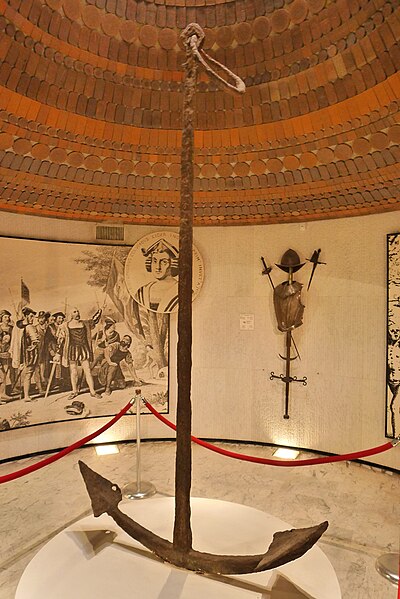
The museum also contains a 13 ft. rusty anchor, said to be salvaged from the Santa Maria, Christopher Columbus’s ship when he discovered Haiti in 1492.
6. Haiti’s second largest city Cap-Haïtien, with a population of 190,000, is located on the country’s north coast.
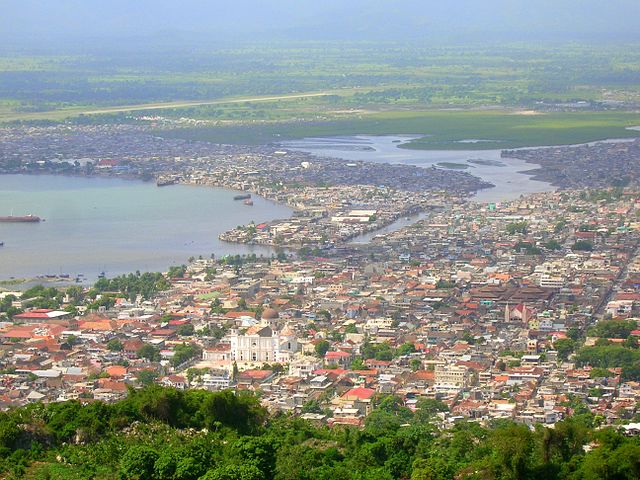
7. Most tourists visit Haiti via Royal Caribbean International’s Labadee beach resort compound that is six miles northwest of Cap-Haitien. This private resort — leased by RCI — has generated the largest proportion of tourist revenue to Haiti since 1986. The resort employs hundreds of local residents and pays the Haitian government a significant head tax for every cruise ship visitor.

8. In addition to its mainland, several offshore islands are part of Haiti. Tortuga Island is located off Haiti’s northern coast. Gonâve, Haiti’s largest island, sits near the middle of the Gulf of Gonâve, while the Cayemites — a pair of islands are north of Pestel. Île à Vache (Cow Island) is located off Haiti’s southwest coast.
9. Most interestingly, Haiti claims La Navasse (Navassa Island) which is subject to an ongoing territorial dispute between Haiti and the United States.
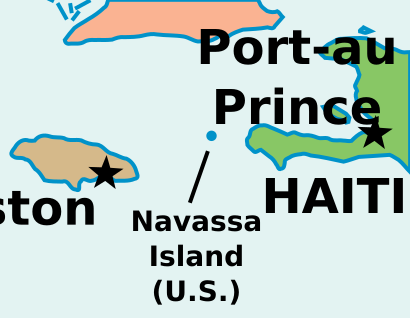
10. Navassa Island is located 40 nautical miles southwest of mainland Haiti. In 1857, when Haiti was a French colony, Navassa was claimed by the United States under the Guano Islands Act. Between 1865 and 1898, a U.S. company mined more than a million tons of bird guano for fertilizer from Navassa.
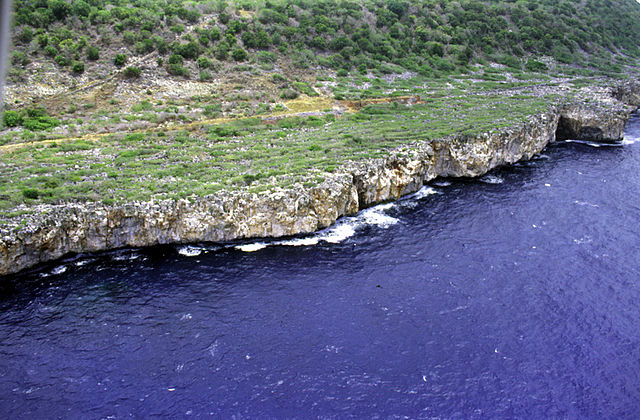
11. Navassa Island is designated as one of the United States Minor Outlying Islands. It is also considered one of the 14 U.S. territories. Since 1999, the U.S. Fish and Wildlife Service has jurisdiction over Navassa Island, managing it as a National Wildlife Refuge.
12. From 1659 to 1804 — while it was a French colony — Haiti was called Saint-Domingue.
13. On January 1, 1804, Jean-Jacques Dessalines proclaimed the Haitian Declaration of Independence, marking the end of 13-year long Haitian Revolution with France. The declaration marked Haiti’s becoming the first independent Black nation in the Western Hemisphere, and the only successful slave revolution in history.

14. Only two copies of the original printed Haitian Declaration of Independence exist today; remarkably, they were both discovered in 2010 and 2011 in the United Kingdom’s National Archives by Julia Gaffield, a Duke University graduate student. They are currently held by The National Archives, Kew, outside of London.
15. Haitians spend the first two days of each year celebrating Haitian Independence Day with dancing, music, and soup joumou. While Haiti was under French colonial rule, African slaves were forced to cultivate pumpkin squash and make the soup for their masters but were specially forbidden from eating it.

16. On Jan. 1, 1804, the first thing Haitians did to celebrate their newfound independence was to sing, dance and eat the formerly forbidden “soup joumou.” While the recipe varies from family to family, it generally includes pumpkin, calabaza or other squash, marinated beef or chicken, onions, peppers and herbs, plus an assortment of other vegetables and pasta.
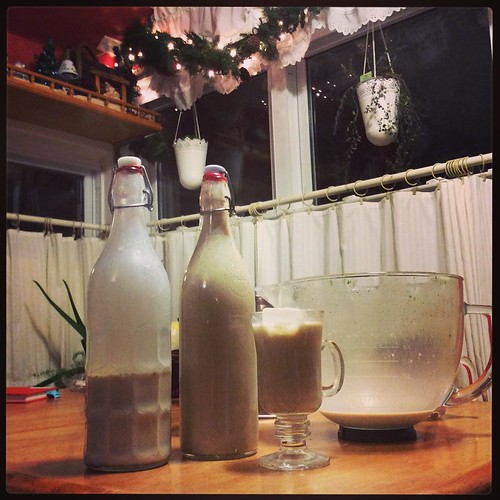
17. Haitians also mark special occasions by drinking cremas (or kremas,) the celebration drink of Haiti that has a creamy milkshake-like consistency. Made with a combination of condensed and evaporated milk, plus cream of coconut, cremas is flavored with nutmeg, cinnamon, vanilla, and lime juice. Then, cremas is made “festive” with the addition of clairin, a clear, moonshine-like liquor made in Haiti’s rural areas.
18. Alternatively, some cremas recipes call for the world-renown Barbancourt rum, produced in Haiti since 1862.

19. Commissioned in 1805 by Henri Christophe and completed in 1820, 20,000 former slaves built Haiti’s Citadelle Laferrière atop the 3,000 ft Bonnet a L’Eveque mountain. The Citadel’s location provided an optimal vantage point to see and thwart potential invaders.
20. A UNESCO World Heritage Site since 1982, the Citadelle Laferrière is Haiti’s most visited tourist site, even though the visit requires going up a 7-mile stone path, which requires hiking or riding on a horse during the last third of the trail.

21. Haiti produces half of the world’s supply of vetiver, a root plant used to make luxury perfumes, essential oils, and fragrances.

22. Haiti’s electricity supply is intermittent, which spells big trouble for hospitals that require continuous power to operate. To solve this problem when building a new teaching hospital in Haiti, Partners in Health incorporated 1,800 solar panels into the design of the 205,000-square foot, 300-bed Hopital Universitaire de Mirebalais. The University Hospital, located 30 miles north of Port-au-Prince, is the world’s largest solar-powered hospital.
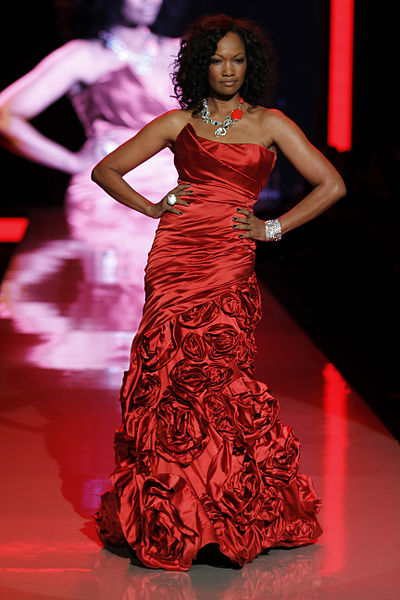
23. Actress Garcelle Beauvais – best known for her leading roles in NYPD Blue, The Jamie Foxx Show, and, since 2020, The Real Housewives of Beverly Hills — was born in Saint-Marc, Haiti in 1966. At age seven Beauvais moved to the United States with her mother and her six elder siblings: settling in Peabody, Massachusetts.


In 1988, at age 19, Beauvais appeared one of her first film roles as the royal rose bearer in Eddie Murphy’s Coming to America. More than 30 years later, she reprised her role in the 2021 sequel, Coming 2 America.


Beauvais also co-hosts the daytime talk show The Real alongside Adrienne Bailon, Loni Love, and Jeannie Mai. In 2013, the Motion Picture Association of Haiti recognized Beauvais with an honorary award.

24. John James Audubon, who painted, catalogued, and described the birds of North America was born in Les Cayes, Saint-Domingue (later Haiti) on April 26, 1785. He spent most of his childhood in France. Audubon emigrated to the United States as a young man.


Audubon combined interests in art and ornithology to make a complete pictorial record of all the bird species of North America. His major work, a color-plate book entitled The Birds of America (1827–1839), is considered one of the finest ornithological works ever completed.
Audubon is the namesake of the National Audubon Society.
What interesting fact about Haiti can you add to this list?
Share your comments or questions via Twitter, Facebook, Pinterest or Instagram.