This post was updated on May 13, 2022 with changes in red text.

1. San Juan is the capital as well as the most populous city of Puerto Rico.
2. Christopher Columbus discovered Puerto Rico on November 19, 1493, during his second voyage to the new world. During his two-day stay, Columbus renamed the island San Juan Bautista (for St. John the Baptist), and claimed it for Spain. He never returned.


3. Then, in 1508, Juan Ponce de Leon came to the island and established the town of Caparra on its northern coast. He quickly found a better location for his fledgling settlement, an islet with an excellent harbor that he named Puerto Rico, or “Rich Port City.”
4. San Juan’s original name was Puerto Rico, but the name was switched to San Juan, which was the original name of the entire island of Puerto Rico in the 1500s.
5. The capital of Puerto Rico is the oldest city in U.S. territory, but St. Augustine, Florida, founded in 1565, claims the status of the oldest city in the continental United States.

6. After the Spanish-American War, Spain ceded Puerto Rico, along with Guam and Cuba to the United States, and transferred sovereignty over the Philippines to the United States for $20,000,000 under the terms of the Treaty of Paris, signed in December 1898.
7. From the signing of the Treaty of Paris to the present day, Puerto Rico has been a territory of the United States of America and San Juan continues being the capital.
8. On March 2, 1917, United States granted Puerto Ricans U.S. statutory citizenship.
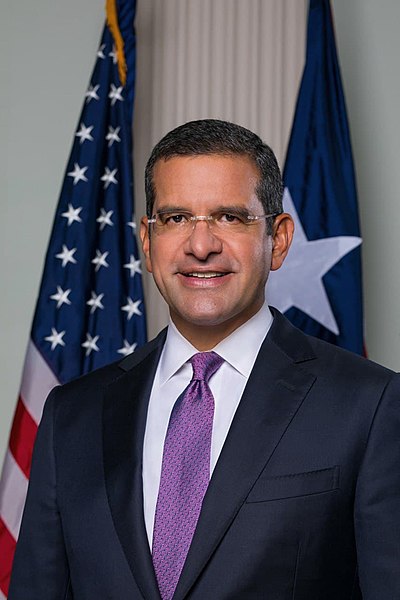
9. Puerto Rico is a self-governing commonwealth within the United States. The chief of state is the President of the United States of America. The head of government is an elected Governor. On January 2, 2021 Pedro Pierluisi assumed the office of Governor of Puerto Rico.
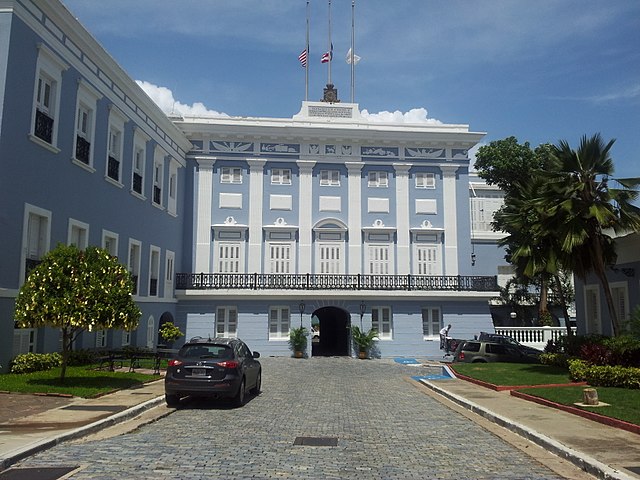
Xemenendura.
La Fortaleza (The Fortress) is the official residence of the Governor of Puerto Rico. It was built between 1533 and 1540 to defend the harbor of San Juan.
10. Puerto Rico is roughly the size of Connecticut but is one of the most densely populated islands in the world.

11. San Felipe del Morro is a 16th-century citadel commonly known as El Morro which dates to 1540. Rising 140 feet above the sea, its 18-foot-thick wall proved a formidable defense. Today El Morro is a National Historic Site administered by the National Park Service.
12. Built in 1634, Castillo San Cristobal is El Morro’s partner in the defense of San Juan. It is a World Heritage and National Historic Site, administered by the U.S. National Park Service.
13. The Puerta de San Juan (San Juan Gate), built in the late 1700s, is one of six heavy doors in the wall which for centuries were closed at sundown to cut off access to the city and protect the city from invaders. The wall is up to 20 feet thick and up to 40 feet tall.
14. At 4,300 vehicles per paved mile, San Juan has by far the highest density of vehicles on the road of any country in the world.
15. U.S. citizens do not need a passport to visit San Juan, or any part of Puerto Rico.
16. San Juan is a great place to mail letters or postcards to anywhere in the U.S. for regular domestic postal rates.
Have you visited San Juan, Puerto Rico? What fun fact can you add? Please share in comments below.
Read more about our various discoveries during prior visits to San Juan, Puerto Rico:
- Finding the Perfect Mojito in Old San Juan, Puerto Rico
- A Peek Inside the San Juan Marriott Resort & Stellaris Casino
- Eating and Drinking Our Way Through San Juan, Puerto Rico with Spoon Food Tours – Part 1
- Eating and Drinking Our Way Through San Juan, Puerto Rico with Spoon Food Tours – Part 2
- Eating and Drinking Our Way Through San Juan, Puerto Rico with Spoon Food Tours – Part 3
- Outrageously Delicious Italian Food in San Juan, Puerto Rico
Here are a couple of games to have fun while learning more about San Juan and Puerto Rico:


Planning a visit to Puerto Rico? Check out this guidebook:

Interact with us on Twitter, Facebook, Pinterest or Instagram.