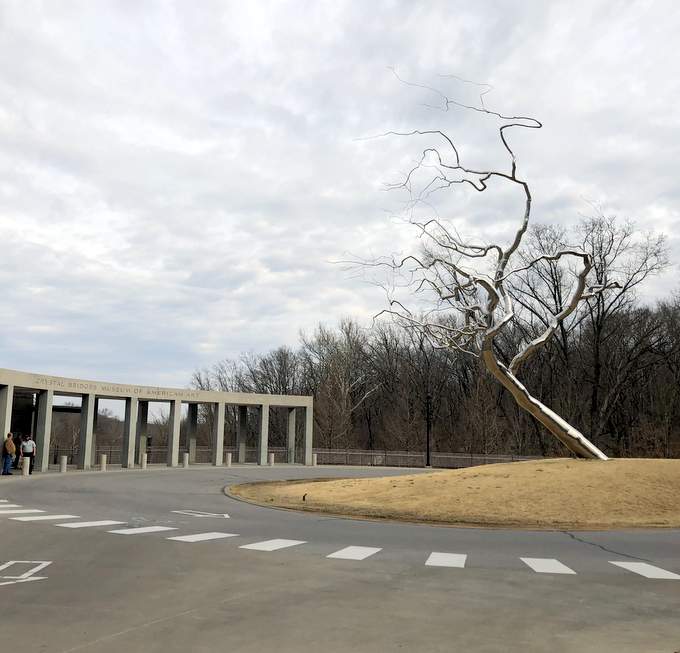
During the last weekend in March, we drove to Bentonville, Arkansas, which is only 210 miles south of Kansas City, Missouri. During our once-a-month weekend wanderings, we often fly to explore somewhere new to us, but this time we got in the car and drove south.
Why Bentonville?
As the birthplace and world headquarters of Walmart, the small city of Bentonville — in the northwest corner of Arkansas –has grown dramatically during the last 20 years to a population of nearly 50,000 people.
As Walmart grew from its small town beginnings, the company’s success made its founder Sam Walton, and his children, extremely wealthy. Sam’s daughter, Alice Walton used part of her wealth to spearhead the founding of Crystal Bridges, a world-class art museum in Bentonville.
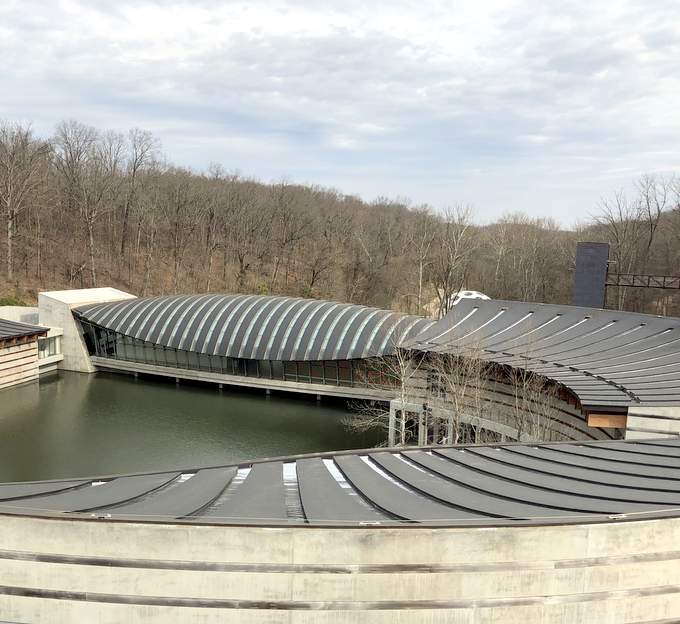
The Crystal Bridges Museum of American Art opened on 11/11/11. Designed by architect Moshe Safdie and engineer Buro Happold, the museum’s glass-and-wood pavilions are nestled around ponds and forest trails on 120 acres.
Admission to the museum is free, but there is a charge for special exhibits.
The permanent collection at Crystal Bridges — valued at more than $450 million — includes American art from the Colonial era to the contemporary period.
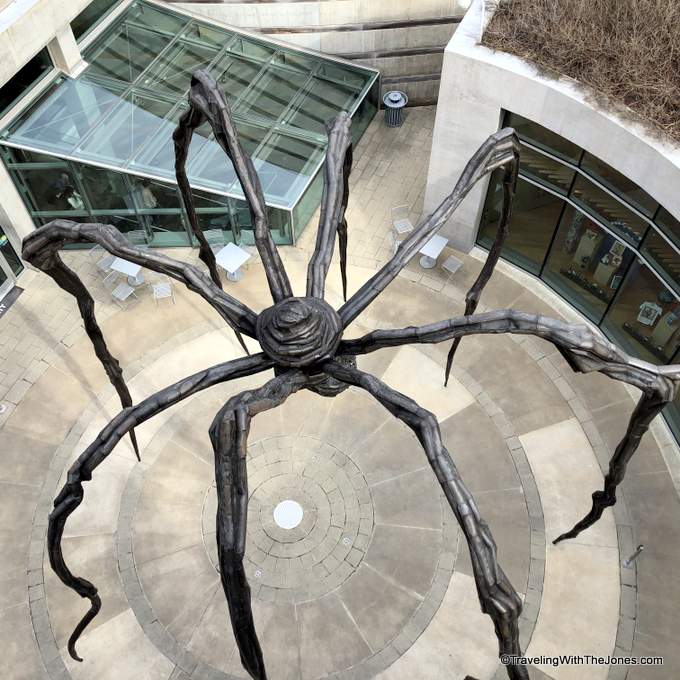
The first art we experienced at Crystal Bridges was a giant spider (more than 30 feet high) in an outdoor courtyard between the museum store and the main entrance. It is Maman, a bronze sculpture by artist Louise Bourgeois.
The spider looked scary and familiar at the same time. Later I realized that we’d seen Maman before at the Tate Modern in London, and at the Guggenheim Museum in Bilbao. The artist made seven spiders — the original was created in steel, with an edition of six subsequent castings in bronze.
Once inside Crystal Bridges, we found a permanent collection of American art that spans five centuries from the Colonial era to the current day.
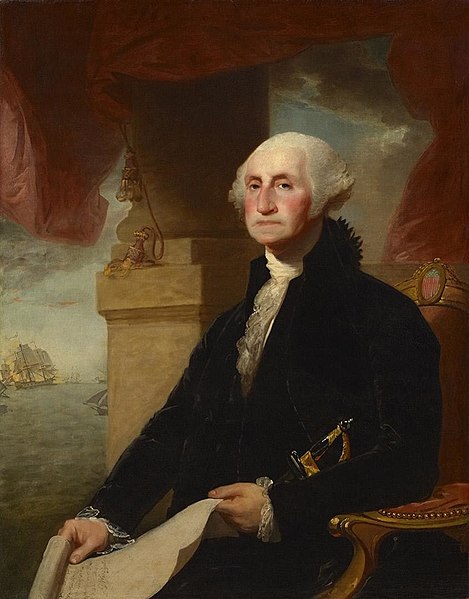
This is George Washington (The Constable-Hamilton Portrait) by Gilbert Stuart painted in 1797.

Along with two portraits of George Washington, the Crystal Bridges permanent collection includes iconic images such as Asher B. Durand’s Kindred Spirits (pictured above), Norman Rockwell’s Rosie the Riveter, and Andy Warhol’s Coca-Cola.
The art at Crystal Bridges includes more than paintings.

For example, this work — Depression Bread Line by George Segal — is a life-size work made from plaster, wood, metal, and acrylic paint.
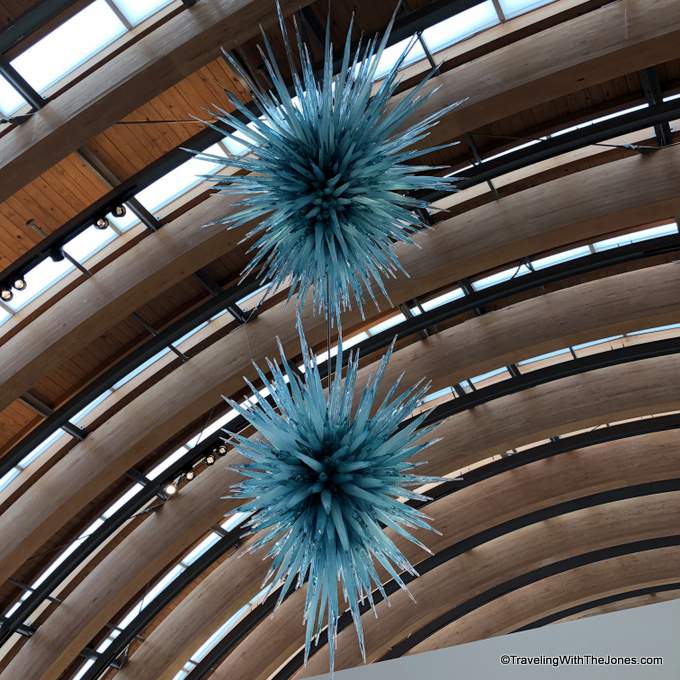
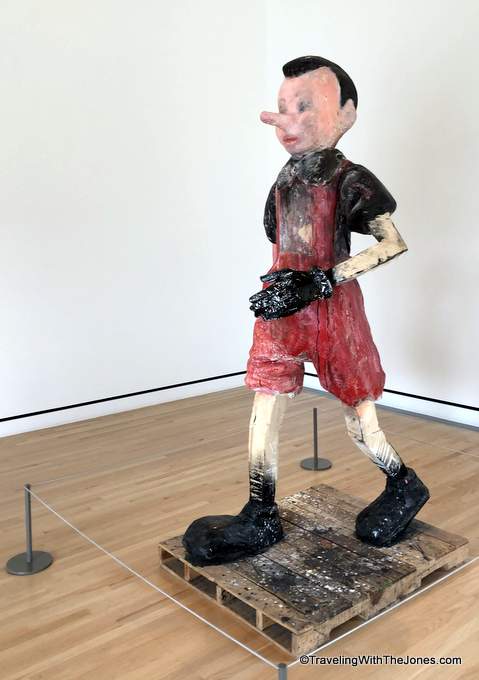
At Crystal Bridges, art comes in many forms — hanging from the ceiling, standing life-size, and in high-definition video portrait with blinking eyes.
One of my favorite things about Crystal Bridges is the outdoor art that is stationed along four miles of walking trails.
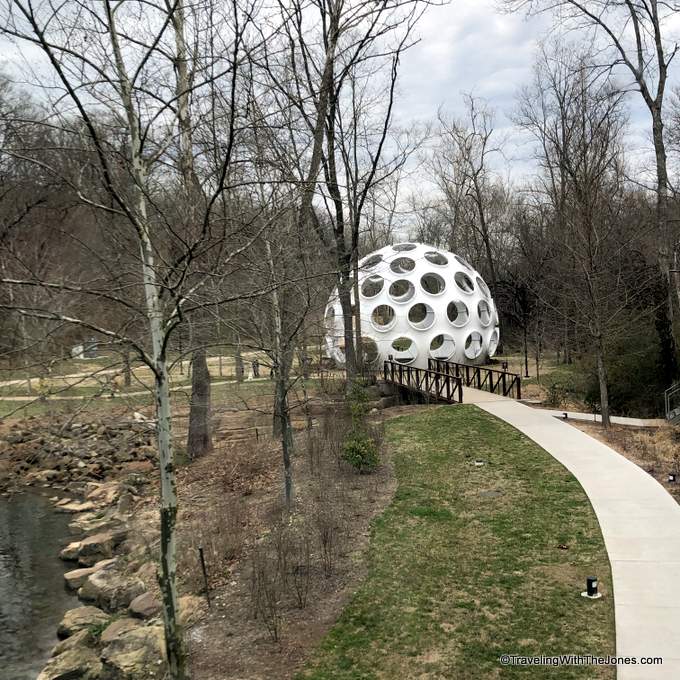
The Fly’s Eye Dome, pictured above, was created by R. Buckminster Fuller in 1966. Inspired by the eye of a fly, Fuller designed the dome as his idea of the affordable, portable, self sufficent home of the future, with windows and openings in the dome to hold solar panels and systems for water collection. Fuller hand-built three prototypes of the his design; the 50-foot fiberglass prototype at Crystal Bridges is the largest.
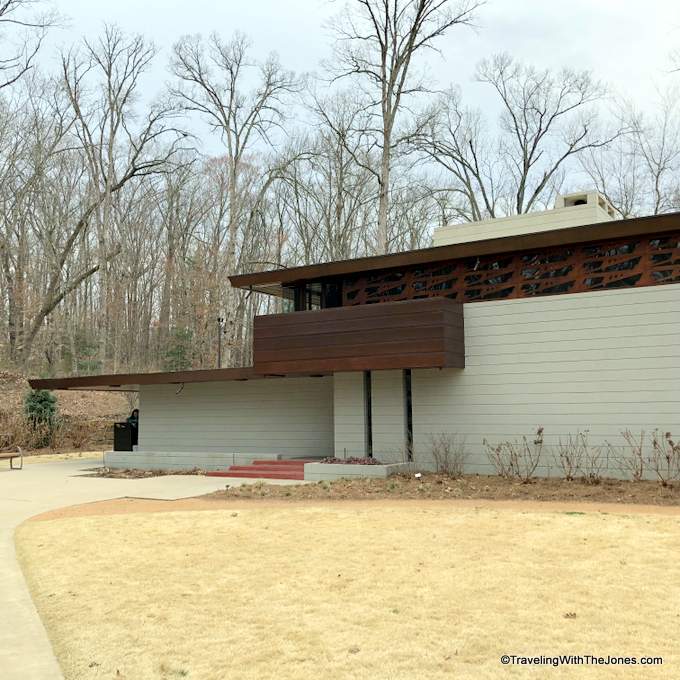
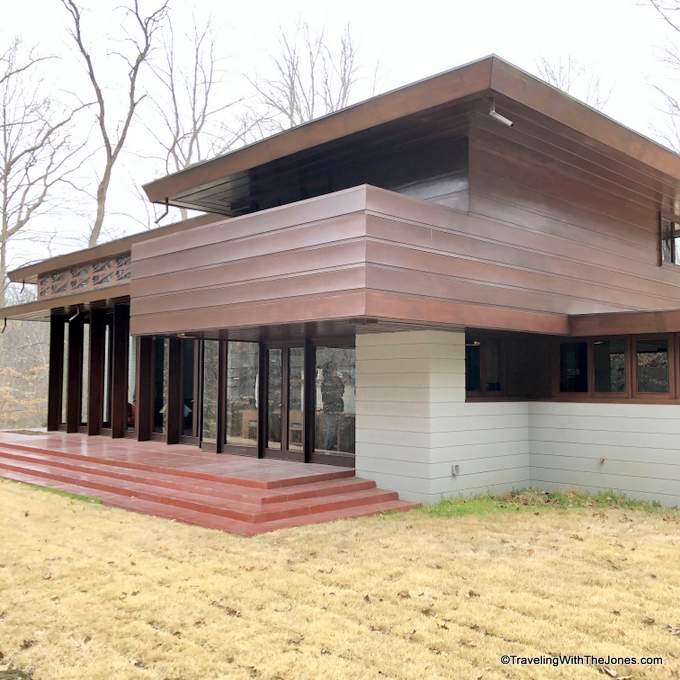
In January 2014 Crystal Bridges acquired the Bachman–Wilson House created by architect Frank Lloyd Wright. Originally built in Millstone, New Jersey in 1954, the house was dismantled piece by piece, relocated to Bentonville and rebuilt at Crystal Bridges. T
Visitors to Crystal Bridges can tour the first floor of the Bachman–Wilson House free of charge, but a ticket for a specific visit time is required. A free audio guide is provided, giving details about each section of the house and its design.
Our visit to the Crystal Bridges Museum of American Art was eye-opening. What a fantastic art museum that did not require a flight to London or New York or northern Spain. Just a few hours drive.
Have you visited Crystal Bridges in Bentonville? What museum do you recommend that’s close to home for you?
Share your thoughts with us via Twitter, Facebook, Pinterest or Instagram.
Learn more about Crystal Bridges Museum of America Art with these resources:

 Celebrating the American Spirit: Masterworks from Crystal Bridges Museum of American Art

 Frank Lloyd Wright’s Bachman-Wilson House: At Crystal Bridges Museum of American Art