If you missed part 1 of 99 Interesting Facts About Omaha, click here to start at the beginning. Click here for Part 2 or here for Part 3.
81. Omaha is flat with no skiing mountains – so how did the ski chair lift get invented in Omaha, Nebraska? In 1936, Union Pacific Railroad — directed by Chairman W. A. Harriman — began development of a new ski resort in Sun Valley, Idaho.

James Curran, working in Union Pacific’s engineering department in Omaha, designed the ski lift inspired by a hoisting mechanism used to load bananas to ships — banana hooks with chairs. His basic design is still used for chairlifts today. U.S. Patent 2,152,235 for the “Aerial Ski Tramway,’ was issued to Mr. Curran along with Gordon H. Bannerman and Glen H. Trout (Chief Engineer of the Union Pacific Railroad) in March 1939.
In 2001, James Michael Curran was elected to the U.S. National Ski Hall of Fame for his design that “revolutionized the sport of skiing by designing an easy, moderately inexpensive method for skiers to ascend the mountain.”

82. Since 2008, Omaha has hosted three consecutive USA Swimming Summer Olympics trials. In 2021, the swimming competition will return to Omaha’s CHI Health Center Arena June 13 – 20th, where 1,800 of the best swimmers in America will compete for spots on the U.S. Olympic swimming team for 2021 Summer Olympics in Tokyo.
83. How does the CHI Health Center arena in downtown Omaha host a major swimming competition without any permanent swimming facilities?

Myrtha Pools — a company that specializes in the construction and dismantling of large-scale temporary pools — oversees a team of 200 workers who construct a pair of Olympic-size pools above the arena floor in the two weeks before the competition. Then the Omaha Fire Department pumps in 2 million gallons of water from hydrants around the center. After the event, the pools are dismantled and moved to other cities for permanent installation.

84. Since 1950, Omaha has hosted the NCAA Men’s College World Series baseball tournament during the month of June. For the first 60 years, the college baseball tournament was played at Omaha’s Rosenblatt Stadium. Starting in 2011 the College World Series moved to Omaha’s TD Ameritrade Park.

In 2019, 332,054 people attended the NCAA Men’s College World Series baseball tournament, giving the city of Omaha a $70 million economic boost. The annual baseball tournament was canceled in 2020 due to the COVID-19 pandemic.

85. Late in World War II, Japan sent exploding hydrogen balloons to the United States via the jet stream. Most of these Japanese balloon bombs landed along the West Coast of the United States, but on April 18, 1945 one bomb made it all the way to Omaha’s Dundee neighborhood. No one was hurt.

86. Omaha has largest of the four dedicated biocontainment units in the United States located at the University Nebraska Medical Center. Commissioned in 2005 by the U.S. Centers for Disease Control, the Nebraska Biocontainment Unit provides the first line of treatment for people affected by bioterrorism or highly hazardous communicable diseases.
In 2014, three Ebola patients were treated at the Biocontainment Unit in Omaha. In February of 2020, 13 US citizens who contracted COVID 19 on a cruise ship in Japan were sent to the unit for evaluation.
87. In the archives of Omaha’s W. Dale Clark Main Library, you can view a human scalp that was carved off of William Thompson’s head by members of the Cheyenne tribe in August 1867.
Thompson and other Union Pacific railroad employees were sent by train to Lexington, Nebraska to repair a broken telegraph wire. The Cheyenne attacked the train, derailing it and killing all the other repairmen. Shot and scalped, Thompson fainted. When he came to, he found the natives had left his scalp. Thompson took his scalp back to Omaha where Dr. Richard Moore tried to reattach it to his skull.

When reattaching the scalp proved unsuccessful, Thompson, an English immigrant, traveled back to his home country, and put his scalp on display for money. In 1900, nearly 40 years later, Thompson sent the scalp back to the Omaha doctor who had tried to reaffix it. Dr. Moore donated the scalp to the Omaha public library, where it was on display for more than 75 years. Now the scalp is preserved in a dark room, but it is still brought out for special events.
88. Although Conagra Brands, Inc. with its consumer food brands like Healthy Choice, Jiffy Pop, Peter Pan and Chef Boyardee moved its headquarters from Omaha to Chicago in 2016, you can still find a six-foot-tall statue of Chef Boyardee in downtown Omaha in front of Building 6 on 707 Conagra Drive.

 Ettore Boiardi: Chef Boyardee Manufacturer
The image of Chef Boyardee is based on the likeness of Italian immigrant Ettore “Hector” Boiardi, a chef and restaurateur before starting his own company producing canned pasta products. He named his product “Boy-Ar-Dee” to help Americans pronounce his name correctly.
89. The cake mix was developed in Omaha at Nebraska Consolidated Mills.
A traveling salesman–who became a food connoisseur by sharing reviews of restaurants he encountered while on the road– licensed his name to a new product created in Omaha.

 Duncan Hines: How a Traveling Salesman Became the Most Trusted Name in Food
The salesman’s name was Duncan Hines and the product was the cake mix.

 Adventures in Good Eating: A Duncan Hines Book; Good Eating Places Along the Highways of America
Duncan Hines, the original road warrior, published his restaurant guide, Adventures in Good Eating in 1938, which launched his second career as one of the country’s most recognized names.


In July 1951, Duncan Hines Cake Mix, produced by Nebraska Consolidated Mills, debuted in Omaha. The creator was actually Arlee Andre, a food chemist at Nebraska Consolidated Mills, who perfected the Duncan Hines mix by having the consumer add fresh eggs. Today the Duncan Hines brand is owned by Conagra Brands, Inc, a consumer foods company headquartered in Chicago.

90. In 1913, the transcontinental Lincoln Highway, running 3,300 miles from New York’s Times Square to San Francisco’s Lincoln Park — through Omaha –was opened. Today, a three-mile stretch of the highway between Omaha and Elkhorn remains intact..

91. Omaha’s historic Blackstone hotel, built in 1916 as a residential hotel, was sold to Charles Schimmel in 1920. Schimmel converted the Blackstone to an elegant hotel with a ballroom, rooftop gardens and award-winning restaurants including the Orleans Room.
From the 1920s through the 1970s, The Blackstone was known as one of the most successful elegant small hotels in the country. See photos through the years here. President John Kennedy and his wife Jackie celebrated their fifth wedding anniversary at the hotel. Ronald Regan, Bob Hope, Jimmy Stewart, and Eleanor Roosevelt all were guests at the hotel, and in 1967, Richard Nixon announced his candidacy for president in the hotel’s Grand Ballroom.
In 1984 the Blackstone was renovated for use as offices, and renamed the Blackstone Center. In 2017, Clarity Development Co. and Green Slate Development purchased the building, and invested $75 million to restore it as a luxury hotel.
92. In 2020, the former Blackstone hotel is expected to reopen as the Kimpton Cottonwood Hotel, named after the Cottonwood Room bar in the original hotel. Design elements of the original hotel have been restored including ornate crown molding, hardwood floors and original tile. Guests will also find claw foot tubs in the bathrooms.
93. The Reuben sandwich is said to have been invented in Omaha during one of Charles Schimmel’s Sunday night poker games at the Blackstone Hotel. One of the regulars — Reuben Kulakofsky — a Jewish Lithuanian-born owner of a highly-regarded food market in downtown Omaha, had barrels of sauerkraut in his establishment. One night, when the poker group got hungry. Charles asked his son, Bernard, to make some sandwiches for the poker game, specifically requesting to make something with corned beef and sauerkraut, because “Reuben wants a sandwich with sauerkraut.”
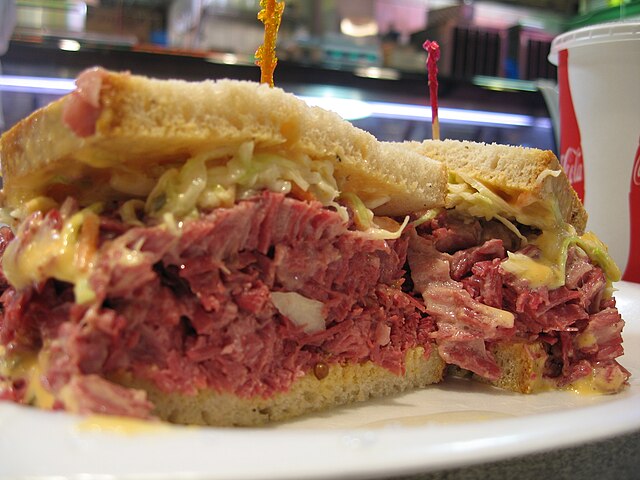
A sandwich with corned beef, Swiss cheese, Russian dressing, and sauerkraut — all grilled together on pumpernickel bread was created. The sandwich was so popular with the poker players that Schimmel decided to it on the menu at the Blackstone Hotel.
The sandwich, named the Reuben, in honor of Kulakofsky, eventually was added to the menus of all of the Schimmel hotels. In 1956, the Reuben received the National Restaurant Association’s Sandwich of the Year award.
94. Omaha’s Crescent Moon Ale House, often called “the Moon” by locals, serves the Blackstone Reuben using the original recipe from the former Blackstone Hotel that is just across the street. In November, the Moon has a ReubenFest, featuring the original sandwich as well as Reuben-inspired offerings such as pizza and egg rolls.
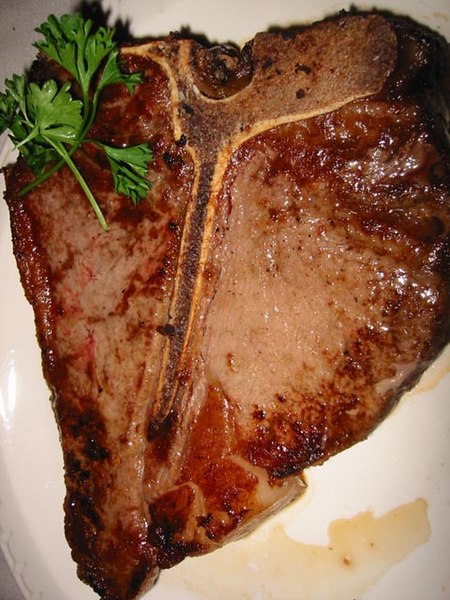
95. As one might expect given Omaha’s history with beef, there are numerous steak houses in the city. One to check out is Gorat’s — best known as Warren Buffett’s favorite. (He likes the T-bone, rare, with hash browns and a Cherry Coke.

Founded in 1944 by Louis and Nettie Gorat, and subsequently operated by their son, Louis, Jr. (known as “Pal”) – Gorat’s has served steaks and Italian specialties for more than 70 years. Steaks are priced from $30 to $42, and include garlic roasted carrots with cranberry balsamic glaze, choice of side and house salad or soup — a mid-range price point for steaks in Omaha.
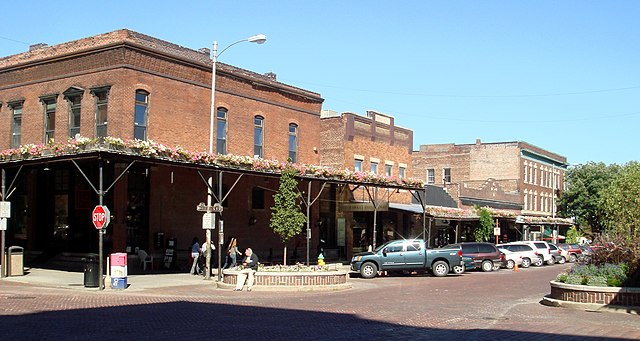
96. Omaha’s Old Market neighborhood is a group of brick buildings and brick paved streets originally built between 1880 and 1920. Today the area is filled with shops, art galleries and eating establishments such as M’s Pub.

M’s Pub is one of the restaurant/bars in Omaha’s Old Market district –it has been in business since 1972. The menu offers many choices, with some of them quite unusual, such as M’s Famous Lahvosh – which is an Armenian cracker with Havarti cheese, and your choice of other toppings. Or, how about a Carrot Dog – like a hot dog except the “dog” is a marinated and grilled carrot, served on a whole wheat hoagie with lettuce, tomato, relish, stone ground mustard and sauerkraut.
97. Omaha’s world famous zoo dates back to 1894 when it was founded as Riverview Park Zoo. In 1963, the name was changed to the Henry Doorly Zoo after Margaret Hitchcock Doorly donated $750,000 in memory of her late husband, who had been chairman of the World Publishing Company.


Is Omaha, Nebraska really home to one of America’s largest indoor rain forests? Yes, the Lied Jungle — part of Omaha’s Henry Doorly Zoo and Aquarium –is a natural rainforest environment enclosed in an 80-ft tall building that covers 1.5 acres. Inside this exhibit you will hear waterfalls crashing, see tapirs, macaws and pygmy hippos, and feel the tropical environment surround you, as if you were in a south America or Africa rain forest.

Another highlight of Omaha’s Henry Doorly Zoo and Aquarium is one of the world’s largest indoor deserts, as well as the largest glazed geodesic dome in the world, known as the “Desert Dome.” The zoo offers “Sleeping Bag Safaris” where families and small groups sleep in a tent overnight in the Desert Dome.

98. The Durham Museum is housed in Omaha’s former Art Deco-era Union Station. Built in 1931 by Union Pacific Railroad as a showstopper for the company’s home city, the museum–which is affiliated with the Smithsonian Institution — chronicles Omaha’s history through exhibits on the Plains Indians and to-scale models of blue-collar cottages. There are train cars on display and a 1930’s working soda fountain, where you can slurp a milkshake after touring the museum.
99. While visiting Omaha, you can walk on Bob, the 3,000-foot pedestrian and bicycle traffic bridge over the Missouri River between Omaha and Council Bluffs, Iowa. The ridge is connected to more than 150 miles of nature trails for walking and biking.
“Bob” is the personality created for the Bob Kerry Pedestrian Bridge, named for the former Nebraska Senator. “Bob the Bridge” has his own Instagram and Twitter accounts.
Omar, a friendly troll lives beneath Bob the Bridge.
Have you visited Omaha? Are you from Omaha? What interesting fact can you add?
Please share your comments or questions via Twitter, Facebook, Pinterest or Instagram.