≡ Menu

This castle overhangs a cliff 130 feet above the sea. 

What is the name of the Castle? Where is it located? 

Hints:

  • The castle survived a serious earthquake.
  • It was built between 1911 and 1912.
  • Today it’s an Italian restaurant.

Be the first to post your answer in comments.

Check back on Wednesday for a post on the destination.

Follow us on https://twitter.com/travelinjones
or interact with us on
Facebook/Traveling with the Jones 

{ 2 comments }

Photo Friday: “The Periscope” Inspires Maritime Students

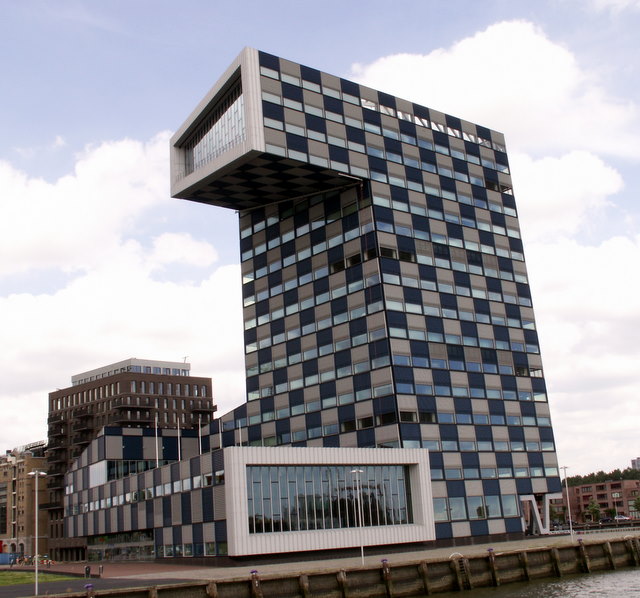
Blue and white corrugated panels in a checkered pattern convey the image of stacked shipping containers while the cantilevered conference room provides students with inspiring views of the nearby Port of Rotterdam.  Designed by Neutelings-Riedijk Architects, the Shipping and Transport College building on the Maas river in Rotterdam  is home to Netherlands Maritime University.

 Europe’s Largest Port

 The Port of Rotterdam the largest port in Europe, and was the world’s busiest from 1962 to 2004, when it was surpassed by Shanghai. The city of Rotterdam is located on the banks of the Nieuwe Maas (“New Meuse”) river, one of the channels formed by the Rhine and Meuse rivers.  

City of New Architecture

During the early stages of World War II,  the city center of Rotterdam was devastated by German bombs, destroying most of the older building. Now, 70 years later, the Rotterdam is known for its ambitious avant-garde architecture architecture.

Internationally-recognized architects based in Rotterdam included O.M.A. (Rem Koolhaas), MVRDV, Neutelings & Riedijk and Erick van Egeraat, among others.  

A few of Rotterdam’s famous architectural designs include the cube houses built in 1984 by architect Piert Blom, the 2,600 ft  cable-stayed Erasmus Bridge nicknamed “the Swan”, the Netherland’s tallest residential building, Montevideo Tower, and the Euromast

Read about our architectural tour in Rotterdam here.  

And our tour of Rotterdam’s Maritiem Museum here.

Follow us on Twitter https://twitter.com/travelinjones
or interact with us on Facebook facebook.com/TravelingWithTheJones

{ 0 comments }

Destination Discovery: Funchal, Madeira

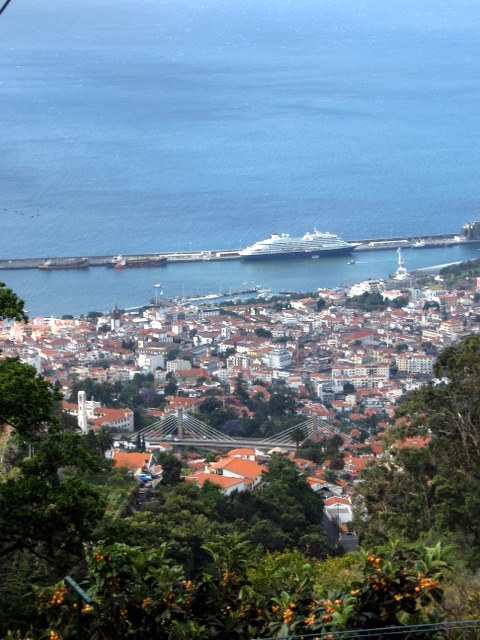
The main harbor for Madeira, a Portuguese island known for wine, flowers and toboggan rides. 

When the Portuguese discovered Madeira in 1419 –  621 miles from continental Europe and 323 miles from Africa —  it was uninhabited by humans.

The island was settled Portuguese farmers, who harvested timber, grew wheat and sugar cane.  Today Madeirans are Portuguese but have developed their own distinct cultural traits.  An hour and a half flight from the Portuguese capital of Lisbon, Madeira is the outermost region of the European Union.

Named after fennel

Funchal is Madeira’s main harbor.  The port city is a frequent stop for trans-Atlantic passenger cruises between Europe, the Caribbean and North America.

Funchal was named by early settlers for the abundance of fennel (funcho in Portuguese) that grew on the island.

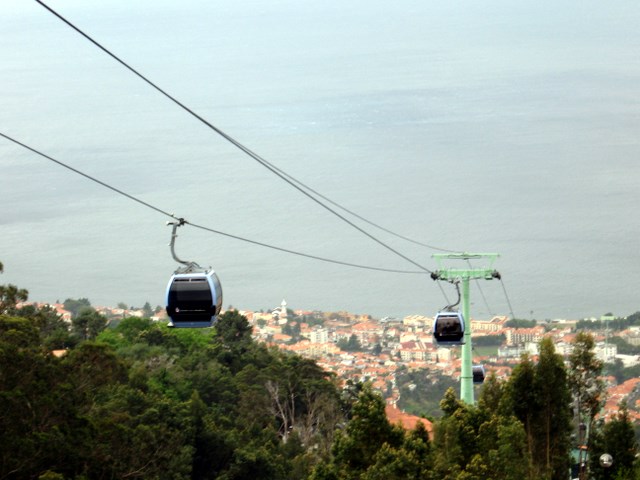
A cable car ride to Monte  

For visitors to Funchal, taking the cable from the port of Funchal to Monte is the best way to enjoy magnificent views of the bay.

Monte Palace Tropical Garden and Austrian Emperor’s Final Resting Place.

Located just off the cable car terminus, Monte Palace Tropical Garden contains 100,000 species of plants from around the world. Sheltered by mountains, flowers bloom year round, making Madeira lush, green and relaxed.

Also near the cable car landing, the Church of Nossa Senhora do Monte is dedicated the patron saint of Madeira. Besides providing terrific views, the church houses the tomb of the last Austro-Hungarian Emperor, Charles I, who died in 1922 at Monte. Charles had been deported to Madeira in 1921 after his second unsuccessful coup attempt on Hungary.

Down the hill via a Toboggan Ride

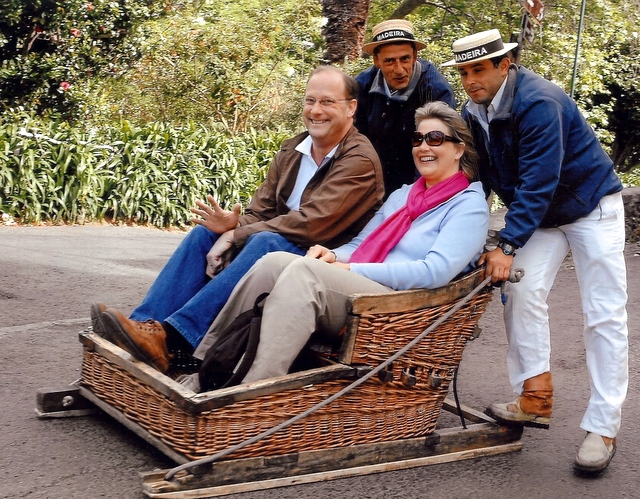
After viewing the sights of Monte, it’s time for an exhilarating ride in one of the traditional Monte sledges. Two carreiros (drivers) push guests in wickerwork toboggans on wooden runners down streets on the  steep hillside towards Funchal.

Not Yet Back to Funchal

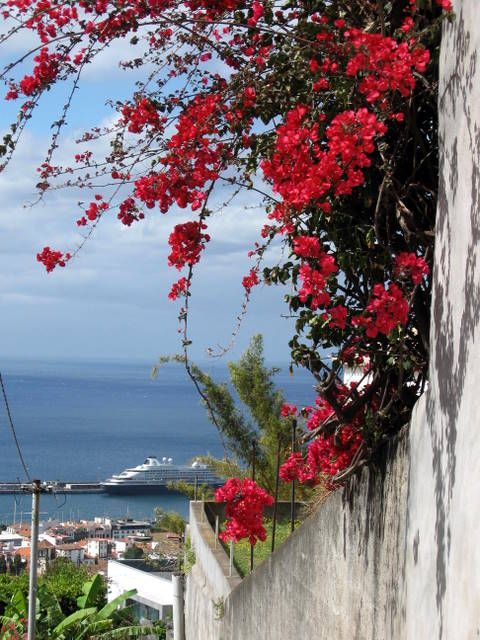
The toboggan rides end only halfway down the steep route back to Funchal. You can take an overpriced taxi (many are waiting), or, take the steep but beautiful downhill walk.  

The views are worth the hike.

In downtown Funchal, a small museum tells the history of Madeira wine, which dates back to the days of early explorers.  In these days, Madeira was a standard stop of ships, where they would pick up wine, before heading to the New World or the East Indies.

Spirits were added to wine to prevent it from spoiling.  When a shipment of wine was returned after a long voyage, wine traders discovered that the long sea voyages – exposing the wine to prolonged heat and movement — had transformed and improved the wine’s flavor.

The long-shipping-at-sea-aging method was replacing with a unique winemaking process of heating the wine to high temperatures for an extended period of time and deliberately oxidating it. This process gives Madeira wine a robust flavor long after it’s opened.

Visiting Funchal via Cruise Ship

Funchal continues to be a main port of call for Atlantic cruises. We visited Funchal on a transatlantic cruise on Holland America Line’s ms Prinsendam.  View our post here.

Ready for visitors after February mudslide

Record rainfalls over a short time period  in February, 2010, resulted in devasting and deadly mudslides in Maderia.

The island has quickly repaired most tourist attractions and is recently launched a new international tourism campaign, “Madeira as Beautiful as Ever.”

You can connect with us via Facebook or Instagram.

{ 3 comments }

So Why Do You Travel?

Why do you like to travel?

To relax?

To escape from your daily routine?

To spend quality time with your travel companions?

Or, do you travel for personal growth, or intellectual stimulation? Do you like to explore new cultures? Or is it a combination of these and other reasons, depending on the trip?

A stimulating blog post

A blog post I read early this morning made me stop — and consider — our motivations for travel.

Princess Cruises recently launched a new blog – 50 Essential Experiences: The Travel Bucket List, written by long-time Princess employees. 

This morning’s blogger was Alan Buckelew, a 33-year Princess employee who happens to be the company’s president and CEO.

Mr. Buckelew’s post is a very personal and touching story about his return visit to Vietnam, 40 years after serving there in the US Army’s Fox Force recon platoon.  

Mr. Buckelew’ reason for traveling to Vietnam on a cruise: for closure on a tough but defining part of his life….  Read about it here.  Judging from the comments, the post resonated with many readers.

 We like to travel for many reasons.

Travel, for us, is fun.  Well, non-business travel, that is, although we both try to make the best of business travel as well.

For pure relaxation and getting away from our daily routine, we enjoy Caribbean & Mexico beach vacations and cruises.

For celebrating life milestones and reconnecting with friends that we don’t get to see very often, we like wine trips exploring California’s Sonoma County, in a vehicle where we don’t have to drive.  

We enjoy visits to San Francisco – the city where we met and fell in love – for romance and reconnection with our favorite old neighborhood haunts.  

The mountains, fishing holes, family and friends around Anchorage, Alaska, where Mr. Jones grew up, beckon, even in the cold of winter.  (Although fishing at the Kenai River, and long days of sunlight make summertime visits a higher priority.)  

While we enjoy returning to our favorite places, we mostly use our vacation travels to explore and discover parts of the world where we haven’t been before.  The funny thing is – the more places we visit – the longer our “must visit list” of new places seems grow.  We’ve been to nearly 70 countries and still are hungry for more.

This kind of discovery travel provides us with intellectual stimulation, from history lessons to personal connections with the places we’ve visited and the people we meet. 

If you make the 36-hour trip on the Trans-Siberian railway from China to Mongolia, for example, you can’t help but have a different appreciation for Genghis Khan.

Visiting Auschwitz in Poland gives one an unforgettable view of the Holocaust.  Sailing through the Bosporus Strait with New Zealanders who lost their grandparents in WWI provides a history lesson unavailable in any book. As does visiting the Blue Eye — a former communist leader retreat in Albania or Stalin’s Dachau near Sochi, Russia.

Sailing into the Polar Ice Cap caused us to think about global warming from a new perspective. Visiting vegetable farms in Mexico provided an expanded view on immigration issues.

Then there’s the food, wine, and cultural activities to explore. From Italian espresso to Singapore hawker stands to wine caves in Reims to the art collection in St. Petersburg’s Hermitage – travel exposes us to things that we didn’t appreciate before we experienced them in new places.

So what about you?  What motivates you to travel?  Relaxation?  Intellectual stimulation and/or personal growth?  To find your past – the lands where your family immigrated from?  Or, like, Mr. Buckelew, are you looking for closure?   

We’d love to hear about your travel motivations.

Please share in comments.

Follow us on Twitter https://twitter.com/travelinjones
or interact with us on Facebook facebook.com/TravelingWithTheJones

{ 1 comment }