≡ Menu

Destination Discovery: Oslo, Norway

 Oslo City Hall: Home of the Nobel Peace Prize Ceremony 
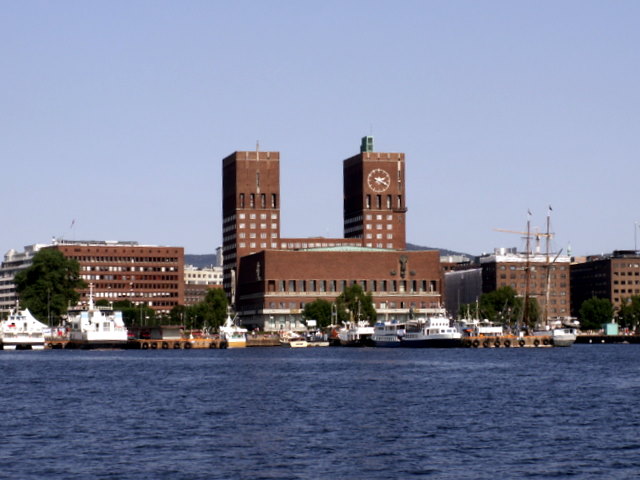
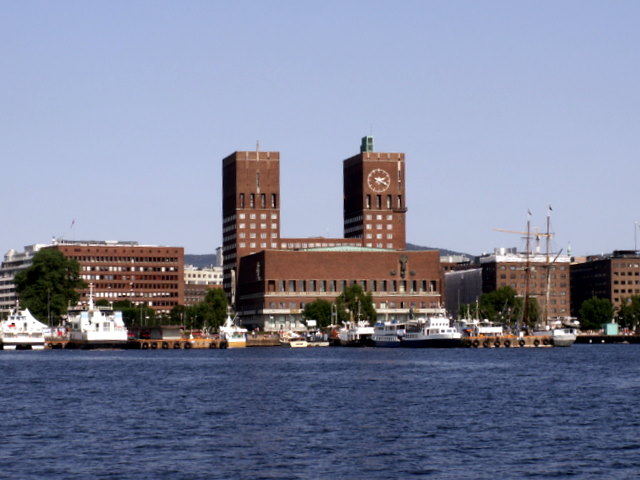
Oslo City Hall hosts the Nobel Peace Prize Ceremony every year on December 10th.

Every year on December 10th – the anniversary of Alfred Nobel’s death – the Oslo City Hall hosts the Nobel Peace Prize ceremony.  Peace Prize Recipients  give a lecture and receive their medal in the grand Central Hall decorated with murals by Henrik Sorensens.

Located in the center of downtown, overlooking Oslo fjord, the Oslo City Hall is decorated with works by Norwegian artists from 1900-1950. 
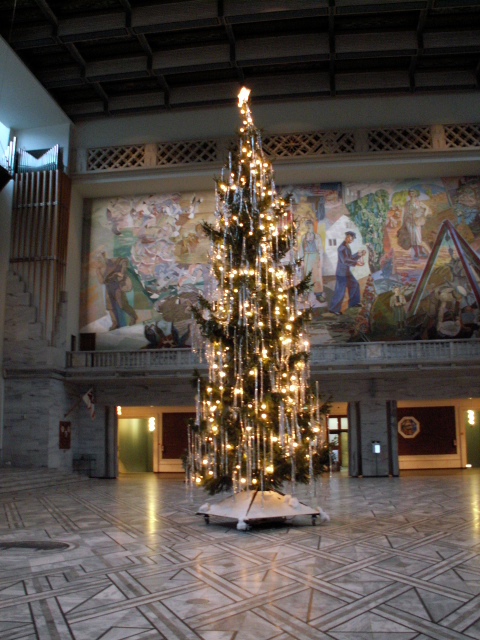
Nobel Peace Prize medals are awarded in the Central Hall, decorated with murals by Henrik Sorensens.

Designed by architects Arnstein Arneberg and Magnus Poulsson, Oslo City Hall creation spanned a dramatic thirty-year period in Norway’s history.  Construction began in 1931 but was delayed by the occupation of Norway during World War II.

Inaugurated in 1950, Oslo City Hall is the seat of the City Council.  Public tours are offered every day in June, July and August, as well as Mondays and Wednesdays the rest of the year.

Nearby the Nobel Peace Center  offers interactive exhibits celebrating the work of Nobel Peace Prize winners.

Vigeland Sculpture Park

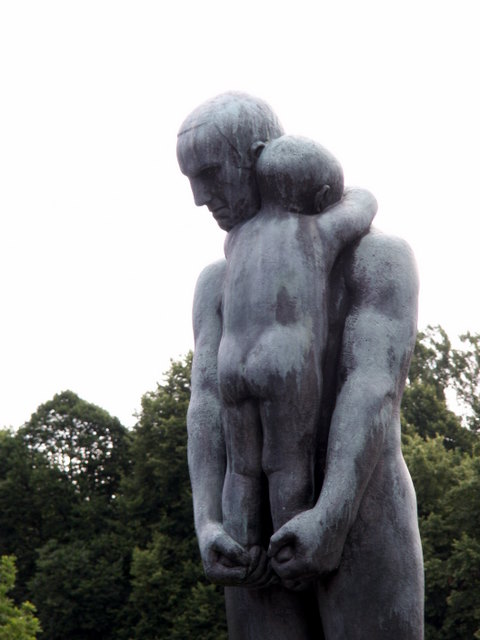
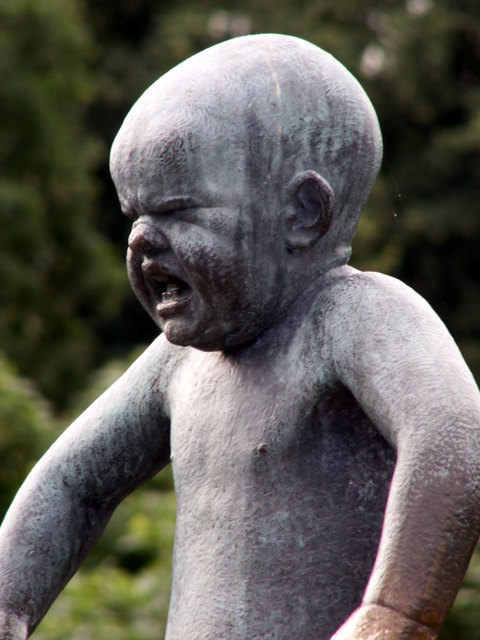
One of Norway’s most-visited and unique attractions, the Vigeland Sculpture Park showcases the life work of sculptor Gustav Vigeland (1869-1943).  Vigeland includes 212 bronze, granite and wrought iron sculptures depicting the human life cycle.
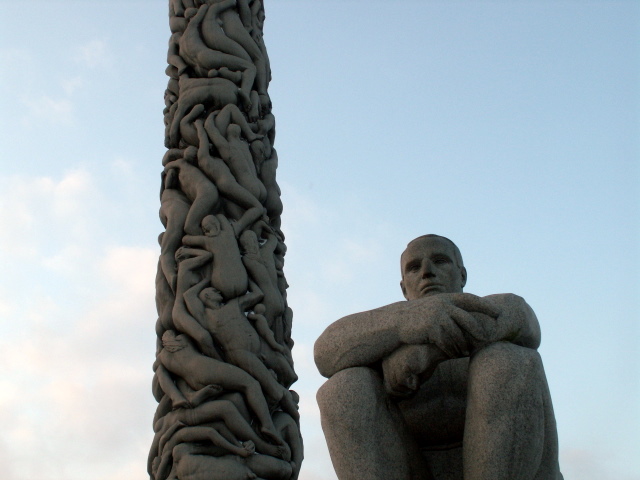
More than 200 sculptures depict the human life cycle at Vigeland Sculpture Park

Sculptor Vigeland created a full-size model of each figure, leaving the granite carving and bronze casting to his craftsmen.  To avoid clothing styles “dating” the sculptures to a specific time period, Vigeland created them all nude.

The park is free and open year round 24 hours a day. 

The Scream

Nordic painter Edvard Munch pioneered expressionism. His most famous painting — The Scream — portrays an agonized figure against a blood red sky, with the Oslofjord landscape in the background. 

Munch created several versions of The Scream in different media between 1893 and 1910.  The earliest painted version is housed in the National Gallery of Norway. 

The Munch Museum holds two versions of The Scream, along with a large collection of other artworks left to the city of Oslo by Edvard Munch.

A Favorite of Art Thieves

The Scream has been the target of several high-profile art thefts.  In 1994, during the Winter Olympics in Lillehammer, the original version of The Scream was stolen from the National Gallery. It was recovered several months later.

In 2004, two Munch works — The Scream and Madonna — were stolen from the Munch Museum.  Both paintings were recovered in 2006, and returned back to display in 2008 after undergoing restoration.    

One of the world’s most expensive cities

Business Week reports that in 2010, Oslo is the world’s second most expensive city out of 399 global locations surveyed by ECA International. The ECA survey found an average lunch in Oslo costs in $43.  At the grocery store, a single can of beer costs $4.71 while a dozen eggs costs $6.72 in Norway’s capital.

 Getting to Oslo

We’ve visited Oslo during winter holidays, arriving on British Airways via a Heathrow connection. If you like ice skating, ski jumps and fresh snow, December is an ideal time to visit. English is widely spoken and getting around on public transportation is easy. 
 If long sun-filled summer days are more appealing, sailing into Oslo via the Olsofjord on a cruise ship or ferry offers a breathtaking view.  Visiting Oslo via cruise ship is an affordable option for visiting this expensive city,   since one is buying food, accommodations and transportation in US dollars rather than Norwegian kroner.  Cruise ships generally dock very close to city hall.  Read about our last visit here.

We enjoy exploring new destinations.   What’s your favorite destination discovery? Please share in comments.
Follow us on Twitter or interact with us on Facebook.

{ 5 comments }

Travel Tips from 5 Travel Bloggers

Finding good travel tips before you go helps avoid travel disappointments.

Every Tuesday is Travel Tip Day  

Today: Travel Tips from 5 Travel Bloggers  

Tuesday is travel tip day for a number of travel bloggers. Finding first-hand travel insights  from other bloggers has helped us have more enjoyable travels time and again,  inspiring us to start this blog to share our travel discoveries.  Here are some  favorite recent tips from other travel bloggers.    

 Travel Tips from 5 Travel Bloggers  

1.     Travel tips are not always right for you.  Blogger Geraldine DeRuiter wrote 7 travel rules you should break on Gadling, leading us to find  Geraldine’s entertaining blog, The Everywhereist  

2.     A blog’s first post Ben Cober –it appears –just started his blog Soar to Shore.  The first blog post is usually one of the toughest. We found Ben’s post on travel photography Shoot Your Vacation helpful and look forward to more posts from Ben.     

3.     Ipads are on our “purchase soon” list, so Charlie Sorrel’s Eight Great Tips for Traveling with the iPad  on Wired Gadget Lab caught our attention.  Our question: will we really be able to give up our computers on the road if we have an iPads? Or, are they are just another cool toy that will make our carry-on bags heavier?  

4.   We are always looking for travel insights from other travelers, so Johnny Jet’s 10 Travel Twitterers to Follow and Why  article on the Huffington Post caught our attention. 

5.   In preparation for a trip to South America, we are considering Spanish classes.  Audrey Scott’s Uncornered Market blog post 7 Tips for Learning Foreign Languages on the Road   provided some helpful insights.  

Other travel tip posts:   

 Follow us on Twitter@travelinjones           

Or interact on Facebook/Traveling with the Jones         

{ 0 comments }

Destination Photo of the Week? Can you identify this city, the country and the global award presented here?

This building hosts a global awards ceremony each year. Can you identify the city, the country and the award?

Hints on the city:
“¢ It’s situated at the end of a fjord
“¢ It’s one world’s most expensive cities
“¢ It’s known for famous works of art and a sculpture garden

Be the first to post your answer in comments, including the city, the country and the award.

{ 0 comments }

Destination Discovery: Bolzano/Bozen, Italy

History, Wine, and Gateway to the Dolomites

Views of the Dolomites from the hiking trails near Bolzano/Bozen, Italy

Near Italy’s northern border, the city of Bolzano/Bozen is a gateway to the Dolomites, the majestic white mountain peaks that are part of the Alps.

Bolzano is the city’s Italian name while Bozen is its German name.  Bolzano/Bozen is the capital of the multilingual province of Alto Adige/South Tyrol, ceded by Austria to Italy at the end of World War I.

This autonomous province has a special statute that preserves the rights of the German minority in this part of Italy.  All signs are in Italian and German.

Three languages spoken, not including English

Three native languages are spoken by residents of South Tyrol:  Italian, German and Ladin, a Rhaeto-Romance language dating to the Roman era.

A historic city and cultural cross point.  

The Romans built settlements around 15 BC. Bavarians migrated to the area after the downfall of the Roman Empire, establishing Bozen around 679 AD.

By 1190, Bozen became an official town and key trading destination between Venice and Augsburg, with a four-time-per-year market drawing traders from the north and south.

Today Bolzano/Bozen remains a cultural cross point between the Germanic and Mediterranean worlds.

Otzi the Iceman

Today in Bolzano, you can visit Otzi – a man who died between 3350 -3300 BC – at the South Tyrol Museum of Archaeology.  Discovered in 1991 eroding from glacier in the surrounding Italian Alps, Otzi’s body was perfectly preserved in a crevasse for more than 5000 years.

A wine region since pre-Roman days

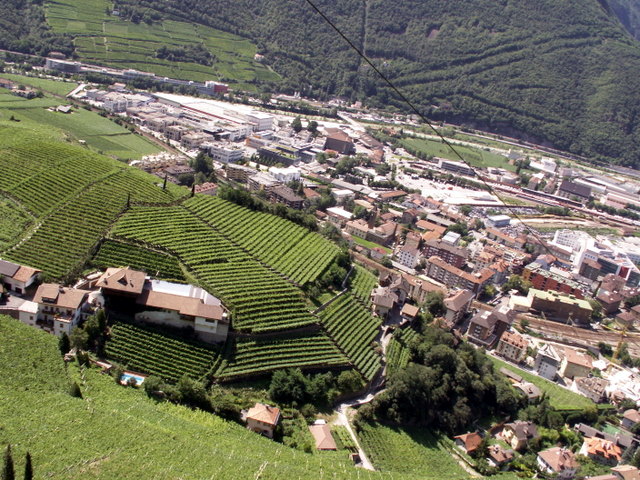
View of grape vines from the cable car.

Bolzano has been producing wine since pre-Roman times – it’s estimated there are 40 vines for every resident – fueling the saying “If Venice floats on water, then Bolzano floats on wine.”

This blog post  inspired us to find Enovit Vinoteque, a wine shop and tasting bar with samples poured by Elisabetta Anderle. We found the place just as the blogger describes it, perfect for observing the Bolzano culture while enjoying its tasty wines.

Three cable car routes to high plateaus  

Bolzano is located in a broad valley basin surrounded by mountains.  Three different cable cars,  including the world’s first passenger cable car from 1908, transport you up to the mountains to the high plateaus, where hiking trails offer magnificent views of the surrounding Dolomites.  

The Renon/Ritten cable car whisks you straight up the mountain, passing over grape vine-covered steep hillsides and valleys to the mountain town of Soprabolzano/Oberbozen.

On the ride, the Dolomites appear in the distance.  In Soprabolzano, enjoy a glass of inexpensive local wine at Café Fink while waiting catch the tram to Klobestein/Collalbo. On this 20 minute ride, the Dolomites become more pronounced.

Hiking Trails Abound

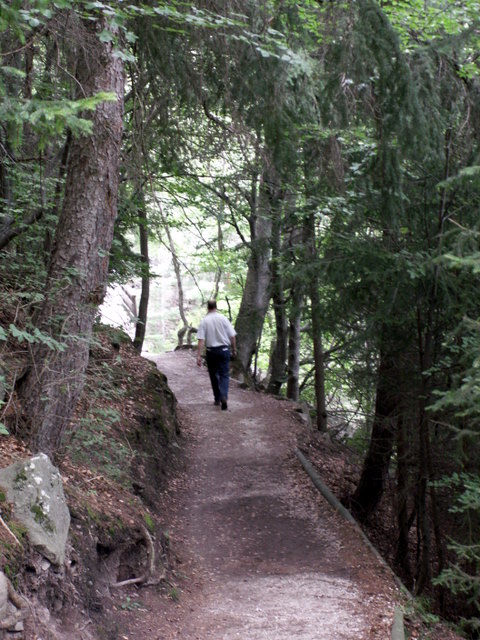
From Collalbo, we hiked on a well- maintained trail marked with a baby carriage symbol, later learning that meant the path was relatively flat.  Regardless, the trail provided stunning views, with cafes along the offering  coffee, apple strudel or a glass of wine.

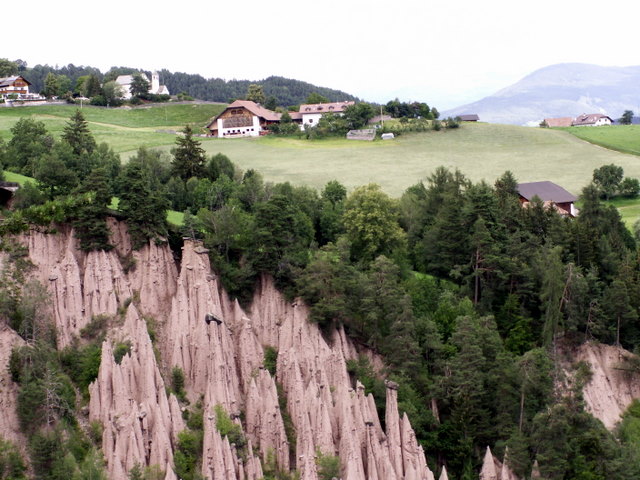
Our hiking route passed the Longomoso Pyramids, eroded earth pillars capped with stone “hats”.

The Longomoso Pyramids are eroded earth pillars topped with stone “hats”.

Back in Collalbo, we took the public bus back to Bolzano for a different view.   This was only a 25-minute ride – full of stomach-churning hairpin turns down the mountains.

Getting to Bolzano/Bozen by train

Needing to get from Innsbruck, Austria to Venice, two travel guidebooks inspired us to make the trip by train.  Great Railway Journeys of Europe describes the Innsbruck to Verona route as “a breathtaking journey with glorious view of Alpine peaks”.

On the Rails Around the Alps provided further details and endorsement of the route. Both books suggested a stop in Bolzano. We were not disappointed.

Read more about our journey here.   From Verona, we connected to a train into Venice.  This is actually an ideal pre-cruise trip: fly into Innsbruck, take the train to Bolzano and stay a few days, then head into Venice to catch your ship.

Or the reverse trip from Venice to Innsbruck via Verona.

In the future, we hope to continue our exploration of this area, and more of the Alps by train.

We enjoy discovering new places with interesting history, especially those with good food and wine.  What’s your favorite destination discovery? 

Share your thoughts with us via TwitterFacebookPinterest or Instagram.

{ 7 comments }