≡ Menu

Exploring Westerpark in Amsterdam

When we travel to a city that we’ve visited before, we try to find new experiences. A different neighborhood, a new restaurant, or a place that people who actually live in the city tell us they like frequent.
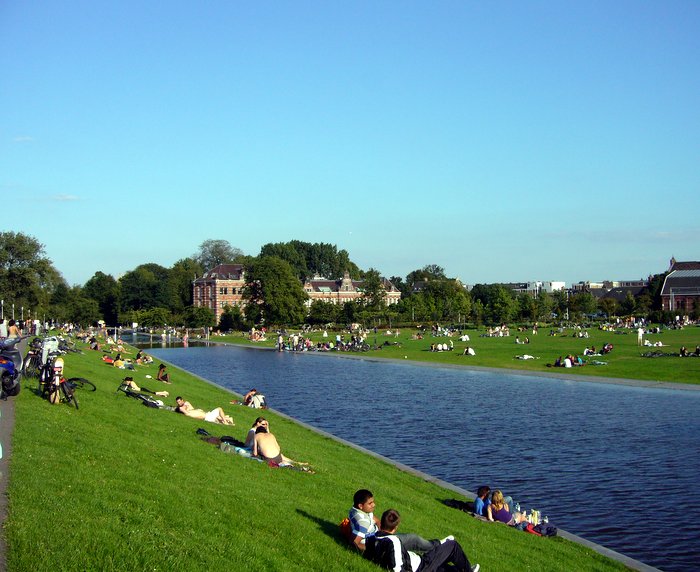
Westerpark, Amsterdam Photo by David van der Mark

A sunny summer day at Westerpark in Amsterdam, The Netherlands. Photo by Westerpark, Amsterdam Photo by David van der Mark.

During our pre-cruise visit to Amsterdam in early June, when we ask locals what they liked to do in their city, we kept hearing, “I like Westerpark.”

“My favorite way to spend a sunny day is at Westerpark. Enjoy the park, and then have some food and cocktails at Mossel & Gin.

We decided to add a visit to Westerpark to our agenda.

From our hotel – the Renaissance Amsterdam – in the heart of central Amsterdam, we walked west, through the Western Canals and the Jordaan neighborhoods to the Westerpark neighborhood, part of Amsterdam West.  While we like to walk, this was a very long distance. (My Fitbit indicated we walked more than 10 miles in total at the end of this day.)

Westerpark, Amsterdam, The NetherlandsWe arrived at the Westerpark just before 12 noon on a sunny Thursday. We found a vast park filled with green space, walking trails, a concert/exhibition space and a variety of eating and drinking establishments. Since it was a beautiful day, people were out enjoying the sunshine, some perhaps, just over their lunch hour.

Westerpark is a peaceful, urban oasis that has an interesting past. Originally called Westerplantsoen (Western Garden), the small park was created in 1845 to give the residents of the emerging working-class neighborhood fresh air.

In 1885, next to the original park, the Imperial Continental Gas Association built Westergasfabriek — a vast industrial facility designed produced gas from coal. (Gas was needed to light Amsterdam’s dark streets, among other uses.) Renowned architect Isaac Gosschalk designed the gas plant’s symmetrical red brick buildings in the Dutch neo-renaissance style popular in 1880’s Amsterdam. Gosschalk also designed the Heineken Brewery of the same era.

By 1899, Westergasfabriek became the Netherlands’ largest gas extraction plant. The facilities continued operating until 1967. Natural gas discoveries in the North Sea had made Westergasfabriek uneconomical to operate.

When the gas plant closed, some buildings were demolished while others were used as storage. The remaining buildings were abandoned until 1992, when they were used– temporarily — to host cultural and creative activities. The large gas holding tank became a spectacular venue for the first Amsterdam mass techno raves.

This activity caused local residents to see Westergasfabriek as historically significant and important for the future of art and culture in Amsterdam. The 22 buildings were listed officially as monuments. But the area was polluted with by-products of gas production, and required a lengthy and expensive environmental cleanup.

American landscape architect Kathryn Gustafson was hired to design the area’s remodel. In 2003, her vision was finally completed with the original Westerpark incorporated with the vast land and buildings of the former gas factory, to become one of Amsterdam’s biggest cultural venues. Now officially called the Cultuurpark Westergasfabriek (Western Gas Factory Culture Park), visitors will discover a huge park with wading pools, walking trails, breweries, restaurants, clubs, music festivals, and much more.

The Cultuurpark Westergasfabriek reminded us of the similar Gas Works Park in Seattle, Washington, as well as that city’s newer, waterfront Olympic Sculpture Park.
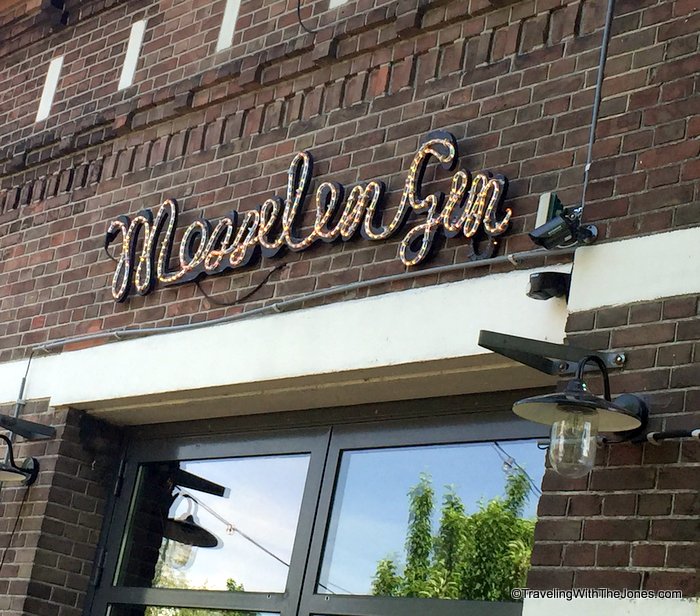
Mossel en Gin Foodbar, Westerpark, Amsterdam, the NetherlandsAfter walking through the huge park for about an hour, we located the recommended Mossel en Gin Foodbar, but were disappointed to learn that restaurant did not open until 4 pm on Thursdays. We vowed to come back another evening.
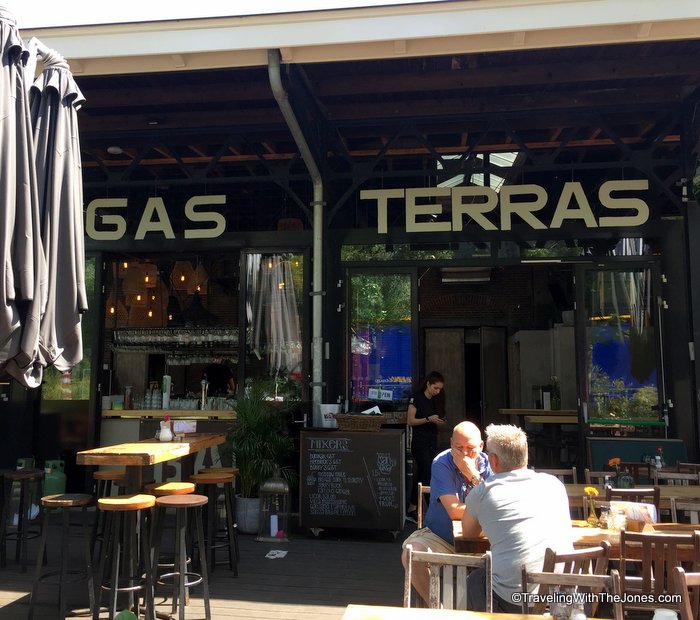
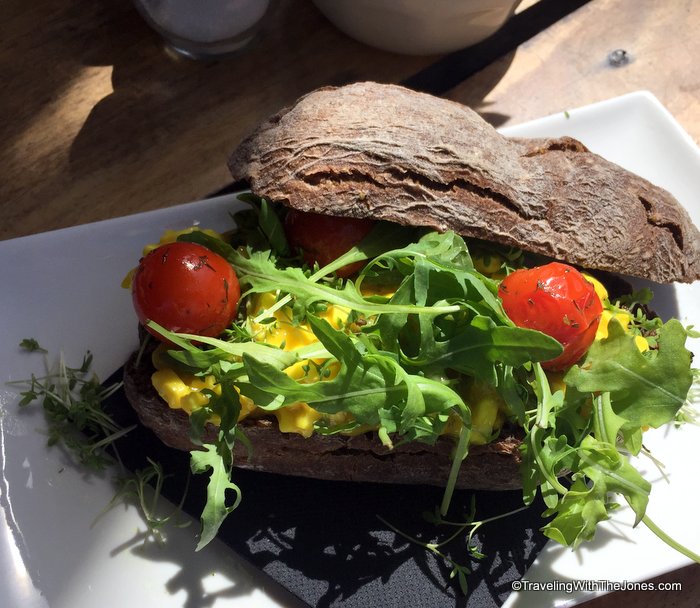
WestergasTerras, Westerpark, Amsterdam, The NetherlandsNow ravenously hungry, we walked onward, following the park’s trails. Eventually, we stumbled onto the WestergasTerras – a restaurant with a large outdoor terrace. Sitting outside, we enjoyed lunch with a view on the famous Gashouder (a concert venue created out of a huge gas-holding tank) and the park’s water gardens.)Old Cheese Spread Sandwich, Westergas Terrace, Westerpark, Amsterdam, the NetherlandsWhile the lunch menu at WestergasTerras is limited to sandwiches, salads and soups, the old cheese spread sandwich on whole wheat bread was anything but standard. It paired perfectly with a glass of white wine, while Mr. Jones enjoyed the Croque Monsieur with a local beer. Throughout our stay in Amsterdam, we were impressed with the fresh produce in every cafe and restaurant we tried.
After wondering through more of the park’s gorgeous paths, we soaked in the sunshine, and vowed to return.

We took a different route back during the long walk back to our hotel.

Have you visited Westerpark, or some other unique part of Amsterdam?

Interact with us on TwitterFacebookPinterest or Instagram.

When planning our visit to Amsterdam, we appreciated the detailed maps and descriptions of each neighborhood in this guide:
DK Eyewitness Travel Guide: Amsterdam

If you enjoy exploring a city on foot, check out:

National Geographic Walking Amsterdam: The Best of the City

{ 0 comments }

A Side Trip to Utrecht from Amsterdam

One of many things we love about visiting Amsterdam is the ease and speed of traveling to other parts of the Netherlands or Belgium by train. We’ve made side trips to the Dutch cities of Leiden, Rotterdam, Den Haag (The Hague), Delft and Gouda, as well as to Antwerp, Belgium, during past trips to Amsterdam.

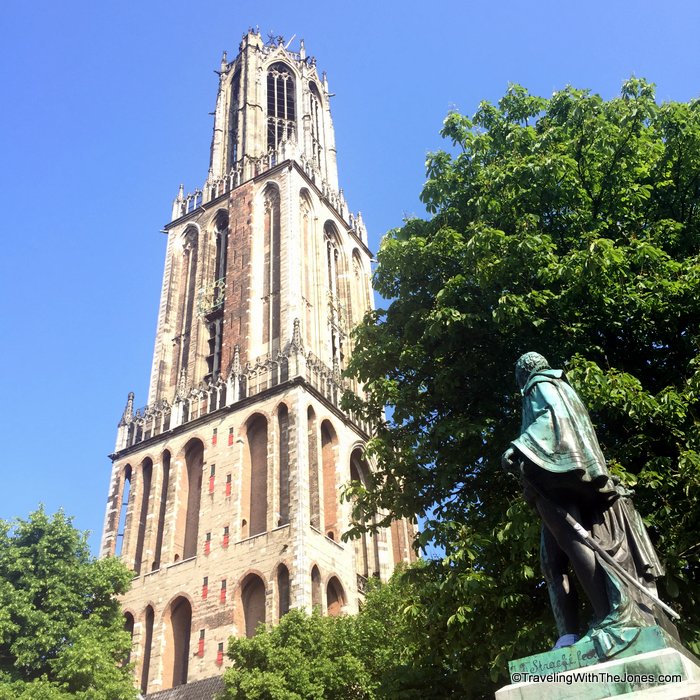
The Domtoren, Utrecht, The Netherlands

During our latest pre-cruise stay in Amsterdam, we made a side trip to Utrecht, the Netherlands’ fourth largest city, and home of its largest university.

The city center of Utrecht dates back to the Romans who founded it in AD 47 to protect a river crossing on the Rhine. Today, the city’s hallmark is its 367-ft tall Gothic Domtoren (Dom Tower) — which dates to 1382.

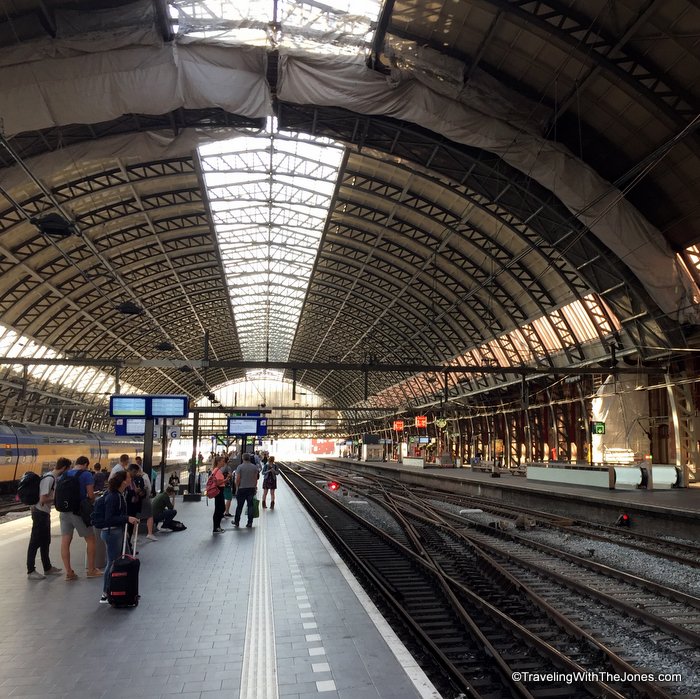
Amsterdam Central Station, Amsterdam, The Netherlands

To reach Utrecht from Amsterdam, we walked from our hotel to the Amsterdam Central Station. Trains depart from here to Utrecht frequently. The ride is less than a 30 minutes, unless you take a local train with more stops.

After arriving at the modern Utrecht Central railway station, we walked through a mall until we reached an exit that led us to the city’s historic center.

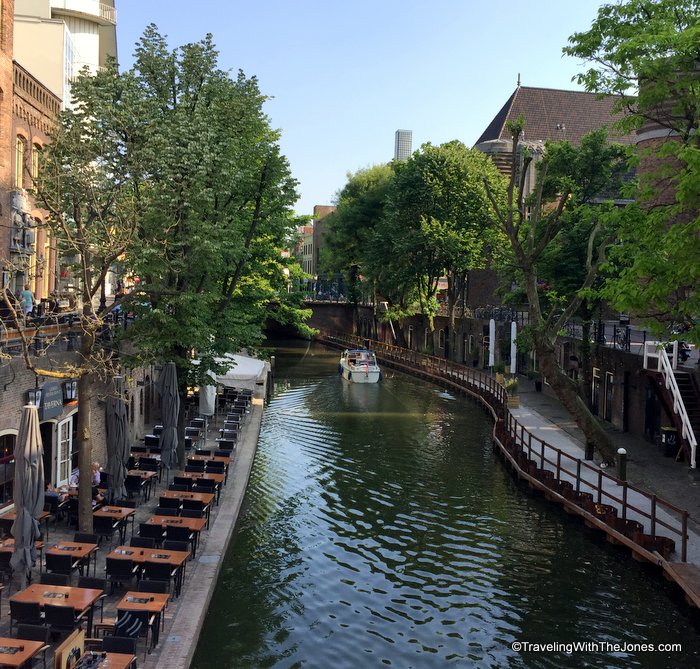
The Oudegracht (old canal) runs through the Utrecht, the Netherlands

Once we found the Oudegracht — the old canal that runs through historic Utrecht — we followed it to reach the Domtoren. Parts of the Oudegracht follow the original flow of the Rhine river.

The Oudegracht or old canal in Utrecht is different from the canals in Amsterdam. Rather than canal water reaching street level, the water flows below street level.  This dates to the 12th century, when the water level of the Rhine River in Utrecht dropped due to new dam on the river upstream at Wijk bij Duurstede. As the people in Utrecht dug the canal deeper, they used the excavated material toraise the sides of the canal, in order to reduce potential flooding. In 1275, the city of Utrecht finished a system of locks to keep the water level constant, enabling the creation of dry cellars and wharfs below street level. The warehouses that lined the canal have been converted into restaurants and cafés.

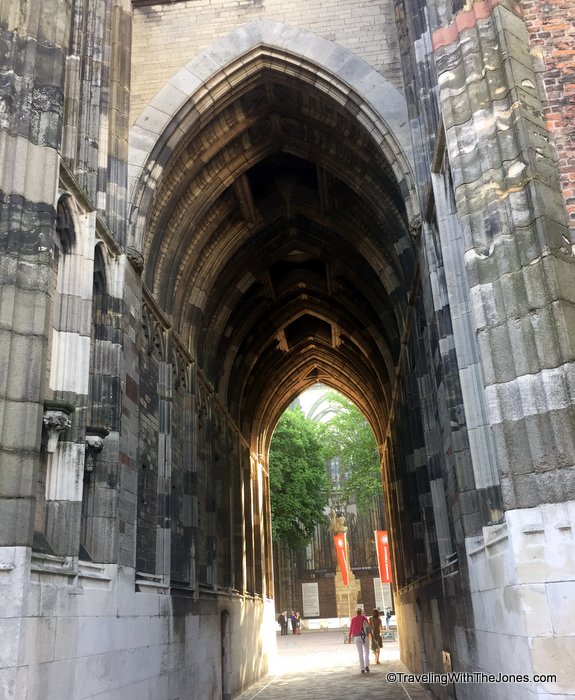
walking through the archway of 'The Dom' in Utrecht, The Netherlands

Although the Dom Tower of Utrecht is the tallest church tower in the Netherlands, you can walk through the archway of its base.

The Gothic-style tower was part of the Cathedral of Saint Martin, also known as Dom Church, and was built between 1321 and 1382. Due to a lack of money, the cathedral was never fully completed as planned. The nave connecting the tower and the rest of the church was unfinished, and collapsed during a storm in 1674.  The Dom has been a free-standing tower ever since.

St. Martin's Cathedral (Dom Church), Utrecht, The Netherlands

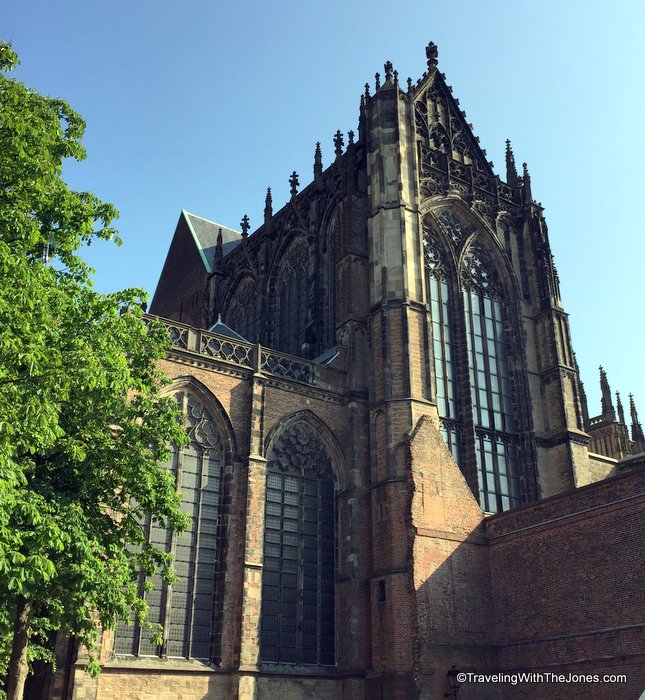
The part of St. Martin’s Cathedral (the Dom Church) that didn’t collapse in 1674 stands nearby.

This Gothic-style church was the Catholic cathedral of the Diocese of Utrecht during the Middle Ages. It is the country’s only pre-Reformation cathedral, but was converted to a Protestant church since 1580.

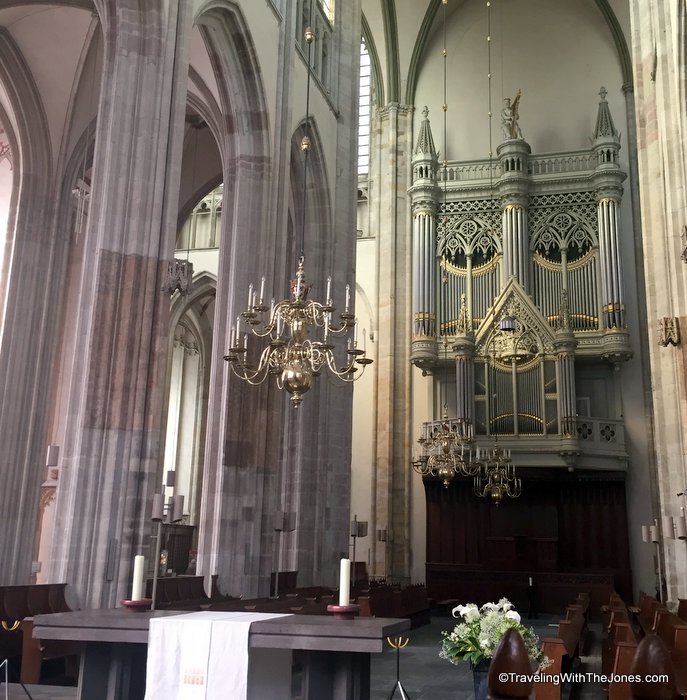
interior view and organ - St. Martin's Cathedral (Dom Church), Utrecht, The Netherlands

Inside St. Martin’s Cathedral (the Dom Church), there is a magnificent organ built by Jonathan Bätz between 1825 and 1831. He used a number of pipes from a previous organ, built by Pieter Jans de Swart in 1571. A complete restoration of the organ was made between 1973 and 1975 by Van Vulpen, returning the organ to its original design.

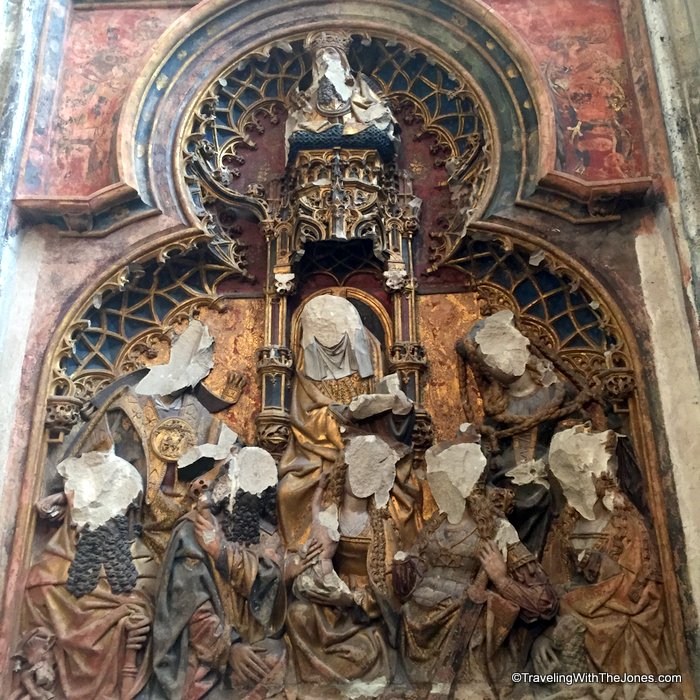
example of Beeldenstorm or "statue storm", - St. Martin's Cathedral (Dom Church), Utrecht, The Netherlands

Another interesting site in St. Martin’s Cathedral is the altar piece with the faces broken off.  This Catholic altar piece was attacked during the Reformation iconoclasm in the 16th century. It is an example of the Beeldenstorm or “statue storm” that swept across the coastal areas of the Netherlands and Belgium in 1566. The actions were justified by the Calvinist belief that statues in a house of God were idolatrous images which must be destroyed. As a result, many of the ornaments on both the exterior and interior of the cathedral were destroyed.

boat delivering supplies - Oudegracht (old canal) runs through the Utrecht, the Netherlands

Walking along the canal, we were impressed with the boat delivering supplies to the cafes and bars that line the Oudegracht (old canal), which we imagine are quite active in the evening.

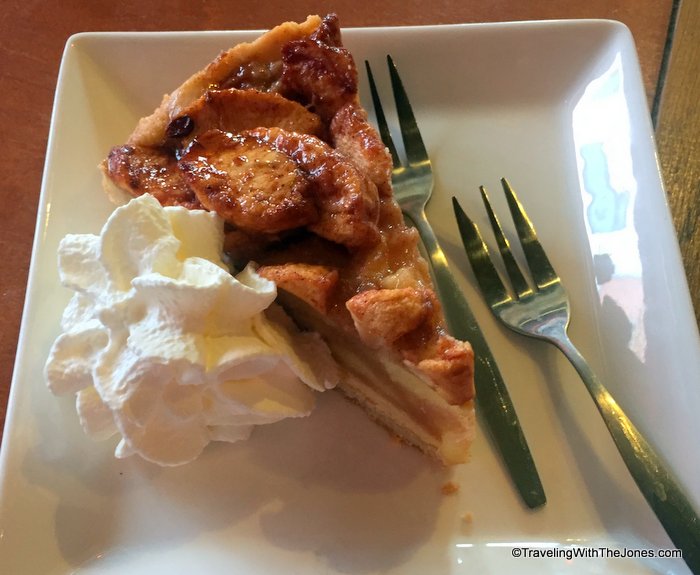
apple cake, Utrecht, The Netherlands

We found a street level cafe to enjoy a coffee and an apple cake, while taking in the local scene from Utrecht University.

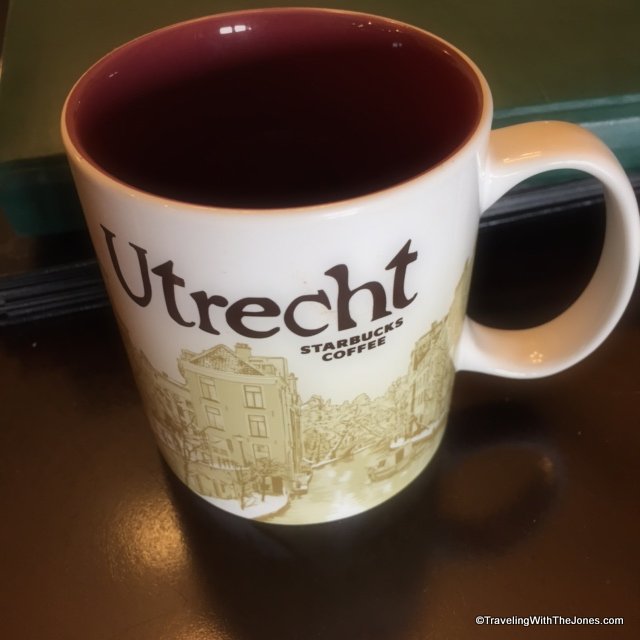
Utrecht Starbucks mug from Utrecht, The Netherlands

While we drank local coffee in Utrecht, we couldn’t resist purchasing a Utrecht mug from Starbucks at the train station to add to our mug collection.

Once we boarded a train at Utrecht Central, we were back to Amsterdam Central Station within about 30 minutes.

Our side trip to Utrecht took a total of about five hours away from Amsterdam. We considered it time well spent.

Have you made a day trip out of Amsterdam to explore other parts of The Netherlands? 

Interact with us on TwitterFacebookPinterest or Instagram. 

If you plan to visit Utrecht, you might want to consult these resources:

Utrecht: Sights and secrets of Holland’s smartest city

Utrecht Travel Guide

{ 0 comments }

With perfect sunshine and blue skies during our early-June pre-cruise stay in Amsterdam, we became enamored with exploring the city on foot. Spending a day in the Rijksmuseum will have to wait for another visit.

Singel Canal, Amsterdam, The Netherlands

From our hotel, we would first cross the Singel Canal as we started out to explore Amsterdam. The large, round copper domed Koepelkerk (a former Lutheran church that’s now an event hall connected by a tunnel to the Renaissance Amsterdam Hotel) was a distinctive landmark to guide us when we were ready to head back to our hotel.

Renaissance Amsterdam hotel

We found the Renaissance Amsterdam Hotel to be perfectly located for exploring Amsterdam’s canal ring and beyond. The hotel is also a brief walk to the Central Station, and a brief taxi ride to the Amsterdam Passenger Cruise Terminal. A number of river cruise guests were staying at the hotel.

Westertoren ("Western tower" tops Amsterdam's Westerkirk

During a food walking tour in the Jordaan neighborhood, we learned that in 1489 Holy Roman Emperor Maximilian I  gave Amsterdam the right to use his personal Imperial Crown in its coat of arms. The crown can be seen on the spire of Amsterdam’s Westerkerk (West Church.)

In addition to having the tallest tower/spire of all churches in Amsterdam, artist Rembrandt van Rijn was buried in the Westerkerk on October 8, 1669. Although Rembrandt’s art is world renown, he died a poor man and was buried in one of the church-owned graves.  As was was customary for these graves, his remains were removed and destroyed after 20 years.

The Westerkerk is near the Anne Frank House where diarist Anne Frank hid from Nazi persecution for two years. In her diary – Anne Frank mentioned the church tower and described the chiming of its carillon as a source of comfort.

gable stone and hook on historic building, Amsterdam

As we walked around Amsterdam’s Canal Ring, we admired the gabled houses with a hook at the top. The hooks are used with a rope and pulley to move heavy and/or bulky items up and through the windows to the top floors. These gabled houses date back as early as the 16th century, but the moving technique continues today.

Walking around Amsterdam’s historic center, we also saw gevelstenen, the Dutch word for gable stones.  These stone carvings were placed on the side of buildings during the 17th century to help walkers find their way. Notice the gevelstenen with a whale in the photo above. The content of gable stones may explain something about the house’s owner. More than 850 of these stones can still be found in Amsterdam.

canal view, Amsterdam

In addition to a beautiful view, the photo above captures a number of special qualities about Amsterdam. There are 165 canals in Amsterdam covering about 31 miles; more than 2,500 houseboats are moored on these canals.

It is obvious the Dutch people love flowers, they are seen growing everywhere in the city.  Amsterdam is home to the Bloemenmarkt, the world’s only floating flower market. Founded in 1862, the flower market has 15 florists and is located on the Singel Canal.

Aalsmeer, a Dutch town eight miles southwest of Amsterdam, is home to the world’s largest flower auction.

cat in the window, Amsterdam

Cats are plentiful in Amsterdam. We enjoyed seeing this cat in the window of his house, with a cat-viewing hold in the window film.  You can also visit De Poezenboot (the Cat Boat), a floating cat shelter that allows tourists to visit for a donation.

Kopjes cat café in Amsterdam West charges visitors three euros entry to spend two hours of quality time with the cafe’s cats who are rescued from local shelters. Visitors can also drink a “catuccino” and eat pastries while visiting the cats.

Amsterdam is also home to Kattenkabinet (The Cat Cabinet) — a small museum specializing in cat art.

shrimp and kibbeling, Vis Plaza, Amsterdam

In order to sustain our miles of walking, we made a late lunch of the shrimp and kibbeling from the Vis Plaza fishmonger in the Jordaan neighborhood. This was one of several terrific local spots we were introduced to during our Jordaan food walking tour.

people-watching from Cafe de Prins, Amsterdam

We also enjoyed people-watching and a local beer while sitting outside at the Cafe de Prins. It was obvious everyone was enjoying the spectacular weather.

We enjoyed one last view of Amsterdam’s Westerkerk with its Imperial Crown spire reflecting into the Prinsengracht canal, just after sunset.

Are you a fan of exploring cities on foot?

Interact with us on TwitterFacebookPinterest or Instagram. 

When planning our visit to Amsterdam, we appreciated the detailed maps and descriptions of each neighborhood in this guide:
DK Eyewitness Travel Guide: Amsterdam

{ 0 comments }

One of our favorite ways to learn about a city is by taking a food walking tour through one of its neighborhoods. While we’ve visited Amsterdam multiple times, we had never explored the city’s Jordaan neighborhood, which is located just west of the canal belt.


ordaan Food Tour, Amsterdam, The Netherlands

During the first day of our pre- Celtic Explorer cruise stay in Amsterdam, we signed up for the 4-hour Jordaan Food Tour offered by Eating Amsterdam Tours.  Thijs van Royen, pictured above, led our small group tour. He tells tour guests to call him “Jacob” since most tour participants find it difficult to pronounce “Thijs” — his Dutch name.

After meeting outside of a cafe on Prinsengracht Street, Thijs provided our group with an overview of the Jordaan, a former working class neighborhood that is now filled with restaurants, specialty shops and galleries, making it one of Amsterdam’s most desirable locations.

poffertjes, Jordaan Food Tour, Amsterdam, The NetherlandsWe headed into Cafe De Prins to try poffertjes, a traditional Dutch treat that looks like a plate of tiny pancakes. Made with yeast and buckwheat flour in a special pan, poffertjes have a light, spongy texture, and are typically served with powdered sugar and butter. We found them delicious with a cup of coffee.

We learned that poffertjes are quite popular during the winter in Holland, when they are often sold at temporary stands, and served on a cardboard plate with a tiny disposable fork.

At the next stop, we enjoyed another Dutch sweet, the stroopwafel, a cookie made from two thin layers of waffle with a caramel-like filling.

beer and bitterballen, Jordaan Food Tour, Amsterdam, The NetherlandsAfter two sweet stops and a lot of walking, we headed to a well-known cafe to sample a Dutch beer and bitterballen, fried, meat-based, dough-ball snacks. Along with the food and drink, tour guide Thijs shared the history of the local cafe, as well as its current claim to fame besides its food.

herring, Jordaan Food Tour, Amsterdam, The NetherlandsNext we were off to a fish monger shop to try the Dutch favorite — herring. Since herring is an acquired taste for most non-Dutch visitors to Amsterdam, Thijs offered a unique drink to accompany the herring.
Dutch vodka, Jordaan Food Tour, Amsterdam, The Netherlands
Thijs poured Dutch vodka shots, which might not seem so unique, until you learn what the vodka is made from.

Tulip bulb vodka, Jordaan Food Tour, Amsterdam, The NetherlandsIt’s Tulpenwodka, a premium, small-batch vodka made from Dutch tulip bulbs.  Served ice cold, the vodka was smooth and refreshing.

kibbeling, Jordaan Food Tour, Amsterdam, The NetherlandsThe kibbeling, however, was our favorite taste at the Vis Plaza fish monger shop. Once known as a food for the poor, we learned, kibbeling is bits of fish, fried in a light batter.  Kibbeling was a popular choice of the local residents stopping by for a quick lunch.

ossenworst and grillworst, Jordaan Food Tour, AmsterdamAt a butcher shop, we tried grillworst (grilled pork sausage) and ossenworst (cold-smoked beef sausage) among other Dutch meat snacks.

At other stops, we tasted our way through a lesson in Dutch Gouda cheese, and tried about some of the delicious food from the former Dutch colonies of Surinam and Indonesia.

Cafe Papeneiland, Amsterdam, The NetherlandsOur final stop was at Cafe Papeneiland, a traditional “brown cafe” that dates back to 1642. While this cafe might be one of Amsterdam’s oldest, it is most famous for its dessert.

apple pie, Cafe Papeneiland, Amsterdam, The NetherlandsFormer U.S. President Bill Clinton has visited the tiny Cafe Papeneiland to try its famous apple pie. We found it to be more like a slice of apple cake, with layer after layer of sliced apples enclosed in a cake-like covering. Served with fresh whipped cream, the pie was a delicious, sweet ending to our food tour through Amsterdam’s Jordaan neighborhood.

coffee, Cafe Papeneiland, Amsterdam, The NetherlandsOf course, apple pie is better with a cup of strong Dutch coffee.

Or, perhaps a local brew.

white wheat beer, Amsterdam, The NetherlandsOur guide and the bartender recommended the IJwit white beer from the local Brouwerij ‘t IJ  (the IJ Brewery.) This small brewery is located east of Amsterdam’s city center, next to the ‘De Gooyer’, the tallest wooden windmill in the Netherlands.

The Jordaan Food Tour offered four hours of good food and drink, and a terrific introduction to Dutch food, as well as local insights into the Jordaan neighborhood’s best stops. We recommend doing this tour on the first day of your visit to Amsterdam, as you will learn about a number of foods to try, and all of the local favorite spots to enjoy them.

Do you like food tours? Where has been your favorite?

Interact with us on TwitterFacebookPinterest or Instagram. 

When planning our visit to Amsterdam, we appreciated the detailed maps and descriptions of each neighborhood in this guide:
DK Eyewitness Travel Guide: Amsterdam

{ 0 comments }