≡ Menu

9 Fun Facts About Kristiansand, Norway

We will be making a return visit to Kristiansand, Norway soon via a 7-Day Viking Sagas cruise on Holland America Line’s new ms Koningsdam.

Kristiansand, Norway map

Not to be confused with the city of Kristiansund on Norway’s northwestern coast, Kristiansand is a city of nearly 90,000 resident located on Norway’s south coast, facing Denmark and surrounded by water on three sides.

9 Fun Facts About Kristiansand, Norway
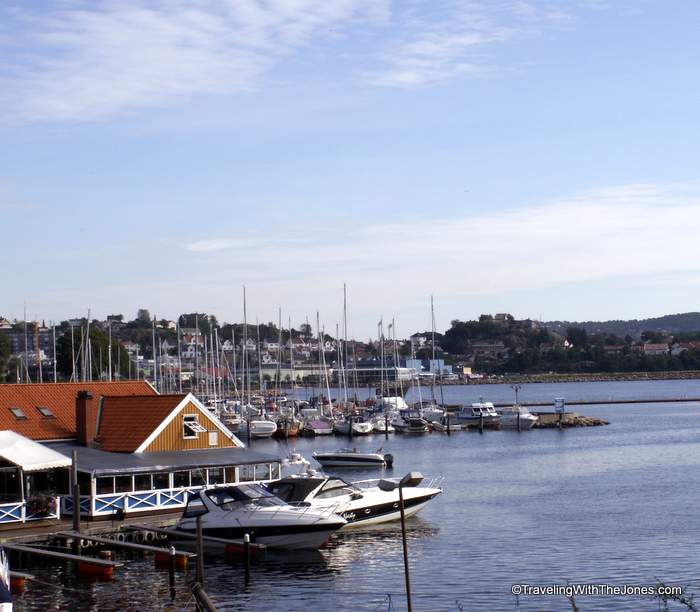
Kristiansand, Norway 1. Kristiansand is Norway’s outdoor playground with mild temperatures mild and little snow. The city is warmer than most other places at the same latitude such as Anchorage, Alaska. Average January temperatures range from 27 °F – 36 °F , while July average daily temperatures ranges from 50 °F – 70 °F.

Monument of King Christian IV, founder of Kristiansund, Norway. Photo by ?????? ?? of the Ukraine.

Monument of King Christian IV, founder of Kristiansund, Norway. Photo by ?????? ?? of the Ukraine.

2. Kristiansand was founded on July 5, 1641 King Christian IV. The city is named after its founding King, and the word “sand,” referring to the sandy headland upon which the city was established.

18TH CENTURY MAP- KRISTIANSAND, NORWAY

3. The city’s name was often written Christianssand until 1877, when it was changed to Kristianssand by an official spelling effort to make the city name “more Norwegian.”  The name was again changed to its present form with a single “s,” Kristiansand, in 1889.

Kristiansand Cathedral. Photo by Bjoertvedt.

Kristiansand Cathedral. Photo by Bjoertvedt.

4. Completed in 1885, the Kristiansand Cathedral was was designed by architect Henrik Thrap-Meyer in Neo-Gothic style.  One of Norway’s largest cathedrals, the church measures 230 ft long and 128 ft wide, with a single 230 ft tower.
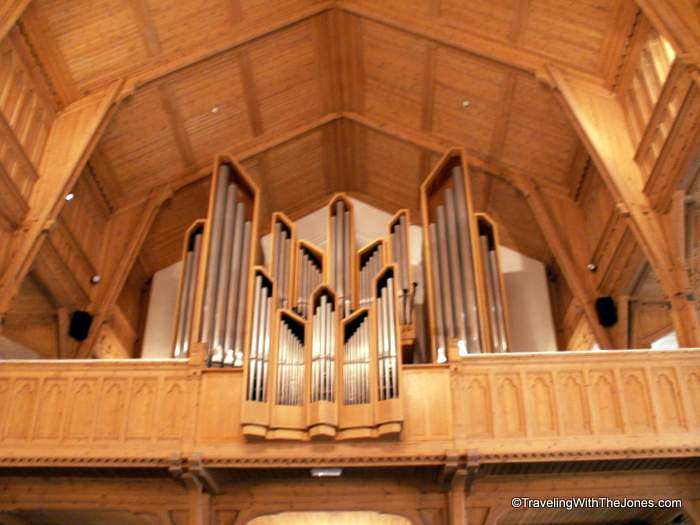
organ in Kristiansand Cathedral, Kristiansand, Norway

organ in Kristiansand Cathedral, Kristiansand, Norway.

5.  The upper part of the Cathedral Tower was damaged by artillery shell during April, 1940 attack on Kristiansand by Nazi Germany. The church’s interiors are modest but there’s a gorgeous altarpiece by Norwegian artist Eilif Peterssen. The church can be visited weekdays between 11am and 2pm.
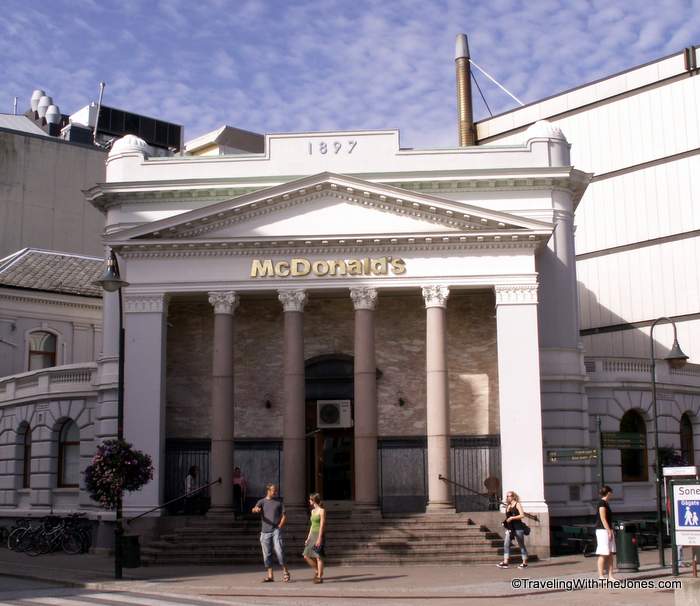
McDonald's in Kristiansand, Norway 6. One of the world’s most unusual McDonald’s restaurants is located in downtown Kristiansand in a former bank building.

Norwegian Crown Princess Mette-Marit and Crown Prince Haakon. Photo by Holger Motzkau, 2010.

Norwegian Crown Princess Mette-Marit and Crown Prince Haakon. Photo by Holger Motzkau, 2010.

7. Kristiansand is the birthplace of Mette-Marit, the Crown Princess of Norway (born Mette-Marit Tjessem Høiby). Married in 2001, she is the wife of Crown Prince Haakon, heir apparent to the throne of Norway.

Kilden Performing Arts Center. Photo by Knut Arne Gjertsen.

Kilden Performing Arts Center. Photo by Knut Arne Gjertsen.

8. Opened in 2012, the Kilden Performing Arts Center is a theater and concert hall with four stages on Odderøya in Kristiansand, Norway. The building cost nearly 1.7 billion Norwegian krones. It houses Agder Teater, Kristiansand Symphony Orchestra (KSO) and Opera Sør.

Tigers swimming at the Kristiansand Zoo. Photo by Berit from Redhill/Surrey, UK.

Tigers swimming at the Kristiansand Zoo. Photo by Berit from Redhill/Surrey, UK.

9. Founded in 1964, the Kristiansand Zoo (Dyreparken) and Amusement park is Norway’s largest zoo and most popular tourist attraction. The zoo houses more than 800 animals of nearly 100 different species. In April, 2016, the zoo provoked parents’ fury after feeding a beheaded zebra to its tigers in full view of visiting children. Zoo officials said the healthy zebra was killed because of overpopulation.

Learn more about Kristiansand, Norway with these resources:


The 2016 Economic and Product Market Databook for Kristiansand, Norway

Lonely Planet Norway

Have you got a fun fact to add about Kristiansand, Norway?

Check out these other “Fun Facts” posts: 

Follow us on Twitter or interact with us on Facebook

Or, check out our boards on Pinterest and/or our photos on Instagram.
{ 0 comments }

A Visit to Fusterlandia in Havana, Cuba

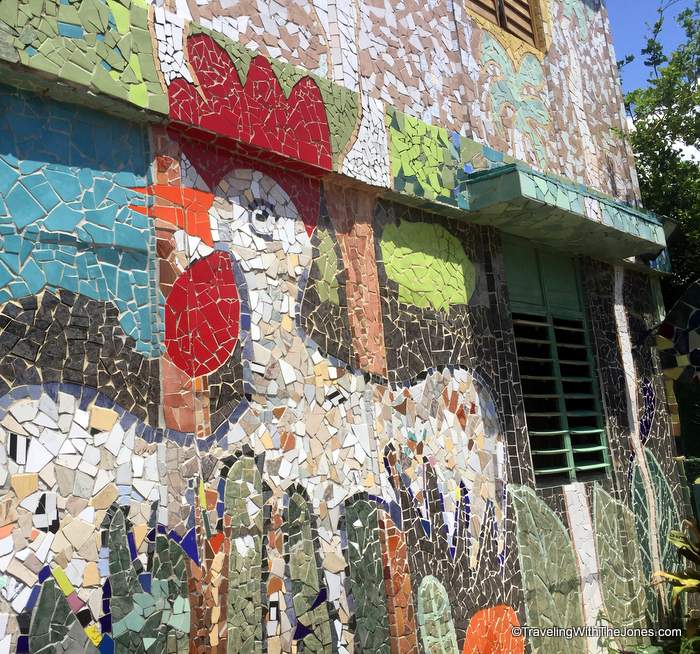
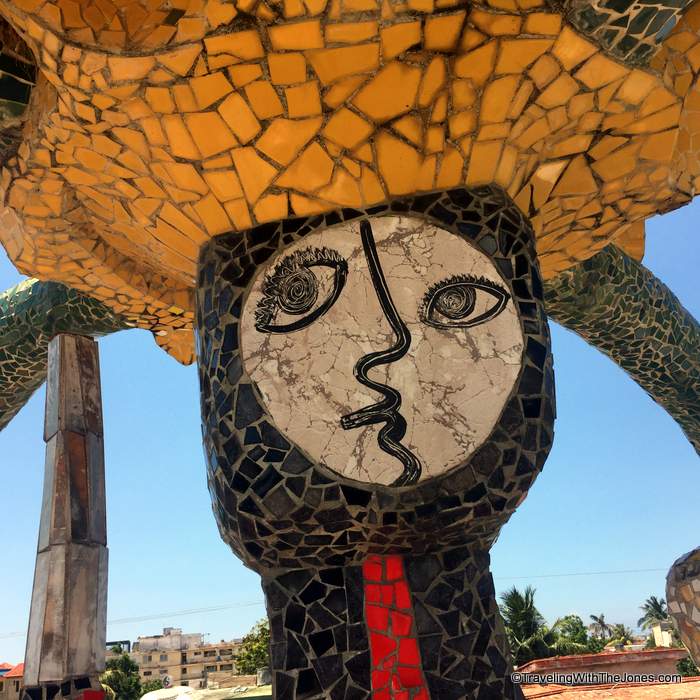
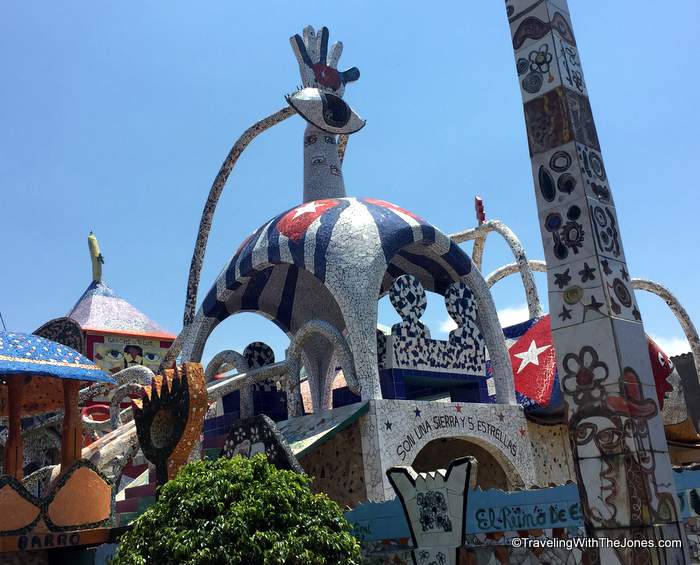
Could you imagine living in a neighborhood where practically every surface of every building was decorated like this?

artwork, Fusterlandia, Havana, CubaA neighborhood where mosaic-covered sculptures grow out of buildings?

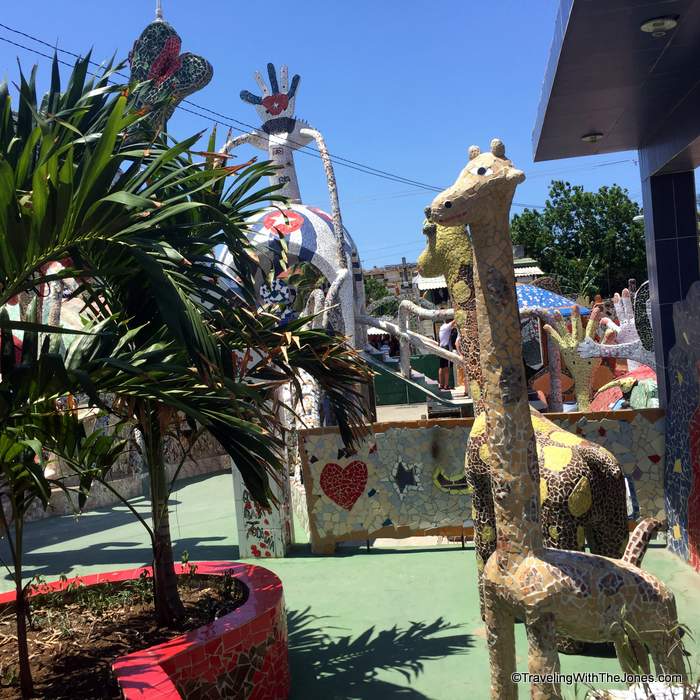
Fusterlandia, Havana, CubaA neighborhood with few surfaces unadorned with a combination of paintings and pieces of tile composed into an explosion of color and playful art forms.

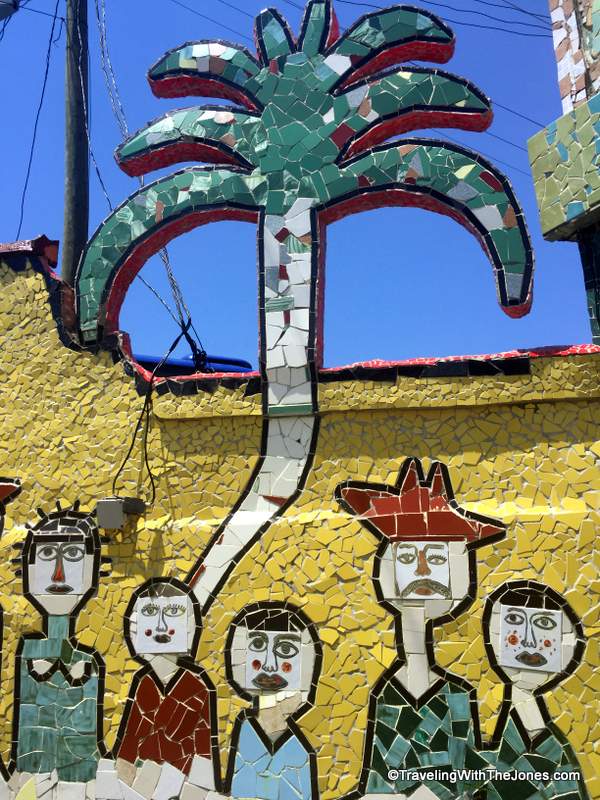
wall in Fusterlandia, Havana, CubaWelcome to Jaimanitas, a community on the northwestern edge of Havana, Cuba. Today, it’s known as Fusterlandia, and is the home, studio and artistic dream (or wild kingdom) of artist José Rodriguez Fuster, who moved to previously run-down neighborhood more than 30 years ago.

inside Fusterlandia, Havana, CubaFuster (as everyone in the neighborhood calls him) had visited Europe and returned to Cuba filled with inspiration from Gaudi in Barcelona and Brancusi in Romania. He set out to change the look of his home and studio, and over the years, his work has changed the look of the entire neighborhood in a dramatic way.

Artist José Rodríguez Fuster, of Havana, Cuba. Photo by Soydcuba.

Artist José Rodríguez Fuster, of Havana, Cuba. Photo by Soydcuba.

The community of Jaimanitas is now a unique work of public art where Fuster has decorated more than 80 houses with ornate murals, each designed to suit the personality of his neighbors.

The artful community now known as “Fusterlandia” draws tourists from around the world, who visit the artist’s residence and studio, often buying his painting and ceramics. Fuster’s art sales fund more neighborhood works.

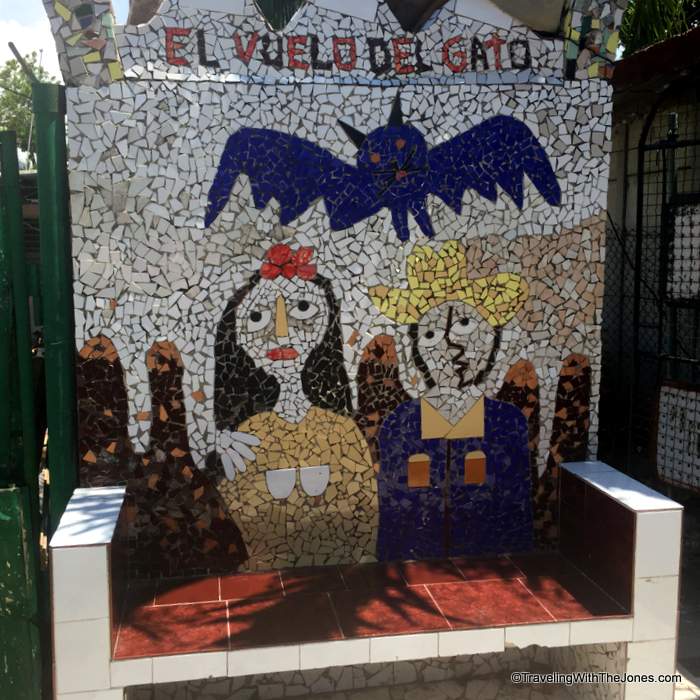
wall art in Fusterlandia, Havana, Cuba "the flying cat" -Fusterlandia, Havana, Cuba

I had the opportunity to visit Fusterlandia on the Best of Havana tour, which was included in my 7-day cruise to Cuba on the Fathom Adonia.  Fathom is the new social impact cruise brand from Carnival Corporation. The 710-passenger ship sails to three ports in Cuba, round trip from Miami, every other week.

The Fathom Cuban cruise itinerary includes two days of people-to-people tours while the ship is docked in Havana. Guests can take the people-to-people tours, or set out on their own “self-guided” people-to-people experience.

A NOTE IF YOUR ARE TAKING A FATHOM CRUISE TO CUBA: not every Best of Havana tour visits Fusterlandia because it would be too many people in the small neighborhood. If this sounds like something important to you, be sure to ask the Fathom impact guides which tours will include this stop on their agenda, and ask to be put on one of those tours.

Alternatively, you could hire a taxi to take you to Fusterlandia on your own.

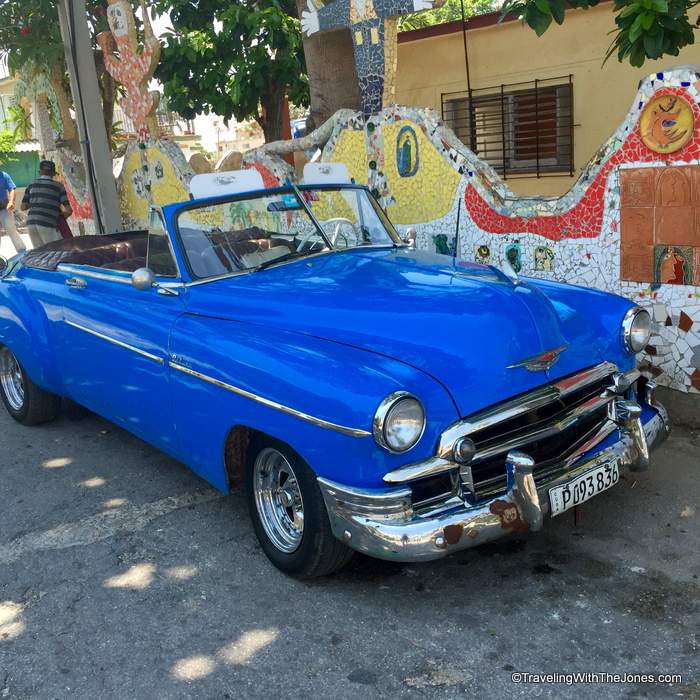
historic car -Fusterlandia, Havana, CubaThere are many classic cars in Havana; but this one I saw in the Fusterlandia neighborhood was my favorite. In the background behind the car, you can see more of Fuster’s artwork.

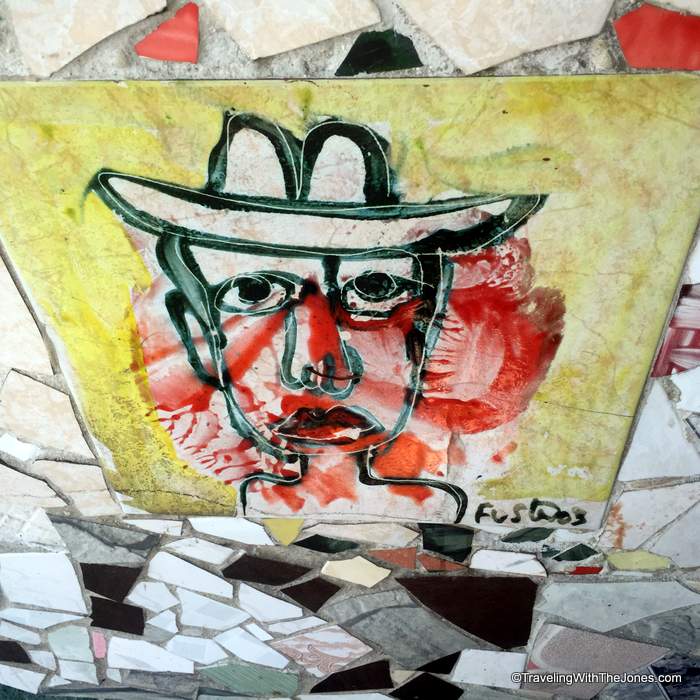
artwork by José Rodríguez Fuster, of Havana, Cuba. One has to look close to find paintings signed by Fuster, like the one above that is incorporated into a larger mosaic work.

Have you visited Havana, Cuba? If not, would you consider a cruise to Cuba? 

Other Cuba-related posts, in case you missed them: 

Follow us on Twitter or interact with us on Facebook

Or, check out our boards on Pinterest and/or our photos on Instagram.
{ 3 comments }

One of my favorite parts of my visit to Havana, Cuba was a side trip about 15 miles out of the city to San Francisco de Paula. It’s the location of Finca La Vigía, the Ernest Hemingway Museum.

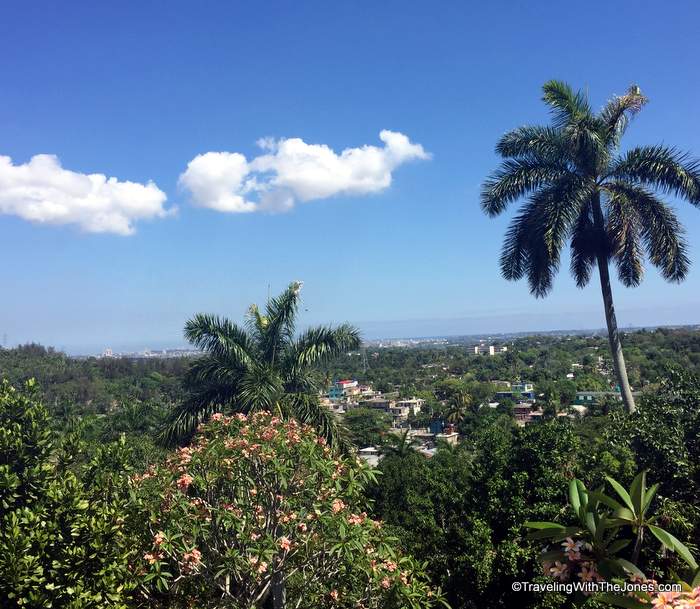
view from Finca La Vigía, the Ernest Hemingway Museum, CubaWhile in Havana via a Fathom cruise to Cuba on the Adonia, two other travelers and I broke away from the group tour and hired a taxi to drive us about 30 minutes to reach the 13-acre estate known as La Finca Vigia (Spanish for “lookout farm”) that became a refuge for Hemingway in 1939.

Built in 1886 by a Spanish Architect Miguel Pascual Baguer, Hemingway purchased Finca Vigia in 1940 for a cost of $12,500. He would live there for two decades, until purchasing a home near Ketchum, Idaho in 1959 to get out of the subtropical heat for part of the year. After Hemingway’s death in 1961, the Cuban government seized ownership of the property from Mary Hemingway. The house and grounds are said to be virtually intact as Hemingway left them.

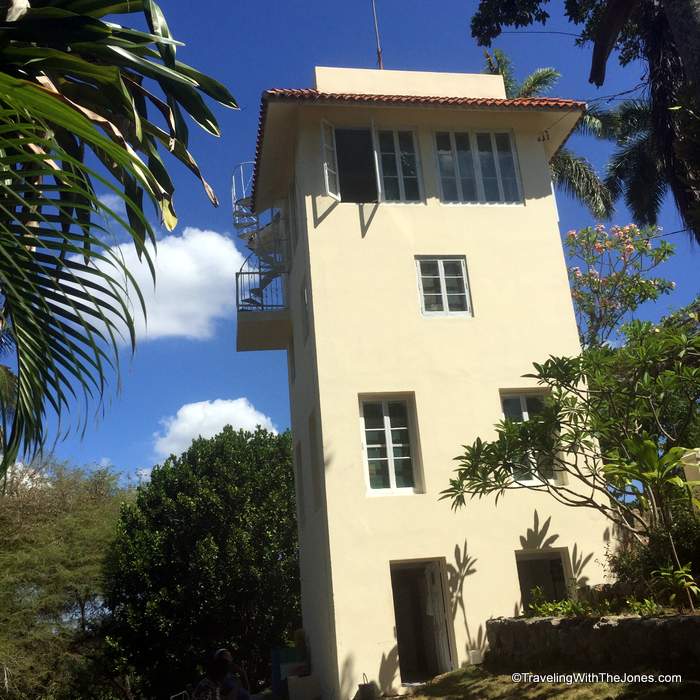
the Tower, Finca La Vigía, the Ernest Hemingway Museum, CubaSeparate from the main house, Hemingway’s forth wife Mary had the tower built as a high-rise writing room with a killer view. The photo above shows the back side of the tower.

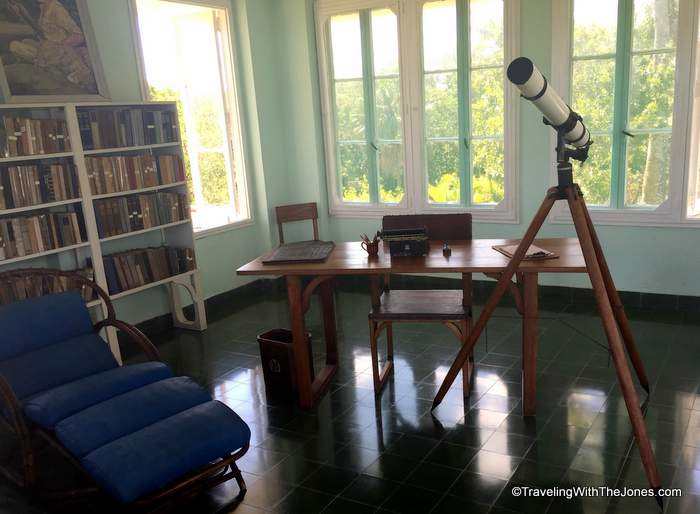
view from inside the Tower, Finca La Vigía, the Ernest Hemingway Museum, CubaVisitors willing to climb the tower’s steep stairs are rewarded with a peek inside. Visitors cannot enter the room, but the local guide urged me to give her my phone to take photos for me. These guides are present throughout the estate, and work for tourists’ tips.

writing room at the top of the Tower, Finca La Vigía, the Ernest Hemingway Museum, CubaIt is easy to picture Hemingway being inspired to write For Whom the Bell Tolls and The Old Man and The Sea.

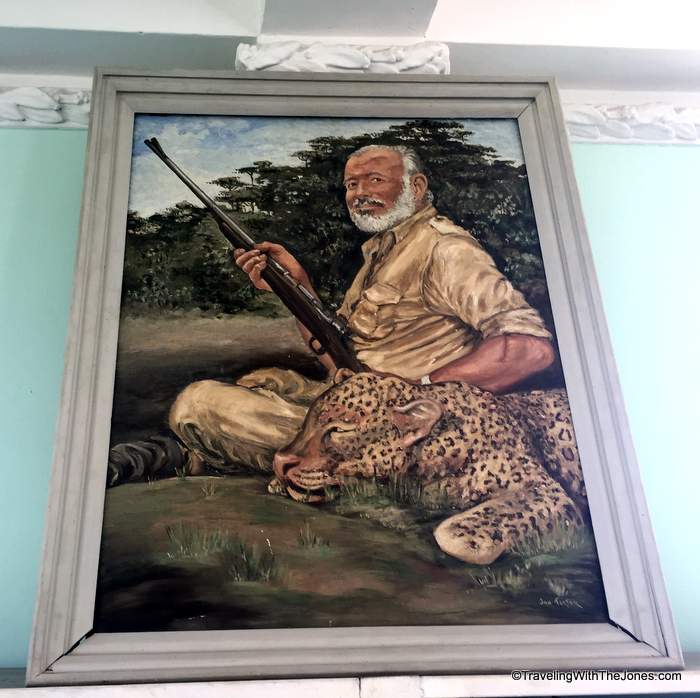
painting at the top of the Tower, Finca La Vigía, the Ernest Hemingway Museum, CubaAlthough I did not ask her to take them, I appreciate the close-up photos the guide took, like this one of a painting of Hemingway on a hunt in Africa.

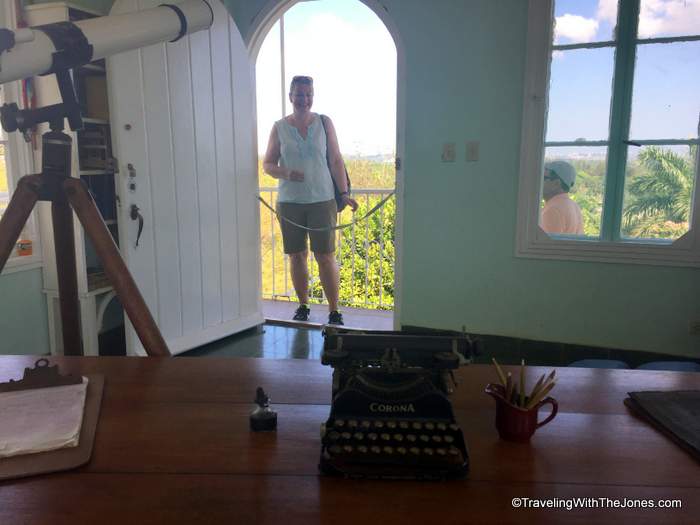
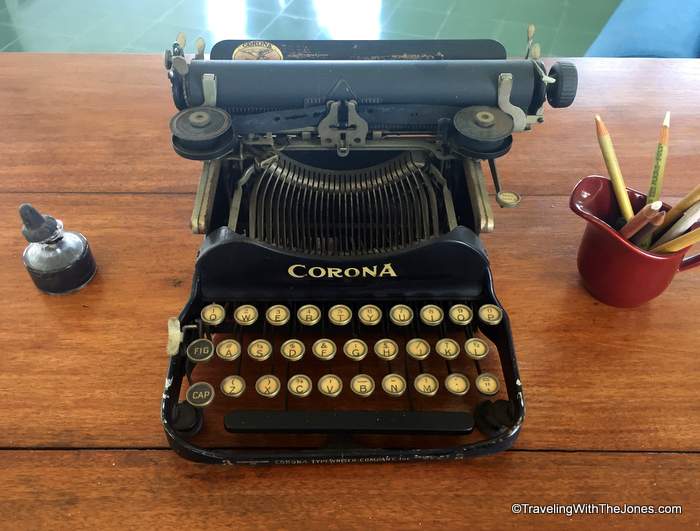
typewriter at the top of the Tower, Finca La Vigía, the Ernest Hemingway Museum, CubaThe guide also shot a nice close-up of the Corona typewriter at the desk in the tower.

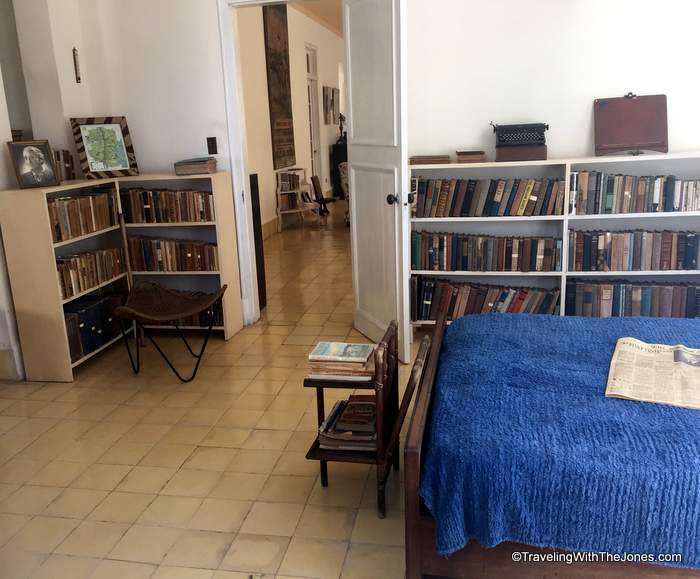
bedroom, Ernest Hemingway Museum (La Finca Vigia), near Havana, Cuba A. E. Hotchner, Hemingway’s friend, claims that while the author enjoyed view from the tower, and found it quiet place to read, he actually preferred to complete his serious writing on the typewriter on top of the bookcase in his bedroom in the main house. (Look for typewriter in photo above.)

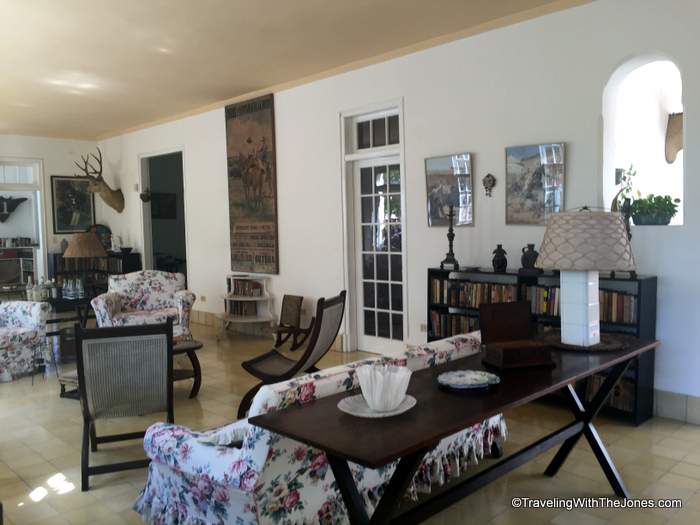
living room, Finca La Vigía, the Ernest Hemingway Museum, CubaGlancing into the living room at Finca La Vigía, one can still see the liquor and mixer bottles by the sofa.

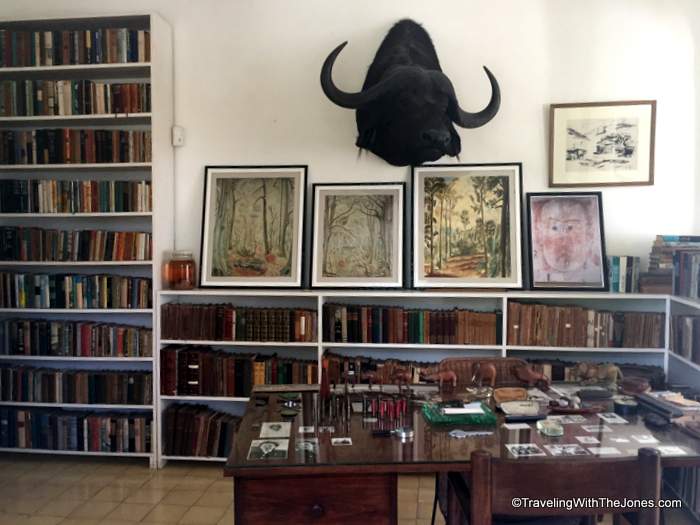
den, Finca La Vigía, the Ernest Hemingway Museum, CubaEvery room at Finca La Vigía is filled with books, and hunting trophies.

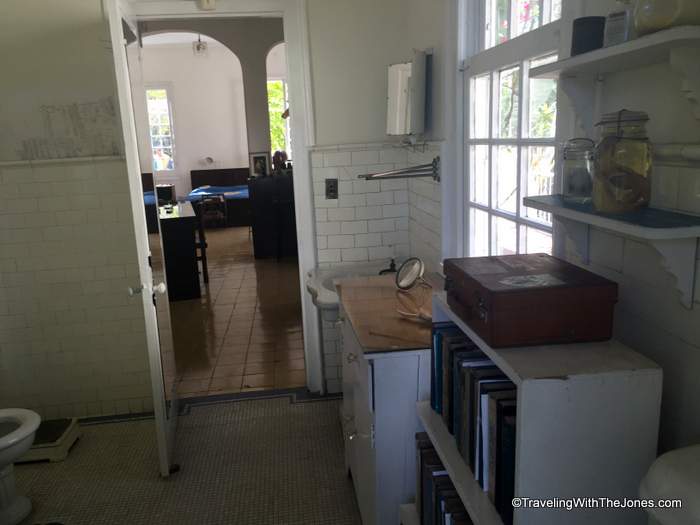
bathroom, Finca La Vigía, the Ernest Hemingway Museum in CubaHemingway even kept books in the bathroom. He also wrote on the wall (left of door) numbers tracking his blood pressure, weight and number of words written on a given day.

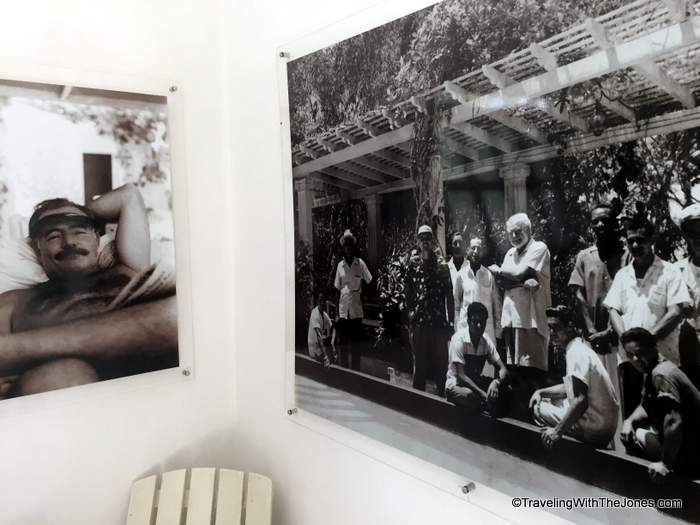
pool house, Finca La Vigía, the Ernest Hemingway Museum in CubaThere’s much more to see at Finca La Vigia including the pool where Ava Gardner supposedly swam naked, photos of “Papa” and his friends in the pool house, and his beloved fishing yacht, Pilar.

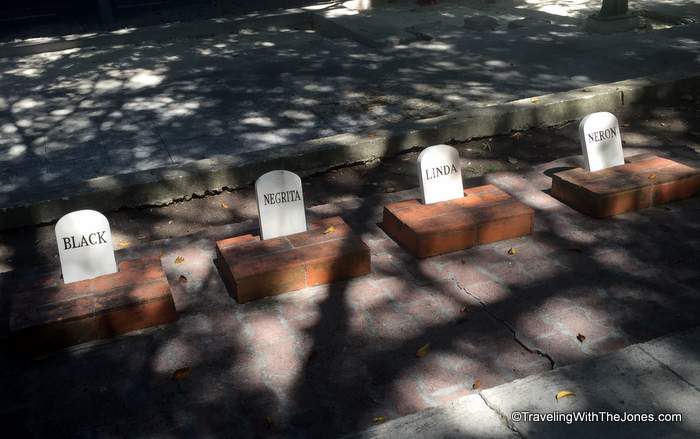
dog cemetery Finca La Vigía, the Ernest Hemingway Museum in CubaThere’s even the dog cemetery, pictured above.

Plus, an outdoor bar for visitors to enjoy a special Hemingway cocktail with Havana Club rum sweetened with freshly-pressed sugarcane. While enjoying my cocktail, I met a man with a special connection to Kansas City Royals baseball.

The Hemingway Museum at Finca Vigia is generally open:

  • 10am to 4pm, Monday thru Saturday
  • 9am to 1pm, Sunday

Admission is $5 CUC per person. Our taxi ride from Havana to the Museum, with the driver waiting, and our return cost $30 CUC.

Learn more about Hemingway’s time in Cuba:

Writer, Sailor, Soldier, Spy: Ernest Hemingway’s Secret Adventures, 1935-1961
Hemingway’s Cuban Son

Have you visited one of Hemingway’s houses in Key West, Cuba or Idaho? 

Other Cuba-related posts: 

Follow us on Twitter or interact with us on Facebook

Or, check out our boards on Pinterest and/or our photos on Instagram.
{ 3 comments }

In anticipation of an upcoming visit to Norway, we did a little advance research on the city of Stavanger.

Stavanger, Norway mapStavanger is a city of approximately 130,000 residents located on a peninsula on the southwest coast of Norway.

21 Interesting Facts About Stavanger, Norway

1. The first traces of settlement in the Stavanger region date to the Ice Age and the time of the Vikings.

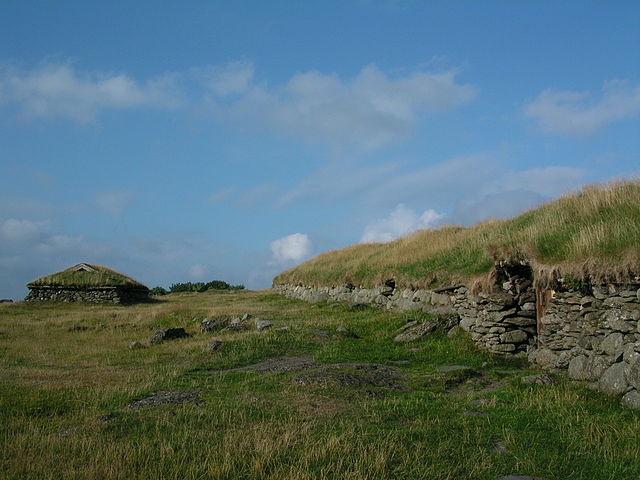
Iron age farm reconstructed in Stavanger, Norway. Photographer: Gunleiv Hadland

Iron age farm reconstructed in Stavanger, Norway. Photographer: Gunleiv Hadland

2. Just two miles from central Stavanger, the Jernaldergarden Iron Age farmstead recreates today how Vikings lived in the area around 350-550 BC —with longhouses and burial mounds—based on excavations conducted by the Museum of Archaeology.

3. In 872 — in the area around Stavanger — King Harald Fairhair gathered all of Norway under one crown in the Battle of Hafrsfjord.

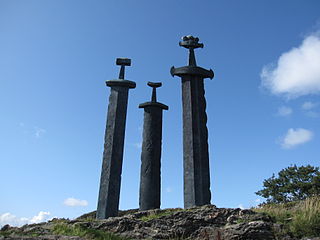
“Swords in the Rock” (Svwes i Fjell) Photo by SteveJothen

4. Today, in the Hafrsfjord neighborhood, the imposing Swords in the Rock (Sverd i Fjell) monument commemorates the historic battle. Three giant bronze swords standing 33 ft. fall are stabbed into the rock of a small hill. Created by Norwegian sculptor Fritz Røed, the largest sword represents the victorious King Harald, and the two smaller swords represent the defeated petty kings.

5. One of Norway’s oldest cities, Stavanger was officially founded in 1125, the same year that the Stavanger Cathedral was completed.

Interior of the Stavanger Cathedral.

Interior of the Stavanger Cathedral.

6. Stavanger Cathedral is Norway’s only active cathedral that dates to the Middle Ages.  Originally built between 1122 and 1125 in the Anglo-Norman style, it was reconstructed with a Gothic chancel after suffering fire damage in 1272.

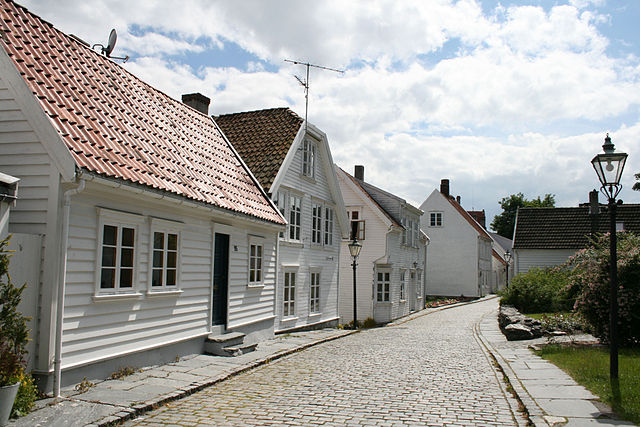
7. Home to nearly 200 18th and 19th century white timber houses, Stavanger’s Old Town (Gamle Stavanger) is preserved as a historical monument. Closed to cars, the charming, pedestrian-friendly area includes restaurants, an open-air market, and small fishing boats along the harbor selling freshly caught shrimp, crab and lobsters.

Gamle Stavanger (Old Stavanger) This photo by Jarle Vines.

Gamle Stavanger (Old Stavanger) This photo by Jarle Vines.

8. Located on an old wharf, the Stavanger Maritime Museum shows the maritime development that occurred through the city, from early sailing ships to emigration to America to the modern oil industry support vessels.

9. Herring fisheries gave Stavanger new life during the first half of the 20th century. Home to 50+ canneries, Stavanger was known as the “canned capital of Norway” in the 1950’s. While the last of these factories closed in 2002, the Norwegian Canning Museum details Stavanger’s role in the fish-canning industry.

10. In 1969, a new boom started when oil was first discovered in the North Sea.  With its close proximity to North Sea oil-fields, air connections, and good harbor, Stavanger was well-positioned to take advantage of the increased petroleum-exploration and production activity.

11. Today oil is Stavanger’s key industry, making the city the “Oil Capital of Norway.”

12. Norwegian energy company Statoil is headquartered in Stavanger.

13. Every two years, Stavanger hosts the Offshore Northern Seas oil and gas industry exhibition during the last week of August.  Offshore Northern Seas 2016 will be the 21st ONS since 1974, and run from August 29th to September 1st, 2016.

14. Housed in a slab-like building resembling an oil platform, the Norwegian Petroleum Museum showcases the history of oil and gas exploration. Opened in 1998, it is Stavanger’s most- visited museum.

15. The Joint Warfare Centre (JWC) is a NATO military establishment headquartered in Stavanger.

Entrance to the Rogaland Art Museum in Stavanger, Norway. Photo by Kristian Kongsvoll.

Entrance to the Rogaland Art Museum in Stavanger, Norway. Photo by Kristian Kongsvoll.

16. The Rogaland Art Museum features paintings by Norwegian artist Edvard Munch, Christian Krogh, Eilif Peterssen and Harriet Backer. The Stavanger museum also has the largest collection of Lars Hertervigs’ work.

A man standing on Kjeragbolten in Norway. Photo by Scoundrelgeo.

A man standing on Kjeragbolten in Norway. Photo by Scoundrelgeo.

17. Close to Stavanger are several famous outdoor attractions. Kjeragbolten is a rock wedged in the cliff approximately 3,200 feet above the fjord. The straight fall down to the fjord makes Kjerag a very popular location for BASE jumping.

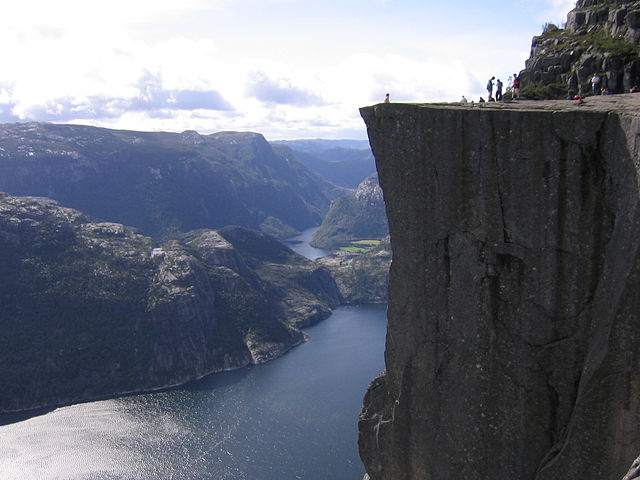
Pulpit Rock (Preikestolen) in Norway. Photo by Aconcagua.

Pulpit Rock (Preikestolen) in Norway. Photo by Aconcagua.

18. Pulpit Rock (Preikestolen) is an often-photographed steep cliff which rises 1,982 ft. above the Lysefjord. After making a 2.4 miles strenuous hike up to the top of the cliff, hikers reach a relatively flat top of approximately 82 ft. × 82 ft., which provides a breathtaking view of the fjord below.

19. Along the coast south of Stavanger there are a number of large, sandy beaches within close reach from the city.

Ullandhaug Tower, Stavanger, Norway. Photo by Anders Almaas.

Ullandhaug Tower, Stavanger, Norway. Photo by Anders Almaas.

20. Built in 1964, the 210 foot high Ullandhaug Tower sits atop a hill dotted with Viking stone relics. While the upper levels of the telecommunications tower are not accessible to the public, you can take the elevator up to the café level and get good views of Stavanger and the surrounding fjords.

21. Norway’s largest bank robbery occurred in Stavanger at the NOKAS cash depot in in on April 5, 2004. The thieves escaped with 57.4 million kroner (about $10 million USD.) While the perpetrators were convicted, 51 million kroner of the stolen monies are yet to be recovered. This story is the basis of the movie Nokas , which premiered in October, 2010.

Consult these resources to learn more about Stavanger, Norway:


From Beaches to Mountains: 38 walks and hikes in the Stavanger Region


Stavanger Travel Guide: Sightseeing, Hotel, Restaurant & Shopping Highlights

Check out these other “Fun Facts” posts: 

Follow us on Twitter or interact with us on Facebook

Or, check out our boards on Pinterest and/or our photos on Instagram.
{ 0 comments }