Recently, after a late-night arrival into the Ft. Lauderdale Airport, we stayed one night in the Hilton Garden Inn Ft. Lauderdale Airport-Cruise Port hotel.
Here is a look around the Hilton Garden Inn Ft. Lauderdale Airport – Cruise Port Hotel, which is located about three miles south of the Fort Lauderdale Hollywood International Airport in Dania, Florida.
This hotel offers a complimentary 24-hour airport shuttle, once an hour. We probably at the “wrong” time, as it seemed to take forever for the shuttle to arrive. Of course, our flight had been delayed and we were anxious to get to the hotel, which probably added to our perception of a “long” wait time.
We checked into room 523.
Rooms in Hilton Garden Inn hotels tend to be fairly similar, whether they are in Ft. Lauderdale, Florida or Rochester, Minnesota. The king room offers everything the business traveler needs, from free Wi-Fi to bedside plugs to a large, flat-screen television.
The leisure traveler is likely to appreciate the microwave, refrigerator, and Keurig coffee maker in the room, next to the slide door closet.
The bathroom was standard, although the flower in the towels was an unexpected touch.
Kids love the pool, directly off the main lobby. We enjoyed combination buffet and made-to-order breakfast (complimentary to Hilton Honors Diamond members) at the restaurant in the lobby.
While the restaurant is open in the evening, it was long closed when we arrived well after midnight. Lucky for us, there were snacks and drinks available for purchase in the pantry area next the hotel’s front desk.
Our bottom line on the Hilton Garden Inn Ft. Lauderdale Airport – Cruise Port Hotel:
The hotel offers an excellent location within 3 miles of the Ft. Lauderdale airport.
It is perfect for a brief pre or post cruise stay, or for a late-night arrival from the airport.
We enjoyed the buffet and made-to-order breakfast at the on-site restaurant.
The staff was welcoming and friendly.
The hotel is a Hilton Honors Category 5 for award stays.
We will be visiting the Azores during a transatlantic cruise in November. Our visits to new destinations are more enjoyable when we do a little background research prior to our arrival.
Here are some highlights of what we learned about the Azores, a group of nine islands that have been a popular stop in the Atlantic Ocean since the early days of transatlantic exploration.
25 Interesting Facts About the Azores
1. The Azores are a group of nine volcanic islands spread over 370 miles in the North Atlantic Ocean.
The Azores are divided into three groups: the eastern (Sao Miguel and Santa Maria islands), the central (Terceira, Graciosa, Sao Jorge, Pico and Faial islands), and the western (Flores and Corvo islands.)
2. Home to about 250,000 people, the Azores are known for their vibrantly-colored blue green lakes, fertile prairies, volcanic craters, colorful hydrangeas, 15th century churches, and majestic manor houses.
3. Although they are located about 850 miles west of continental Portugal, the Azores are an autonomous region of Portugal, the same status as the Portuguese island of Madeira.
4. The nine islands and their many islets add up to 906 square miles of land mass. Corvo, the smallest island, covers seven square miles, while São Miguel, the largest, is 293 square miles. The seven other islands include Faial, Flores, Graciosa, Pico, São Jorge, Santa Maria and Terceira. Since these remote islands were settled sporadically over two centuries, their culture, dialect, cuisine and traditions vary considerably.
Horta was a waypoint in transatlantic shipping; today it is the home of the Azorean regional parliament and capital of the island of Faial.
5. Ever since the Azores became an autonomous region of Portugal in 1976, each of three branches of its government is located on a different island. The executive branch is located in Ponta Delgada, on São Miguel Island. The legislative branch is located in Horta on the island of Faial. The judicial branch is located in Angra do Heroísmo on the island of Terceira.
6. Year-round temperatures in the Azores range between 57°F and 71°F.
7. Tourism, government jobs, fishing and agriculture are the major industries in the Azores. The fertile soil yields a variety of crops, vineyards and grazing for dairy cattle and other livestock.
Mount Pico, the highest mountain in the Azores and Portugal, as seen from the island of São Jorge.
8. Mount Pico, on the island of Pico, at 7,713 feet above sea level, is the highest point in the Azores and all of Portugal.
9. When measured from their base at the bottom of the ocean to their peaks, the Azores are actually some of the tallest mountains on the planet.
10. While they are not native to the Azores, colorful hydrangeas flowers were introduced to the islands and are today are very common. Faial Island is known as the “blue island” due to the vast number of hydrangeas present.
The Sete Cidades twin lakes of São Miguel, Azores, Portugal. Photo by Maros.
11. The Azores were detailed on a Catalan Atlas drawn and written in 1375, but the islands were officially “discovered” in 1431 by Gonçalo Velho Cabral. São Miguel was first settled in 1444, under the command of Cabral – at the site of modern-day Povoação.
12. Although the Azores were settled by immigrants from mainland Portugal, the islands were also populated by Flemish, French and Spaniards, as well as Moorish prisoners and African slaves from Guinea, Cape Verde and São Tomé. As a result, the Azorean population today differs genetically from the mainland Portuguese.
13. As early as the 1600’s, the Azores began getting overpopulated, resulting in Azoreans immigrating to Brazil, Uruguay, the United States and Canada.
14. Azoreans founded Florianópolis and Porto Alegre in the Southern Region of Brazil.
15. Between 1921 and 1977, about 250,000 Azoreans immigrated to U.S. cities of New Bedford, Bristol, Barrington, Pawtucket, Central Falls, West Warwick, Hudson, Marlborough, East Providence, River Point, Taunton and Fall River in Rhode Island and Southeastern Massachusetts.
16. Religious festivals, patron saints and traditional holidays are important to the Azorean people, who are primarily Roman Catholic. Azoreans celebrate Carnival (a festive season that occurs before Lent, usually in February) with parades, pageants lively music, colorful costumes, hand-made masks, floats, bullfights and the running of bulls in the streets.
The solemn procession of the Lord Holy Christ of the Miracles. Photo by Ruben JC Furtado.
17. On the fifth Sunday after Easter, the Festival of the Lord Holy Christ of the Miracles religious event takes place in Ponta Delgada on the island of São Miguel. Portuguese pilgrims travel to Ponta Delgada to participate in an afternoon procession behind the image of Christ along the flower-decorated streets of the city.
18. Azorean handicrafts including blue and white ceramics, wicker baskets, fig tree pith miniatures, and flowers made with fish scales are popular purchases by visiting tourists.
19. Azorean cuisine is a rich, hearty and peasant-based style of cooking. Famous local food of the Azores includes Cozido das furnas (a one-pot stew cooked by the hot springs,) octopus stewed in wine, kale soup, fried mackerel, locally-grown pineapples, the sweet/spicy Pimenta da terra (cherry-red peppers,) and fresh rich dairy products such as local yogurt, butter and cheeses. Queijo do Pico is a salty cow’s milk cheese from the island of Pico.
20. In the 1750’s, tea leaf was found growing in the wild in the Azores. Commercial tea production in the Azores began in the 1870’s and continues today. The Azores’ tea-drying process using the fresh ocean air gives its green teas a unique fragrant scent when they are brewed.
21. Winemaking in the Azores dates back to the 15th century, as Catholic religious orders planted vineyards as soon as they arrived. While all nine of Azorean islands originally had vineyards, disease outbreaks during the 1850s devastated most. Today wine grapes are grown on the islands of Pico, Terceira and Graciosa.
22. Azorean wines are traditionally made mainly from three grape varieties — Verdelho, Arinto, and Terrantez. Vines are typically grown in little pens surrounded by stonewalls made of volcanic rocks to protect them from the winds and cool evening temperatures.
23. Author Mark Twain visited Horta in 1867 during his “Great Pleasure Excursion” cruise through Europe and the Holy Land on board the chartered Quaker City ship with a group of Americans. Twain humorously chronicled his journey including his time in the Azores in his Innocents Abroad book published in 1869.
Lajes Field, Terceira, Azores, Portugal
24. The United States maintains a NATO air base on the island of Terceira. The Lajes Air Base provides a strategically-located mid-Atlantic link for US and Allied Forces to Europe, Africa and the Middle East. Lajes Field is a multi-use airfield, home to the Portuguese Air Force Base, a United States Air Force detachment unit and a regional air passenger terminal.
25. Just before the start of the Iraq War in 2003, the Azores was the location for a summit meeting of United States President George W. Bush, British Prime Minister Tony Blair, Spanish Prime Minister José María Aznar, and Portuguese Prime Minister José Manuel Durão Barroso. Learn more about the Azores with these resources: Top 10 Azores
We’ve visited Barcelona, Spain several times, and have loved the food and the unique architecture like the rooftop of Antoni Gaudí’s Casa Milà. In anticipation of an upcoming return visit, we did a little background research on the city.
32 Interesting Facts about Barcelona, Spain
View of Barcelona, Spain from space from NASA.
1. Located on the coast of the Mediterranean Sea, Barcelona is Spain’s second largest city with 1.6 million residents.
2. Barcelona is the capital of Catalonia, an autonomous community of Spain that consists of four provinces: Barcelona, Girona, Lleida, and Tarragona.
3. Both Catalan and Spanish are official languages in Barcelona. While Spanish is spoken more frequently, Catalan is understood by 95 percent of Barcelona residents.
4. Barcelona has a Mediterranean climate with mild, humid winters and warm, dry summers. Winter temperatures range from 39 to 63 °F, compared to summertime temperatures between73 to 90 °F. Frosts and snow are rare.
5. Each year, 8 million tourists visit Barcelona, making it Europe’s third most-visited city after London and Paris.
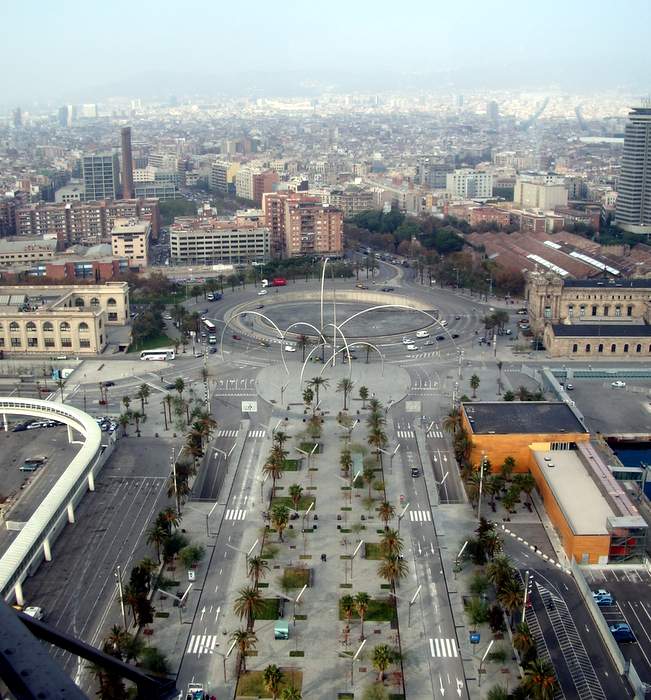
6. With its key location on the Mediterranean Sea, the Port of Barcelona is Europe’s largest cruise port, with approximately 3.6 million cruisers passing through the port each year.
7. The Barcelona Maritime Museum is located in the historic Barcelona Royal Shipyard, a former military building dating to the 13th century, with a Roman graveyard found underneath that structure.
8. There are two stories about the founding of Barcelona. One version claims the city was founded by Hercules, 400 years before the building of Rome.
9. The second version attributes the founding of Barcelona to Carthaginian general Hamilcar Barca, father of Hannibal, who named the city Barcino after his family in the Third century BC.
10. A typical Roman grid plan is still visible today in Barcelona’s Barri Gotic (Gothic Quarter.) Some remaining fragments of the Roman walls have been incorporated into the Basilica La Seu cathedral founded in 343.
11. In 1794, French astronomer Pierre Méchain used the Montjuïc castle overlooking the Barcelona harbor as one endpoint for his survey providing the official measurement of a meter.
The Columbus monument. Photo by Diliff.
12. The Columbus monument, built in 1888 for the World Exposition, honors Christopher Columbus’ first voyage to the Americas, and serves as a reminder that he reported to Queen Isabella I and King Ferdinand V in Barcelona after his first trip to the new continent.
13. While some tour guides may claim that Columbus is pointing towards America, he is actually pointing to somewhere near Constantine, Algeria, or most likely, simply out to sea.
14. The Art Nouveau movement throughout Europe between 1880 and 1950 left an important legacy in Barcelona, including the work of architect Antoni Gaudí.
15. Gaudi is best-known for the immense, iconic but still unfinished Sagrada Família cathedral, which has been under construction since 1882.
16. Antoni Gaudi was not the first architect to work on the Sagrada Família. Architect Francesc del Villar was first commissioned to design the church on that site. When he resigned a year into the project, Gaudi took over and completely revamped the design.
17. Barcelona has 9 UNESCO World Heritage Sites. Seven of them were created by Gaudi:
Park Güell
Palau Güell
Casa Milà
Casa Vicens
La Sagrada Família
Casa Batlló
Crypt of the Church at Colonia Guell
The two other UNESCO sites were designed by architect Lluis Domenech i Montaner:
Palau de la Música Catalana – one of the world’s leading concert halls
Hospital de Sant Pau
The interior of the Palau de la Música concert hall. Photo by Lohen11.
18. Barcelonans are crazy about football (soccer to Americans.) The city is home to one of the worlds’ largest and richest football clubs, FC Barcelona. The club’s Camp Nou stadium in Europe’s largest, with a capacity of 100,000. More 1.5 million people visit the attached FC Barcelona Museum each year, making it Barcelona’s most-visited museum.
19. Despite their world-class status today, five beaches in Barcelona did not exist before 1992 Summer Olympics. The seacoast was covered by industrial companies. In preparation for the Games, the city relocated the factories and brought in sand to convert the sea coast into a leisure area with beaches, hotels, bars and restaurants.
20. Flamenco is not popular in Barcelona as it is in other parts of Spain. There is a strong contemporary rock-n-roll scene with some night clubs in Barcelona open until 6 am on weekends.
21. Driving in Barcelona is dangerous with an accident occurring in the city every 19 seconds. As a result, many Barcelonans prefer to walk. The city has more than 320 acres dedicated to pedestrians.
22. April 23rd is Saint Georges Day (La Diada de San Jordi), the national festival day in Barcelona and throughout the Catalonia region. On this day, Catalonians give their loved ones roses and books, similar to Valentine’s Day. Saint Georges Day celebrations inspired UNESCO to declare April 23 as World Book Day.
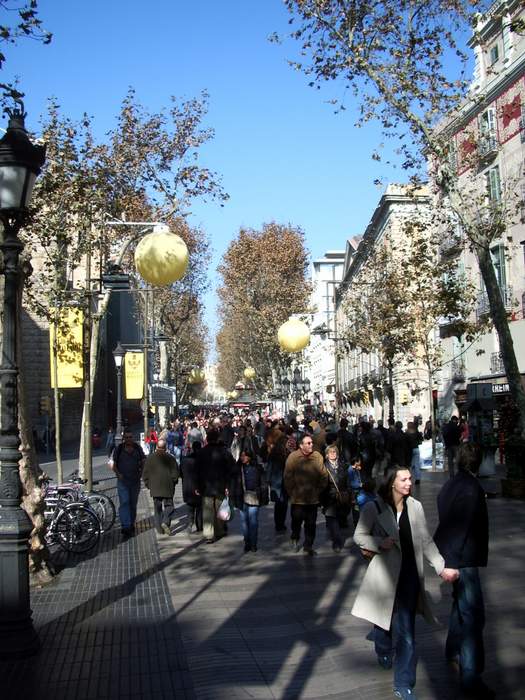
23. The 1.2 mile long Las Ramblas –a boulevard filled with strolling tourists and locals — is actually a combination of five streets: Canaletes, Estudis, Sant Josep, Caputxins and Santa Mònica. The Mercat de Sant Josep de la Boqueria, often simply referred to as La Boqueria, the oldest indoor market in Barcelona is located on La Ramblas.
24. The most crowded street in Spain is Portal de l’Angel, the main shopping street in Barcelona. On average, 3,500 people walk down this street every hour.
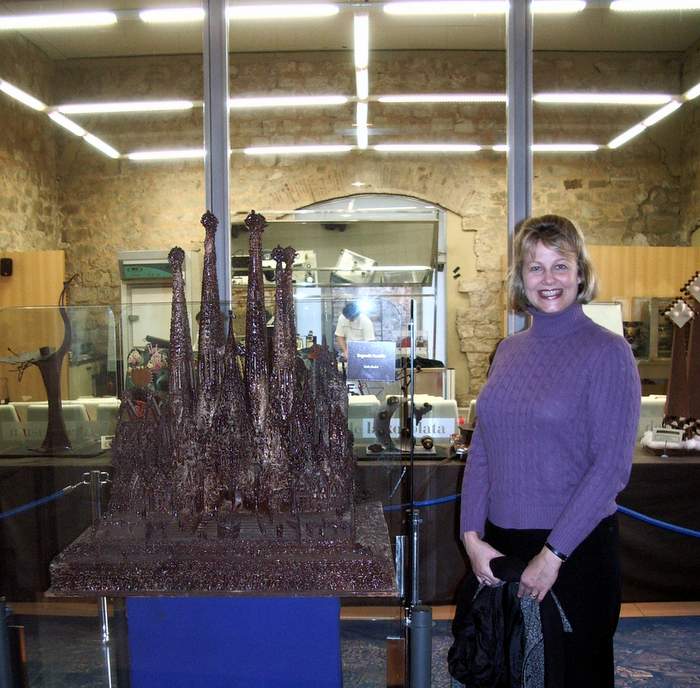
25. The Museu de la Xocolata (Chocolate Museum) is owned by the Barcelona pastry-makers’ guild, and contains chocolate sculptures of various well-known Barcelona buildings.
26. Spanish artist Pablo Picasso spent his formative adolescence artist apprenticeship years in Barcelona. The Picasso museum located the gothic Palau Aguilar houses 4,251 works and focuses on the artist’s work from his formative years through his Blue Period.
27. More than 10 percent of Barcelona is parkland, split between 68 parks.Montjuïc, located on the hill overlooking the harbor, covers more than 500 acres, making it the largest park in all of Spain.
28. Tibidabo is an old fashioned amusement park set on a mountain overlooking Barcelona. Its main rollercoaster, Muntanya Russa, benefits from one of the worlds’ most spectacular settings for a ride.
29. On this You Tube Video above, themeparkjames shows on how to get to the Tibidabo amusement park, and what it’s like to ride on the Muntanya Russa roller coaster.
30. The Port Vell area houses Aquarium Barcelona — one of Europe’s largest aquariums with 8,000 fish and 11 sharks housed in more than a million gallons of seawater.
31. The Maremagnum shopping mall – also within the confines of the Port Vell, is the only commercial mall in Barcelona that can open on Sundays and public holidays.
Port Vell Aerial Tramway passing through the Torre de Jaume I. Photo by João Carvalho.
32. Barcelona’s Port Vell aerial tramway first opened in 1931. Today it is mainly a tourist attraction that offers excellent views of the city and its port. The tramway starts at Miramar station halfway down the hill of Montjuïc at an altitude of 187 feet, passes through the 351 ft. peak of Torre Jaume I, and ends at the top of Torre Sant Sebastià at 282 ft., from where passengers taken an elevator down to the streets of the seaside surburb of Barceloneta.
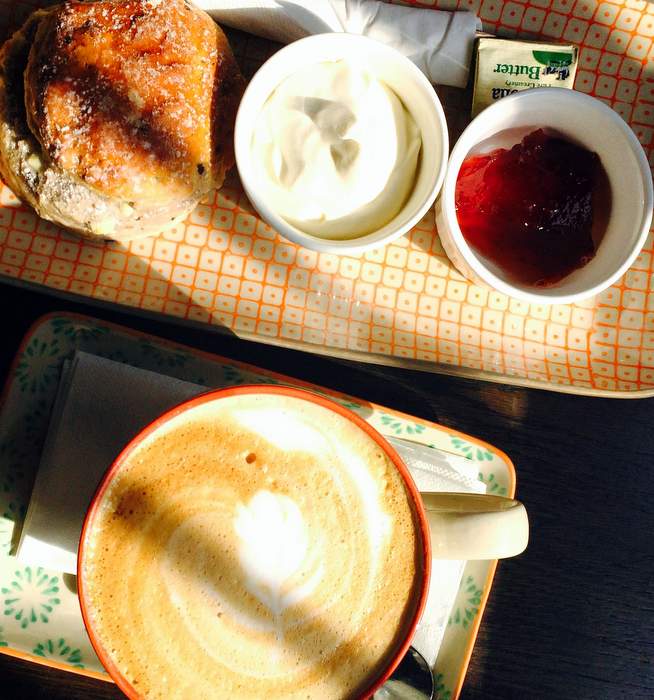
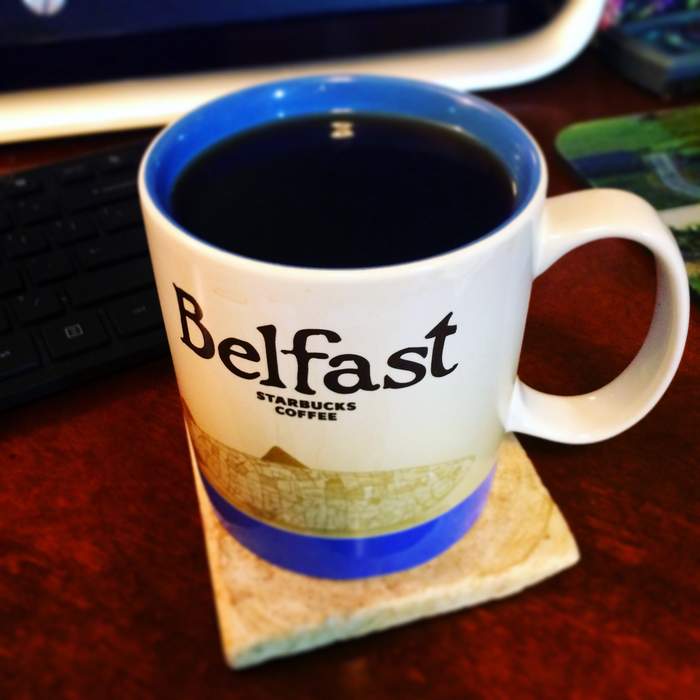
In honor of National Coffee Day today, we are celebrating some of our favorite cups of joe from our travels during the past year.
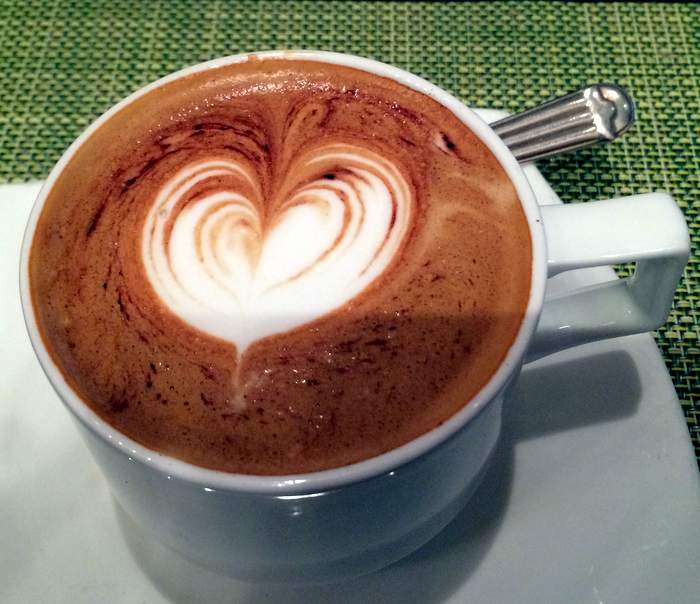
In Singapore at the Conrad Hotel, we loved the artful look and the delicious taste of the cappuccinos in Oscar’s that are made to order with the breakfast buffet.
Straight black coffee is not as artistic-looking but it is strong, flavorful and eye-opening at the State and Lake Chicago Tavern on the first floor of the Wit hotel in downtown Chicago.
The coffee in Penang, Malaysia looks strong and bitter but it was very smooth. Penang is known for its street food, and many of the street food stalls are centered around a coffee shop/cafe that serves coffee and other beverages. The cafe owner then rents food stall spots around the cafe space to others who make a specific kind of food. We learned this during our Heritage on a Plate food walking tour in Penang.
While in Key West, Florida, we made an effort to find the best Cuban cafe con leches, searching for places mentioned in a New York Times article. The coffees at the 5 Brothers Grocery & Sandwich Shop at the corner of Southard and Grinnell Streets were hot, sweet and silky, inspiring us to try the Traditional Cuban sandwich and ham croquettes as well.