≡ Menu

12 Things to Do Before Your Cruise

cruise shipsBefore Your Cruise You Might Want To”;

1. Be aware of any Online Check-in processes.

Go to the cruise line’s website and complete the check-in process. In some cases, you may not be allowed to board the ship if you have not checked in three days before your cruise.

2. Have complete and accurate identification with you.

This means having your passport, any required visas, or other proper identification documentation with you when you board your cruise. While some cruises do not require a passport, they are very strict about proper identification. Without it, you may not be allowed to board the ship and you may not get a refund. Plan ahead, they take a couple months to get a hold of a passport and other proper documentation.  Your travel agent and/or the cruise line can tell you exactly what is required.

3. Check the ship’s emergency contact phone numbers.

You can find these numbers in your cruise documents or on the cruise line’s website. It is a good idea to leave the emergency contact information with a trusted friend or family member.

4. Buy travel insurance.

Many insurance plans (including Medicare) do not include emergency medical coverage when you are out of the country.  Plus, if you get sick or injured on a cruise ship while at sea, and have to be evacuated off the ship, you can have a very large bill.  Look for a third party insurance plan (one not purchased through the cruise line) that provides emergency medical coverage, medical evacuation, trip cancellation and trip interruption coverage.

5. Leave copies of credit cards, passports, and other important documents with a family member or friend.

Doing so will help you get these documents replaced more quickly if you lose them or they are stolen while you are traveling. Also, carry a photocopy of these documents with you in a separate location from the originals.  It’s also a good idea to scan a copy of your passport and email it to yourself.

6. Tell your bank that you are traveling.

You don’t want your ATM card or credit cards to be declined when you are traveling because your bank suspects suspicious charges and/or withdrawals.  Notify your credit card company and bank of your travel plans before you depart.

7. Tell your post office to stop your mail.

Or, hire someone to pick it up every day while you are gone.

8. Place your name and address on you baggage.

It’s a good idea to put your contact information inside each bag as well as putting an identification tag on the outside of each bag. Most important is to list your name and phone number.

9. Get the Vaccinations that you will need.

These are usually established by the countries you are visiting. Contact your local physician, Health Department and/or travel to see what is required for your travel destination.

10. Bring insect repellent.

Many diseases are brought on by bug bits and mosquito bits. Prevent them with insect repellent.

11. Have a notarized letter of consent by your parents if you are under 18, and/or are traveling with someone other than your legal guardian. 

Minors need written, notarized consent of their parents and/or legal guardian to travel on a cruise ship if they are traveling with someone besides their parents or legal guardians. Learn more in this post: Does a 12-Year Old Need a Passport to Go on a Cruise?

12. Bring a swimsuit and appropriate clothing

Each cruise line has different guidelines for the appropriate clothing to be worm on board. From swimsuits to workout wear to formal evening wear, check out the dress code and possible activities before you cruise, so that you can pack the proper clothes.

Being sure that you have a strong checklist before you board your ship week prior to the trip is the most useful way to travel. Sometimes, if you aren’t aware of certain things then you can have big consequences happen like, not be able to board the ship, or not be able to do certain things. So plan ahead, and be prepared.

If you are a cruise fan, what do you make sure that you never leave home without on your cruise vacation? Please share in comments below.

Megan BrydeThis post is written by Megan Bryde, a forever student of the world while also finishing up her bachelors in English at Truman State University this semester.

Involved in too many activities, she sings as loud as she can, writes, cooks, bakes, and drinks a lot of coffee.

Megan is currently completing an internship with VentureTime Travel and aspires to be teaching English someday.

{ 1 comment }

About a month ago, we were waiting in the Fort Lauderdale, Florida airport to board a Southwest flight.  There was a woman sitting near us who was quite distraught.
She had lost her cell phone, and had just received some bad news from the Southwest gate agent. We helped her locate her missing phone by calling it for her.  Once the phone was located, we found out what was really causing her distress:

She was traveling with her therapy dog, and the Southwest gate agent told her that she had to pay the $95 fee for her dog to fly. She could not take the dog on her flight as an “Emotional Support Animal” because she did not have the proper documentation from a medical health professional or doctor who was treating her  mental health-related disability.

The Southwest gate agent was compassionate, but firm, and the woman paid the $95 fee.

The reason she was so upset is that she thought she had done what she needed to do because she had paid several hundred dollars to some kind of online Dog Registry service like this one (I don’t know for a fact that it was this organization). In addition to registering her dog as an “Emotional Support Animal“, the woman had purchased a special carrier, tags, certificate, and dog vest and leash.

The gate agent told her that none of this was meaningful to airlines in accepting an Emotional Support Animal on board with a passenger.  The only thing that was required was something she did not have with her: a letter from the medical health professional who was treating her.

Curious, I looked up the details on Southwest’s website. They are clearly spelled out:

Emotional Support Animals

Animals used for a Customer’s emotional support are accepted in the cabin. Emotional support animals will be allowed to travel on flights to/from all domestic and international destinations with the exception of Jamaica. No animals will be allowed to travel to/from Jamaica on Southwest Airlines under any circumstances due to country-specific regulations. In order for a Customer to travel with an emotional support animal, the Customer must provide to a Southwest Airlines Employee current documentation (not more than one year old) on letterhead from a mental health professional or medical doctor who is treating the Customer’s mental health-related disability stating:

  1. The Passenger has a mental or emotional disability recognized in the Diagnostic and Statistical Manual of Mental Disorders – Fourth Edition (DSM IV)
  2. The Passenger needs the emotional support of psychiatric service animal as an accommodation for air travel and/or for activity at the passenger’s destination
  3. The individual providing the assessment is a licensed mental health professional or medical doctor, and the Passenger is under his or her professional care AND
  4. The date and type of mental health professional’s or medical doctor’s license and the state or other jurisdiction in which it was issued

Assistance and emotional support animals must be trained to behave in a public setting. Customers traveling with an assistance animal or an emotional support animal cannot sit in an emergency exit seat.

Anyone who wants  to travel with their cat or small dog in the cabin on a Southwest flight,  may do so under certain circumstances when you meet the procedures and pay the $95 fee.

Our cat, Princess Gracie, hates to travel and will not be joining us in flight anytime soon.

But if you want to travel with your pet on Southwest, here is the place to find out all of the details.

The bottom line: if you are traveling with a service animal of any kind, or want to travel with your pet, it is crucial to check the details and requirements of the airline that you plan to fly, well in advance of your flight.

Have you flown with your pet or service animal? What tips do you have to share? 

Follow us on Twitter or interact with us on Facebook.

{ 0 comments }

Photo Friday: Green Giant

Green Giant

The Green Giant sparkles at the entrance of Swarovski Crystal Worlds in Wattens, Austria

Just outside of Innsbruck, Austria, in the city of Wattens, Tyrol, there is a green giant with sparkling eyes, built right into the hillside. Inside the entrances on either side of the “monster’s” water-spouting mouth are the entrances to the Swarovksi Kristallwelten (Crystal Worlds) underground grotto created by the company in 1995 to celebrate it’s 100th anniversary.

Upon entering under the water-spouting Giant with sparkling eyes visitors are treated to glittering displays created by globally-recognized artists showcasing Swarovski’s ultra-brilliant crystal in the Chambers of Wonder.

Wattens, where the company was founded, remains the global headquarters for Swarovski.

Read more about our visit to Kristallwelten in this post: Destination Discovery: The Swarovski Crystal Worlds, Wattens, Austria

Have you visited the Swarovksi Kristallwelte? f so, please let us know in comments below.

See all of this photos for this week’s Photo Friday Challenge: “˜Green” here

Check out these other Photo Friday pictorial posts:

Follow us on Twitter or interact with us on Facebook.


{ 0 comments }

The History of Cruising and Cruise Ships

When people think of famous ships they may think of the Titanic, the Queen Elizabeth, Carnival’s Mardi Gras, the Queen Mary 2, or the Sovereign of the Seas. Or they may think of Royal Carribean’s Oasis of the Seas or Allure of the Seas or Harmony of the Seas, currently the largest cruise ships afloat at sea.

We rarely think of the way cruise ships came into being or how they have gradually gotten very popular over the years.

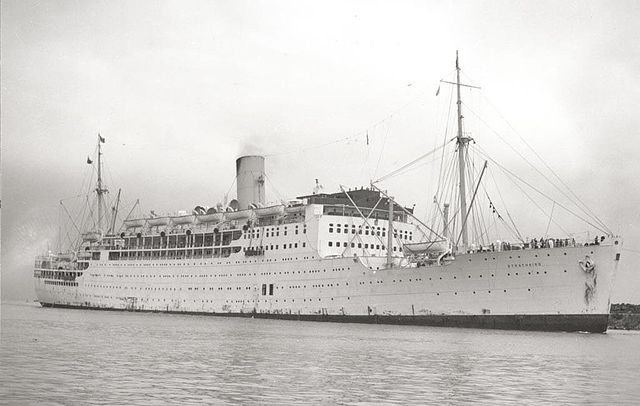
“Strathaird” Cruise Liners from P & O Cruises. Photo from 1950.

Here is a timeline of the evolution of the cruise ship:

1815: Before it was P&O Cruises (which is still running today), it was Wilcox and Anderson – a ship brokering firm originally founded by Brodie McGhie Wilcox and Arthur Anderson for trading between England and the Iberian Peninsular countries of Spain and Portugal.

Wilcox and Anderson eventually became The Peninsular and Oriental Steam Navigation Company (P&O) in 1822.

P_&_O_steamer_in_Venice_circa_1870,_in_album_owned_by_W.F._de_Salis,_a_director_of_the_company

A P & O steamer in Venice, circa 1870.

1833: Some sources recognize the Francesco I, flying under that flag of the Kingdom of the Two Sicilies (a predecessor of Italy), as one of the first cruise ship sailings. Nobles, authorities, and royals boarded the Francesco I, and cruised  to 11 countries within three months. Since the sailing was limited to European aristocrats, it was not considered to be a commercial cruise.

1840: Wilcox and Anderson (P&O) were awarded new mail contracts to extend their services to the Egyptian Port of Alexandra. Their new contract required that the voyage from England to Alexandria should be accomplished within 15 days. This is when the two men realized that they could do much more with their trade than merely travel, export, and mail.

1844: P&O introduced “leisure excursions” that allowed passengers to travel to the Iberian Peninsula and the Mediterranean from Southhampton.   As the forerunner of modern cruises with  these voyages, has led P&O Cruises to be recognized as the world’s oldest cruise line.

1867: The ship, Quaker City, was the first cruise from New York to Europe.

1880: The P&O ship the Ravena was the first ship to be constructed as a 100 per cent steel superstructure.

1889: The SS Valetta was the first ship to use electric lights

1891: Augusta Victoria was a German ship which carried 241 passengers and expanded the cruise ship to a wider market.

1900: The first ship that was built exclusively for luxury cruising was the Prinzessin Victoria Luise of Germany.

800px-Prinzessin_Victoria_Luise_LOC_det.4a15439

Prinzessin Victoria Luise

1912: The Titanic sank which stimulated the improvement of safety on cruise ships.

In 1914: otherwise the beginning of WWI, all production of cruising came to a halt.

1922: The first world cruise was made by Laconia, a British Conard Line which lasted six months.

Laconia 3 ladies

Some women watching the Laconia as it sails away. Photo curtesy of Wallsend Local History Society

1927: Ile de France, made by the French, was a passenger ship that was completely decorated in a modern, contemporary style and introduced the now-famous art-deco style and ended the era of the classic, severe interior of the cruise ships.

1939 to 1945: During World War II,  many cruise ships were used to transport troops including the Queen MaryAquitaniaCap ArconaLaconiaQueen Elizabeth, and the Orontes. Many ocean liners were destroyed during the war.

And from then on cruises have then been built larger, grander,–providing the best experiences for those who seek them.

2009: Royal Caribbean International launched the Oasis of the Seas, the first in it’s Oasis-class of ships. With a gross tonnage of 224,282 and a displacement of approximately 100,000 metric tons, the Oasis-class ships are the world’s largest passenger ships, carrying a maximum of 6,296 guests and approximately 2,200 crew members. Oasis-class ships feature a split structure, with the 5-deck high “Central Park” and “Boardwalk” outdoor areas running down the middle of the ship. These ships feature a  lush tropical garden, a zip line, two Flow Riders, two rock climbing walls, an AquaTheater with divers performing off of a 60ft platform, and  a working carousel.

Learn more about the cruise ship industry with these resources:

A Cruise Ship Primer: History & Operations


Devils on the Deep Blue Sea: The Dreams, Schemes, and Showdowns That Built America’s Cruise-Ship Empires


Dead Wake: The Last Crossing of the Lusitania

Megan Bryde

This post is written by Megan Bryde, a forever student of the world while also finishing up her bachelors in English at Truman State University this semester.

Involved in too many activities, she sings as loud as she can, writes, cooks, bakes, and drinks a lot of coffee.

Megan is currently completing an internship with VentureTime Travel and aspires to be teaching English someday.

For more history of cruising information, check out these posts:

Reach out to us via Twitter or interact with us on Facebook.

{ 0 comments }