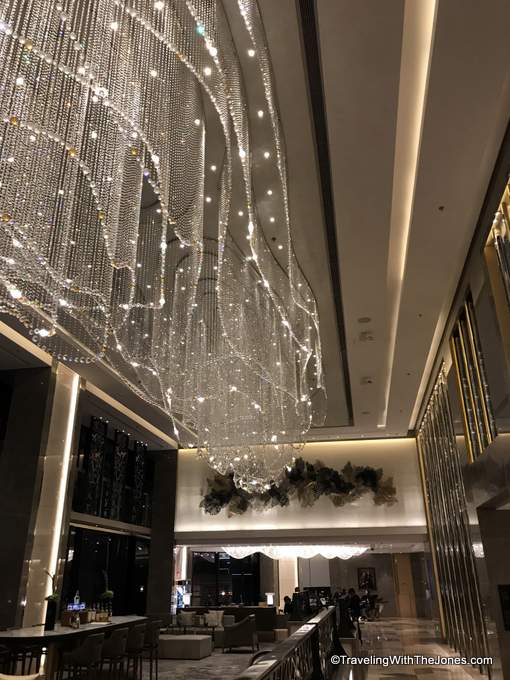
In April, we enjoyed a 5-night stay at the JW Marriott Hotel in Chengdu, China. The sparkling hotel lobby (pictured above) is on the eight floor of a high rise building.
The black high-rise building (center) in the photo above is home of the JW Marriott Chengdu Hotel. It’s located near Tianfu Square in central Chengdu, with easy access to the subway.
Arrival and Hotel Check-In
Since were going to be traveling for 36 hours to get to Chengdu, we pre-arranged a private transfer from the Chengdu airport through the hotel. (We could have taken the subway, but in our groggy, jet-lagged state we were happy to have someone meet us outside of the customs hall, and drive us to the hotel.) It was about a 30-minute ride.
Once we arrived to the eighth-floor hotel lobby, check-in was quick, despite our morning arrival.
Hotel Room
We received a nice upgrade to a suite with a spacious living/work area, a separate bedroom with a king bed, and two bathrooms.
Suite #1512 was on a lower floor of the hotel, so its views were mostly of other buildings. We were very happy with the large space, luxurious bath and other amenities, such motorized window shades that could be closed with the push of a button.
Our suite was one of the nicest we have experienced at a JW Marriott property.
The JW Marriott Chengdu has a large and well-appointed executive lounge on the hotel’s 28th floor.
Open every day from 6:00 am, the Executive Lounge offered a breakfast buffet with a wide selection of fresh fruit and some hot items until 10:30 am.
In addition to the buffet, the lounge offered a made-to-order noodle station where the chef also cooked eggs and omelets to order.
The Dan Dan noodles with minced pork and vegetables were exceptional. You could order them for breakfast, or during the happy hour buffet served each evening between 5:30 to 7:30 pm.
There was a nice selection of western and Chinese foods each evening, along with sodas, coffee, tea, beer, wine and a limited selection of hard liquor. While the food stopped at 7:30 pm, you could have drinks until 9:30 p.m.
The lounge staffers were professional and eager to please. They knew our names after the first visit. There were some language issues — we don’t speak Mandarin and English is not widely spoken in Chengdu — but nothing that couldn’t be overcome with some patience and a smile.
Our stay fell over Mr. Jones’ birthday; the lounge staff very thoughtfully surprised him with a cake.
Restaurants in the JW Chengdu Hotel
Thanks to Mr. Jones’ Platinum status with Marriott Rewards, we were also given the option of eating breakfast at the hotel’s eighth-floor restaurant called The Table. We did this a couple of times but found the lounge less hectic.
We also enjoyed an excellent Dim Sum lunch at the hotel’s Man Ho restaurant, which was surprisingly crowded and very good.
The restaurant’s dining area had a window to the kitchen. We could see six or more chefs busily creating made-to-order Dim Sum. The price was reasonable by hotel standards, with guests being able to order unlimited Dim Sum for about $20 a person.
Overall Impressions of Hotel
We found the JW Marriott Chengdu hotel exceeded our expectations. The hotel is new and well-appointed, and our suite was spectacular in both size and amenities.
As a Category 4 Reward Level hotel in the Marriott Rewards program, we considered this hotel a terrific use of points.
The Executive Club Lounge was a relaxing, welcoming space with a hard-working staff. We found the hotel’s central location ideal for exploring Chengdu on foot, as well as easy access to multiple subway lines.
Two notes: the hotel seemed somewhat sterile and did not have an active “vibe.” For example, the bar in the beautiful eighth-floor lobby was almost always empty. And, for being part of a western hotel brand, the staff’s English skills were lacking to non-existent, except for a few women at registration and in the Executive Lounge.
We are back enjoying a cruise to Canada and New England on Holland America Line’s msVeendam cruise ship.
This is one of our favorite 7-day cruise itineraries, and Holland America offers it between April and October.
You can sail this itinerary in either direction, either starting in Montreal, Canada, and sailing to Boston. Or you can sail from Boston, and end your cruise in Montreal. Some folks stay on the ship both ways, for a 14-day cruise, or combine their 7-day Canada and New England cruise with a 7-day cruise to Bermuda.
The 7-Day Canada and New England cruise includes six days in different ports, with one day at sea. Here are some of our favorite insights on each port from our prior cruises:
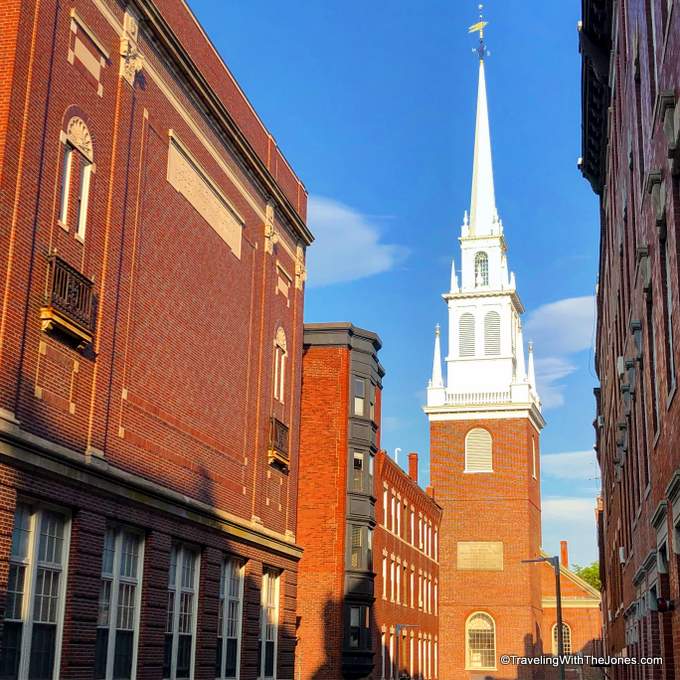
From the historic Old North Church in Boston (where Paul Revere shined his light) —
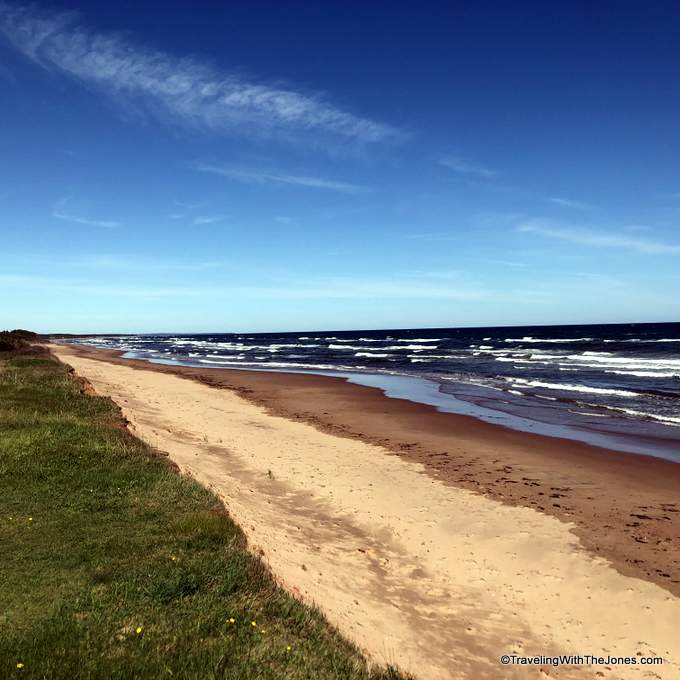
to the northern shores of Prince Edward Island (famous for mussels, potatoes and Anne of Green Gables) — we think this cruise offers fun for people of all ages.
Have you taken a Canada and New England cruise? If so, what was your favorite experience?
While on a weekend road trip, we found ourselves hungry while driving near Ponca City, Oklahoma. This city of about 25,000 people is located in the northern part of the Oklahoma, less than 30 miles from interstate I-35.
As we often do when we’re somewhere unfamiliar, we used Yelp to find a good casual lunch spot. Since it happened to be the fifth of May, also known as Cinco de Mayo*, we thought of Mexican food.
We found good reviews about Enrique’s Mexican Restaurant, and entered the address into our GPS. As we arrived, we were surprised to learn this restaurant is inside the Ponca City Regional Airport.
While the Ponca City Regional Airport hasn’t had scheduled passenger flights since 2006 when Great Lakes Airlines stopped flights to Denver and Dodge City, the airport — with a 7,201-foot long concrete runway — is still active with private and commercial planes.
Most of the terminal is now a part of Enrique’s Mexican Restaurant, which offers great views of planes taking off and landing in addition to Mexican, American and Cuban-inspired food.
Really hungry, we munched on the house-made fried corn chips and salsa while waiting for our entrees to be cooked.
I ordered the Shrimp Ranchero — described as a Cuban-inspired dish of shrimp sauteed in a green chile sauce with pico de gallo. It is served with black beans, rice and a lettuce salad. Delightful favor, without much spice.
Mr. Jones ordered the Tampico Fiesta, listed on the menu as one of the “Sabor de la Casa” or specialties of the house.
Also described as a Cuban dish, Tampico Fiesta comes with your choice of an 8-ounce rib eye steak, or two pork chops, smothered with grilled onions and peppers, and topped with shrimp.
Mr. Jones chose the steak, and was very happy with his meal.
Since we were getting back on the road to drive onward to Kansas, we did drank ice tea rather than a more traditional Cinco de Mayo beverage.
What is Cinco de Mayo?
*We knew that Cinco de Mayo is not a celebration of Mexican Independence Day, but we did not know why the 5th of May is widely celebrated. It turns out the Cinco de Mayo holiday celebrates the Mexican army’s victory over France at the Battle of Puebla (on May 5, 1862) during the Franco-Mexican War.
Other things to see and do in Ponca City, Oklahoma
While we did not have time to explore Ponca City on this trip, I did pick up a Ponca City Tourism brochure at the airport. There are several things that I’d like to see the next time I’m near Ponca City, Oklahoma, including:
The Marland Mansion built in 1928 by oil tycoon E.W. Marland and his wife, Lydie. This 55-room castle has ceilings covered in 24-karet gold leaf and million-dollar chandeliers.
The Standing Bear Museum and Education Center that tells the story of six local Native America tribes: the Kaw, Osage, Otoe-Missouria, Pawnee, Ponca and Tonkawa.
The Wentz Swimming Pool and Camp, built in 1928 and donated to Ponaca City by oil millionaire Lew Wentz. The 150 foot-long pool, built on a hill overlooking Lake Ponca, is still open to the public today.
The Conoco Museum that depicts the merger and transformation of the Marland Oil Company and the Continental Oil and Transportation Co. into Conoco.
The Pioneer Woman Statue and Museum that celebrates Oklahoma’s pioneering women.
NOTE: This post has been updated on 8/21/2020 with changes in red type.
Since we having an upcoming road trip that involves an overnight stay in Tulsa, we wanted to learn a little more about the state of Oklahoma’s second largest city.
55 Interesting Facts About Tulsa, Oklahoma
1. Tulsa, located in northeastern Oklahoma on the Arkansas River, is the 47th most populous city in the United States with 403,505 residents (in 2015).
2. The area where the city of Tulsa exists today got its initial start after the passage of the Indian Removal Act in 1830 under United States President Andrew Jackson.
A map of the Oklahoma Territory and the reduced Indian Territory circa 1890’s. Source: Wikipedia
3. Under the Indian Removal Act, the U. S. federal government evicted the Creek (Muscogee) people — along with the Cherokee, Chickasaw, Choctaw and Seminole — from their ancestral lands in the southeastern U.S. and forced them to march west to “Indian Territory” — what is today known as eastern Oklahoma.
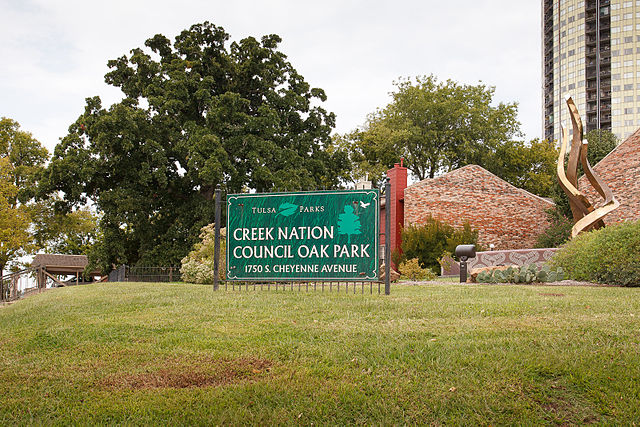
4. The location where Tulsa exists today was part of this Indian Territory. In 1836, the Muscogee Creek Indians created a formal settlement at what is now the intersection of Cheyenne Avenue and 18th Street in Tulsa.
Creek Nation Council Oak Tree, Tulsa, Oklahoma. Photo by W. R. Oswald.
5. The Creek nnamed their settlement “Tallasi,” which means “old town,” and later evolved into “Tulsa.”
6. In 1882 the railroad arrived in Tulsa, attracting white settlers to the small town as it became a cattle-shipping point.
7. On January 18, 1898, Tulsa was officially incorporated. Edward Calkins was elected as the town’s first mayor. Population is reported as 1,100.
8. An oil boom fueled Tulsa’s growth. On June 25, 1901 John Wick and Jesse Heydrick found oil near the village of Red Fork, across the Arkansas River from Tulsa. Today the location of the “Red Fork Gusher” is a neighborhood in southwest Tulsa.
9. Then, on November 22, 1905, two oil prospectors — Robert Galbreath and Frank Chesley — who had been alternating shifts on a drilling rig in the Creek Indian Reservation four miles south of the small town of Tulsa — struck black gold.
10. Bob and Frank’s well started to make gurgling noises and then “blew in over the derrick” with a gusher of 75 barrels of oil per day. Bob and Frank named the discovery “Glenn Pool” after Ida E. Glenn, the woman who owned the land that they had leased.
11. This Glenn Pool oil was light and sweet — perfect for refining into gasoline and kerosene. The Oklahoma oil boom had begun in Tulsa.
12. Families from the older, developed oil fields in Illinois, New York, Ohio, Pennsylvania and West Virginia rushed into the booming area around Tulsa. Young men such as Harry Sinclair and J. Paul Getty learned the business and made their first millions in the Glenn Pool oil field.
13. Royalties of almost a million dollars a year were being paid to some Creek Indians who held 160-acre allotments in the field.
14. By the time Oklahoma became a state in 1907, nearly 100 oil companies had set up shop around Glenn Pool alone.
15. During 1907, Oklahoma produced more oil that any other state in the United States and any other country in the world.
Tulsa, Oklahoma in 1909.
16. Tulsa, formerly known as a small railroad stop, became the undisputed “Oil Capital of the World,” a moniker the city retained for more than six decades.
The “Oil Capital” Historic District in downtown Tulsa, Oklahoma. Photo by W. R. Oswald.
17. Tulsa’s oil industry success prompted construction booms in the city between 1924-1931. Many buildings were designed in the Art Deco style that was all the rage at that time.
18. Today Tulsa boasts one of the nation’s most extensive collections of Art Deco architecture, including the Philtower and Philcade buildings, the Atlas Life building, Tulsa Club, and the Public Service Company of Oklahoma building. NOTE: This “fact” was obtained from the Tulsa, Oklahoma wikipedia page which says:
“A collection of large art deco structures such as the Mid-Continent Tower, the Boston Avenue Methodist Church, Will Rogers High School, and the Philtower, have attracted events promoting the preservation and architectural interest.
Blog reader Ellen S sent this note: “you have The Philtower and Atlas listed as Art Deco Buildings. Neither of those are Deco. The Philtower is Neo Gothic. The Atlas is Classic Revival and was built 5 years before Deco was even a thing.”
In studying the buildings it seems that The Atlas building is not of an art deco style. Their seems to be disagreement among different groups in Tulsa on the status of The Philtower.
Here is a description of the Philtower Building’s current website:
Standing as a beacon of the Tulsa skyline when it was completed in 1928 by architect Edward Buehler Delk, the Philtower still stands out amid other buildings with regal beauty. The distinctness of its English Gothic Revival and Art Deco designs make it an architectural jewel.
19. The Tulsa Art Deco Museum — located in the lobby of the historic Philcade Building — boasts a diverse collection of items from Tulsa’s golden age of Art Deco.
20. Profits from the oil industry continued through the Great Depression, helping Tulsa’s economy fare better than most cities in the United States during the 1930s.
21. While Tulsa remains an important center for the energy industry in the 21st Century, the city now has a diversified economy with aerospace, chemicals, computer parts, industrial machinery, and a plethora of small businesses.
22. Today about 80 percent of Tulsa’s businesses employ fewer than 10 people, and 90 percent of local employment is in smaller companies, according to the Tulsa Regional Chamber.
23. The average income level of Tulsa residents is 11 percent above the national average, while the cost of living in Tulsa is four percent below the national average.
24. The BOK Tower (formerly known as One Williams Center) –a 667 ft, 52-story tower in downtown Tulsa, Oklahoma looks very similar appearance and construction to the World Trade Center towers in New York City (destroyed by a terrorists’ attack on September 11, 2001.)
The BOK Tower in Tulsa, Oklahoma looks similar to two other famous buildings by the same architect. Photo by Caleb Long.
25. Tulsa’s BOK Tower — built in 1976 — was in fact designed by Minoru Yamasaki & Associates, the same architect who designed the World Trade Center in New York City.
26. While one might not think of Tulsa as a port city, the Tulsa Port of Catoosa on the Verdigris and Arkansas rivers ranks among America’s busiest inland river ports. More than 2.2 million tons of cargo passing through it annually.
27. Tulsa has more man-made lakes than any other city in the United States.
28. Tulsa’s Gilcrease Museum houses the world’s largest collection of art and artifacts from the American West. The vast collection, amassed by Tulsa oil magnate Thomas Gilcrease, was purchased by the city in 1955.
29. Mayfest — a 4-day outdoor music and arts festival in downtown Tulsa — attracts 250,000 attendees each year. In 2018, Mayfest will take place May 17- 20 on Main Street between 3rd and 6th.
30. The Tulsa Drillers baseball team — a Double-A affiliate of the os Angeles Dodgers — plays at ONEOK Field in the historic Greenwood district adjacent to downtown Tulsa. Pro baseball players Matt Holliday, Sammy Sosa, R.A. Dickey, Ivan “Pudge” Rodriguez, and Mark Teixeira all played for the Tulsa Drillers before advancing to the big leagues.
31. ONEOK Field (named for a natural gas company) is alsohome of the Tulsa Roughnecks FC of the United Soccer League.
32. The 19,199-seat BOK Center, or Bank of Oklahoma Center, is Tulsa’s primary indoor sports and event venue since its opening in August, 2008. The building — designed by César Pelli, the architect of the Petronas Towers in Malaysia — was built at a cost of $196 million.
33. The BOK Center is the home of the Tulsa Oilers, a minor league hockey team affiliated with the St. Louis Blues. The “Ice Oilers” as some locals call them — play in the ECHL — a mid-level professional ice hockey league.
34. Oklahoma has two state fairs. Not to be confused with the Oklahoma State Fair, the Tulsa State Fair takes place every September beginning on the fourth Thursday after Labor Day. In 2017, the fair and exposition at Tulsa’s Expo Square attracted about 1,150,000 visitors.
35. At the entrance to the Tulsa Expo Center stands the sixth–tallest statue in the United States, and the most photographed landmark in Tulsa. It is the Golden Driller — a 75-foot-tall, 43,500-pound statue of an oil worker.
The ‘Golden Driller” in Tulsa, Oklahoma. Photo by Timdayf5.
36. Originally built in 1952 for the International Petroleum Exposition, theGolden Driller statue was permanently installed in front of the Tulsa Expo Center for the 1966 International Petroleum Exposition.
37. Frustrated by the region’s poor roads, Tulsa businessman Cyrus Avery started pushing for improvement, becoming Oklahoma’s Highway Commissioner in 1924. When the federal government started planning an interstate highway from Chicago to Los Angeles, Avery lobbied for the route to run southwest rather than over the Rocky Mountains.
38. In 1927, Avery established the U.S. Highway 66 Association in Tulsa. As a result of his efforts, the road that would become Route 66 was laid through Arizona, New Mexico, the Texas panhandle, and (conveniently) Tulsa.
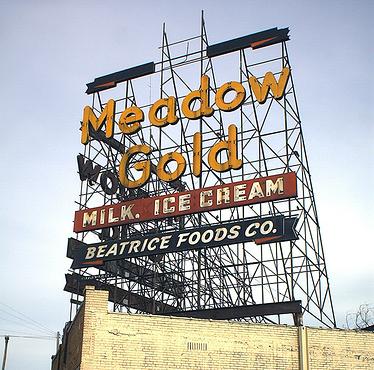
Meadow Gold sign, Route 66, Tulsa, Oklahoma
39. Tulsa’s famous neon Meadow Gold sign became a Route 66 landmark. Built during the Great Depression to promote the Beatrice Food Company, the sign still sits at the intersection of 11th Street and Quaker Avenue in Tulsa.
40. Clinton Riggs, a Tulsa police officer, invented the “yield” road sign, first testing his creation by posting a sign at the corner of First Street and Columbia Avenue in 1950. Collisions decreased, and the signs spread throughout Tulsa, America, and the world. When Riggs died in 1997, a yield sign was engraved onto his tombstone.
41. During the late 1950s, the first transistorized sportfishing sonar device was invented by Carl Lowrance and his sons in Tulsa. Today, the local Lowrance Electronics Co. specializes in marine electronics and Global Positioning System devices.
42. Tulsa has 15 institutions of higher education, including two private universities that compete at the NCAA Division I level for sports: the University of Tulsa Golden Hurricane, and the Oral Roberts University Golden Eagles.
43. Founded in 1894, the University of Tulsa (TU) is a private research university known for its law, English, computer science, psychology, and engineering programs. Prominent TU alumni include current Walmart CEO Doug McMillon, Golden Girls actress Rue McClanahan, radio legend Paul Harvey, Cherokee Nation Chief Chad “Corntassel” Smith, and Brazilian billionaire businessman Ermirio Pereira de Moraes.
44. The University of Tulsa acquired The Bob Dylan Archive in 2016. TU also manages the Gilcrease Museum, which includes one of the world’s largest collections of American Western.
45. Gordon Matthews, born in Tulsa and a University of Tulsa graduate, filed a patent for “voice message exchange” in 1979. Granted in 1983, Matthews’ U.S. Patent No. 4,371,752 was significant for the development of voicemail.
46. Oral Roberts University, founded in 1963 by evangelist Oral Roberts, is an ultra-conservative Christian institution that helped Tulsa earn the moniker as “the buckle of the bible belt.”
47. A sculpture of two 60-foot-tall praying hands (made of 30 tons of bronze) marks the entrance to the campus of Oral Roberts University, which counts Kathie Lee Gifford and Joel Osteen among its alumni.
48. S.E. (Susan Eloise) Hinton — born in Tulsa and a 1966 graduate of Will Rogers High School — had, at age 17, her young adult novel — The Outsiders published.
49. The 1983 cult classic film The Outsiders — based on Hinton’s novel — was actually shot on-site in Tulsa where the story was set. The movie was directed by Francis Ford Coppola, and starred a number of young actors on their way to major fame including Tom Cruise, Patrick Swayze, Diane Lane, Matt Dillon, Rob Lowe, and Emilio Estevez.
50. In addition to The Outsiders, several films starring “Brat Pack” actors were filmed in Tulsa in the early 1980s including Tex (1982), Rumble Fish (1983) and Fandango(1985).
51. Tulsa made a splash at the 2009 Sundance Film Festival when Sterlin Harjo featured his critically acclaimed film Four Sheets to the Wind in 2007. The film, which takes place in Tulsa, opens with the line, “Every now and then, good things happen in Oklahoma.”
52. Garth Brooks, an American singer and songwriter known for integrating rock and roll elements into the country genre, was born in Tulsa on February 7, 1962. Brooks is one of the music industry’s best-selling solo artist, having sold more than 170 million records.
53. Tulsa’s Woodward Park is home to the Anne Hathaway Herb Garden—named after the wife of English playwright William Shakespeare (not the Oscar-winning actress.)
54. After she visited Hathaway’s cottage near Stratford-upon-Avon, England, Tulsa resident Jewell Huffman designed the plot in 1939. Styled like a formal English garden, it includes medicinal and culinary herbs like rosemary and catmint.
55. On a road trip through the Great Plains and southwestern U.S., one is never far from a QuikTrip, a chain of gas and convenience stores with legendary apple fritters. Established in 1958 by Tulsa residents Burt Holmes and Chester Cadieux, the original store opened on Peoria Street. Still headquartered in Tulsa, the company now has more than 750 locations.
 In April, we enjoyed a 5-night stay at the JW Marriott Hotel in Chengdu, China. The sparkling hotel lobby (pictured above) is on the eight floor of a high rise building.
 The black high-rise building (center) in the photo above is home of the JW Marriott Chengdu Hotel. It’s located near Tianfu Square in central Chengdu, with easy access to the subway.
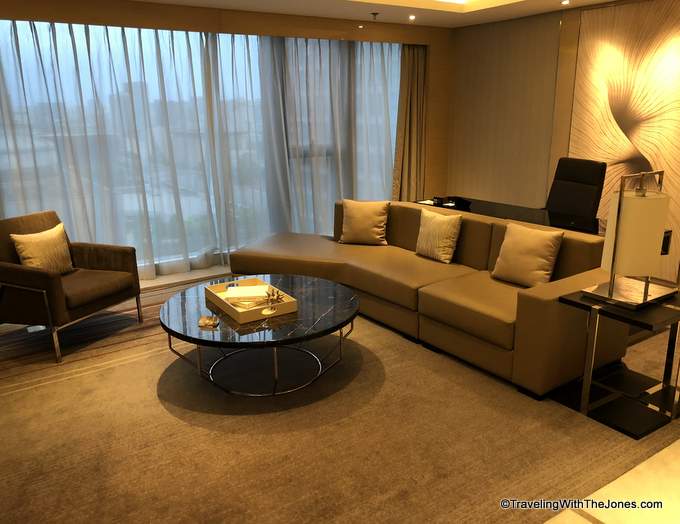 We received a nice upgrade to a suite with a spacious living/work area, a separate bedroom with a king bed, and two bathrooms.
 Suite #1512 was on a lower floor of the hotel, so its views were mostly of other buildings. We were very happy with the large space, luxurious bath and other amenities, such motorized window shades that could be closed with the push of a button.
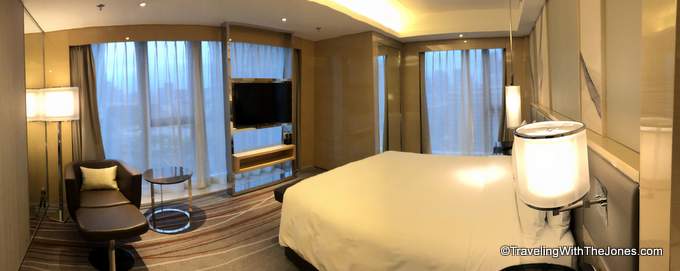 Our suite was one of the nicest we have experienced at a JW Marriott property.
 The JW Marriott Chengdu has a large and well-appointed executive lounge on the hotel’s 28th floor.
 Open every day from 6:00 am, the Executive Lounge offered a breakfast buffet with a wide selection of fresh fruit and some hot items until 10:30 am.
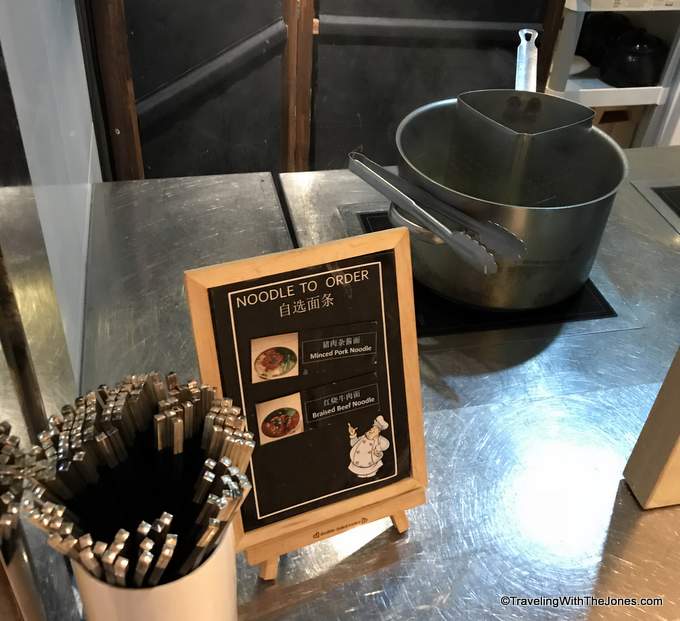 In addition to the buffet, the lounge offered a made-to-order noodle station where the chef also cooked eggs and omelets to order.
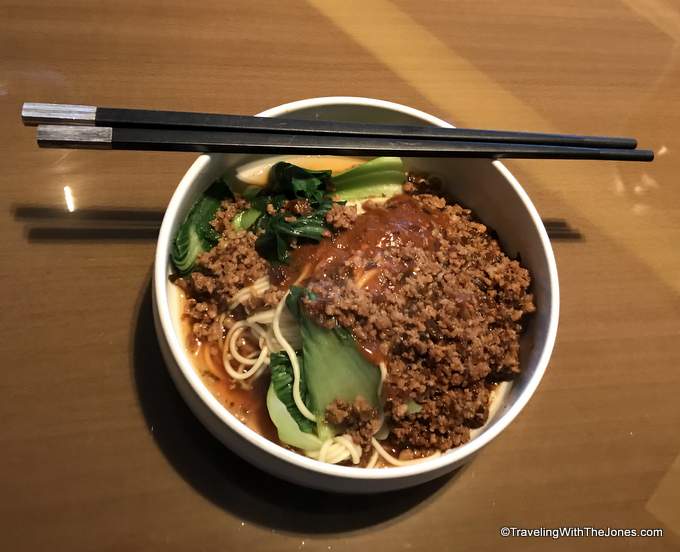 The Dan Dan noodles with minced pork and vegetables were exceptional. You could order them for breakfast, or during the happy hour buffet served each evening between 5:30 to 7:30 pm.
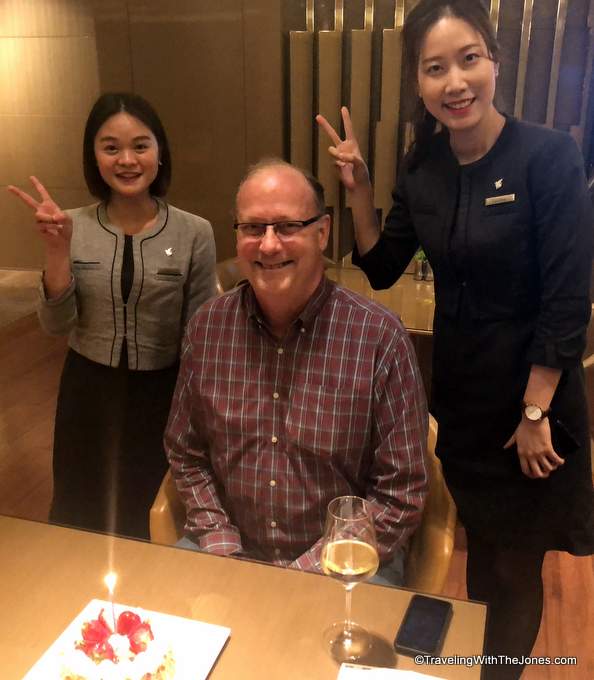 Our stay fell over Mr. Jones’ birthday; the lounge staff very thoughtfully surprised him with a cake.
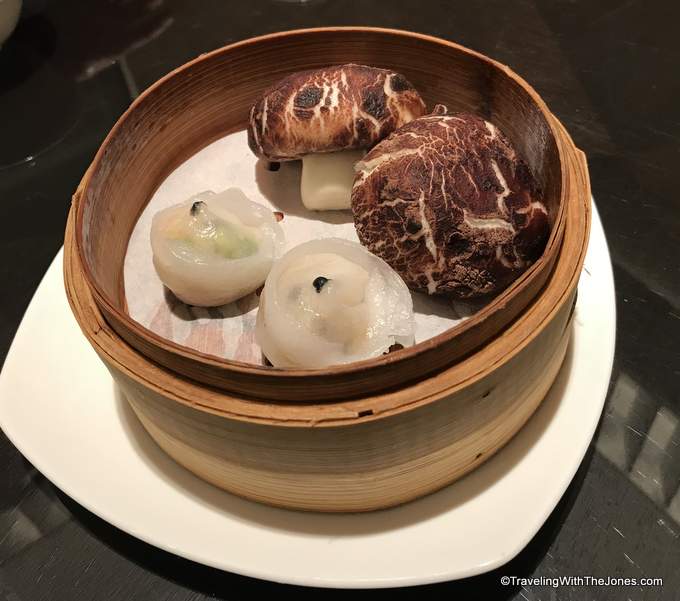 We also enjoyed an excellent Dim Sum lunch at the hotel’s Man Ho restaurant, which was surprisingly crowded and very good.
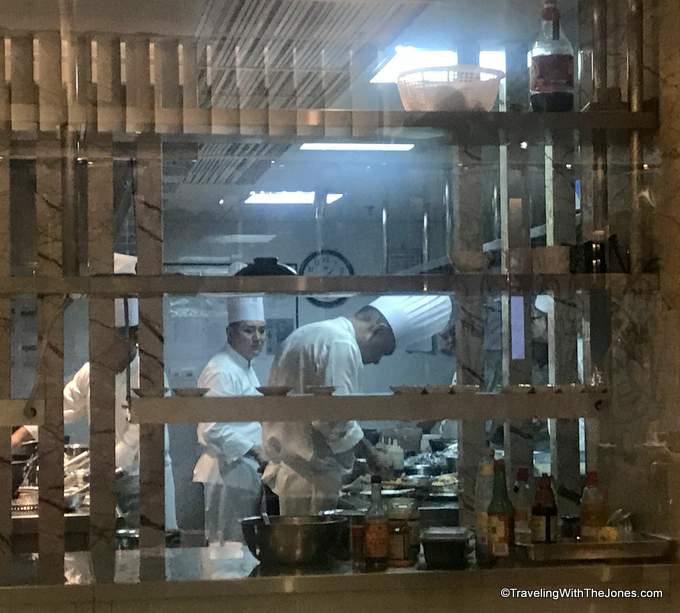 The restaurant’s dining area had a window to the kitchen. We could see six or more chefs busily creating made-to-order Dim Sum. The price was reasonable by hotel standards, with guests being able to order unlimited Dim Sum for about $20 a person.
 We found the JW Marriott Chengdu hotel exceeded our expectations. The hotel is new and well-appointed, and our suite was spectacular in both size and amenities.