≡ Menu

See and hear glaciers in Glacier Bay, Alaska
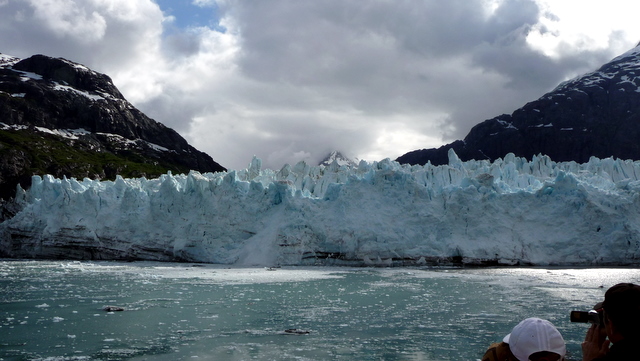
Neither pictures nor video adequately convey the raw beauty and sounds of Glacier Bay National Park and Preserve in southeastern Alaska.  Part of a UNESCO World Heritage Site, the 5,130 square mile park includes calving tidewater glaciers, snow-capped mountain ranges and deep fjords. 

In 1925 the area around Glacier Bay became a US National Monument, and was changed to Glacier Bay National Park and Preserve on Dec. 2, 1980.  Click here to view a map from the National Park Service.
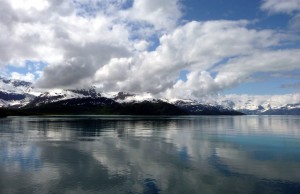
Glaciers cover 27 percent of the park. 

Glacier Bay National Park contains more than 50 named glaciers, most of which originate between 8000 to 15,000 feet above sea level.  Glaciers that flow down to the sea are known as  “tidewater” glaciers.  As water undermines some ice fronts on tidewater glaciers, giant blocks of ice break loose and crash into the water, known as “calving”.  Glacier Bay has seven active tidewater glaciers that calve icebergs into the sea.

Margerie Glacier  

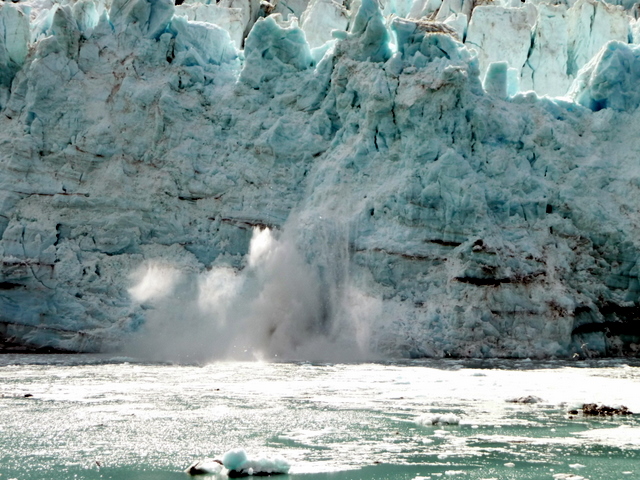
In general, the Glacier Bay’s  tidewater and terrestrial glaciers have been receding over the past several decades. Margerie Glacier is one of the exceptions.  Rising 250 feet above the sea, Margerie Glacier is 21 miles long and a mile wide.  When ice calves from the face, it creaks, groans and showers like a waterfall into the water below.

Access is Limited to Glacier Bay 

No roads lead to the Glacier Bay National Park.  It is reached by air or sea.

Most visitors arrive at the park via cruise ship or tour boat. The only road is 10 miles from the town of Gustavus.  Alaska Airlines offers seasonal air service to Gustavus, including a 20 percent discount right now.

During the summer, the number of vessels in Glacier Bay is restricted to a maximum limit per day of two cruise ships, three tour boats, six charter vessels and 25 private vessels.
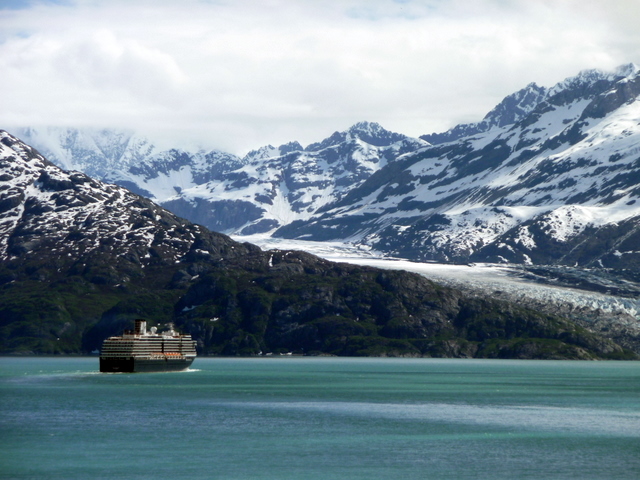
 Close to 423,000 cruise passengers visited Glacier Bay in 2009, the majority of the nearly 445,000 visitors.  If you are thinking about visiting by cruise ship, check the itinerary carefully. Not all Alaska cruises visit Glacier Bay.

In 2011, Holland America Line, NCL and Princess offer weekly itineraries that include Glacier Bay.

The Weather in Glacier Bay 

Southeast Alaska is located in a wet, coastal rainforest.  Summer temperatures in Glacier Bay range from 50 to 60 degrees F. Annual precipitation is 70 to 80 inches.

Visitors should anticipate and dress for cool, rainy weather.  For tips on packing for an Alaska cruise,  click here for 10 tips on what to pack

 Another Alaska post you might enjoy: 
16 Insider Tips to Anchorage  

Travelin Jones

We enjoy discovering new places.  What’s your favorite destination discovery? Please share in comments. 

Follow us on Twitter https://twitter.com/travelinjones
or interact with us on Facebook facebook.com/TravelingWithTheJones
{ 10 comments }

Get up close with an alligator with Cajun Encounters Tour

From New Orleans, it is only a 40 minute drive to Honey Island Swamp.  Cajun Encounters offers a tour from New Orleans, with pick-up from your hotel.  Or, if you have a car, you can drive to the swamp for the tour.  See prices and details here.

Honey Island Swamp Tour

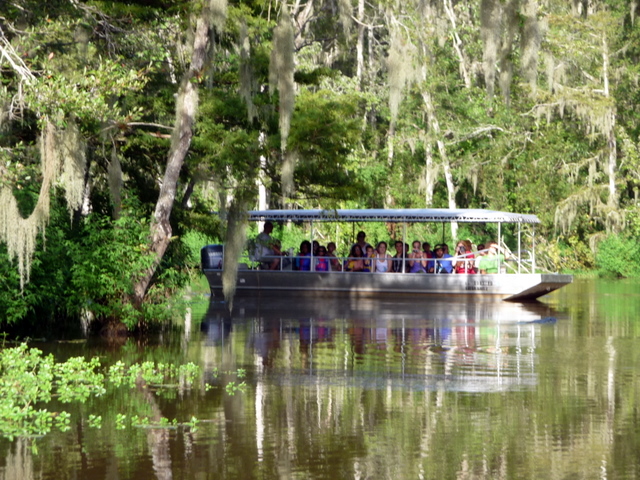
Never having been to a swamp, it was easy to imagine creepy things and lots of mosquitos.  I was pleasantly surprised — no insects, and a fascinating, peaceful tour of the swamp. 

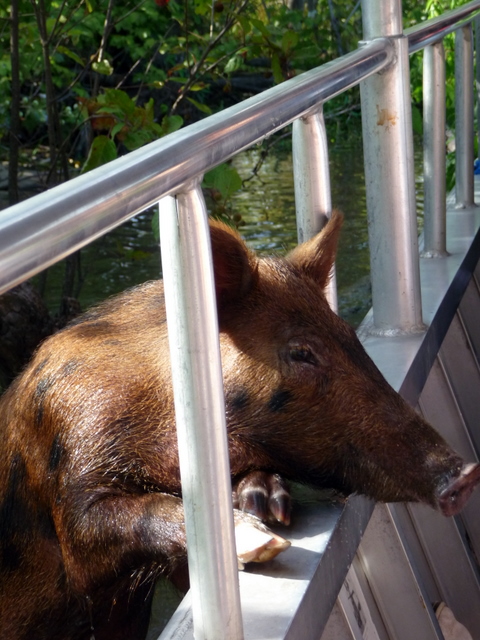
Wild hog piglet tries to climb in boat

Of course, there were up close encounters with animals: first, some young pigs from a wild hog’s litter.  They were practically in the boat to get the marshmallows the boat captain/tour guide tossed to them.  While these young hogs were friendly, he said adult wild hogs are not.

As we progressed through a river into the swamp, our guide charmed up with tails of swamp life, explaining the history of the Cajun people in the area. 

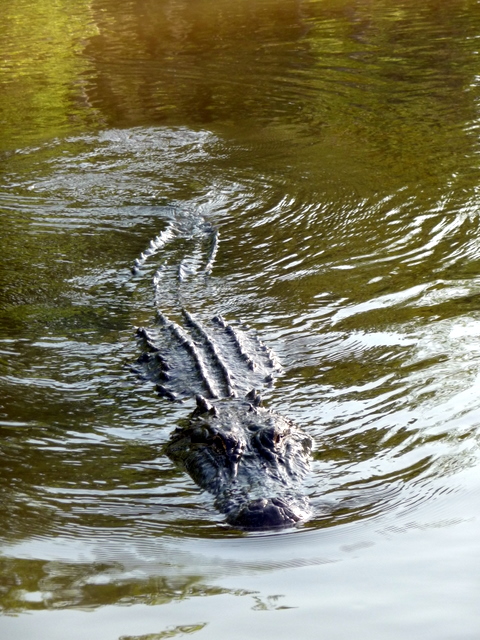
We traveled in a quiet boat with about 20 people.  Soon we arrived in an area with alligators.  The other Cajun Encounters tour boat was ahead, so we watched as the alligators came out to greet the boat, and to jump for the hot dogs and/or marshmallows the guides gave them.

feeding the alligator in Honey Island Swamp

We learned the difference between alligators (docile animals) and crocodiles (not docile). Honey Island Swamp only has alligators.  

Alligator up close

Our boat also glided through a nature preserve in the swamp.

This is a great tour for kids young and old; we all enjoyed it.

We enjoy exploring unusual sites, and always enjoy a guide who’s knowledgeable and passionate about their subject.   What’s your favorite tour?  Please share in comments   

Follow us on Twitter or interact with us on Facebook.

{ 5 comments }

This island has inspired creativity and endured occupation.

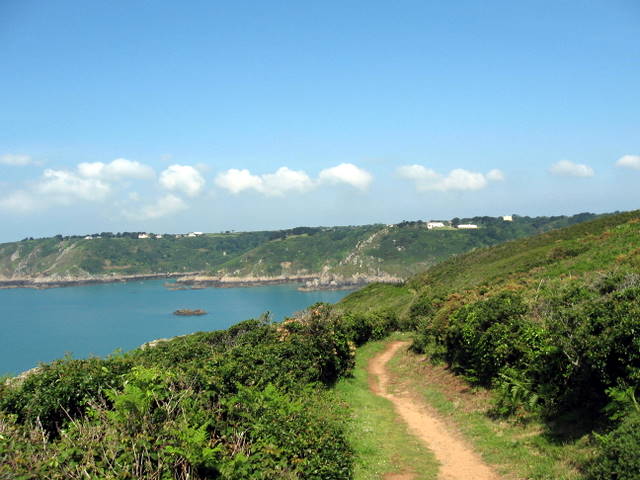
Visitors will find 28 miles of public walking trails on the island of Guernsey.

Located 30 miles from France and 70 miles from England, Guernsey is a 25-square mile island in the English Channel. It is the second largest of the Channel Islands.  These semi-autonomous islands have a formal allegiance to the British crown but not to British parliament. They are not a part of the European Union. The Channel Islands are considered a British Crown Dependency and are made up of two administrative regions: The Baliwick of Guernsey and the Bailwick of Jersey.

Guernsey fosters a favorable tax climate, resulting in many offshore banks, fund managers and insurance companies establishing on the island. Guernsey has its own stamps and currency.  While British pounds can be used on the island, Guernsey pounds cannot be used in the UK.

St. Peter Port is the capital of Guernsey and the primary port of the island. Guernsey has a diverse landscape with 28 miles of spectacular cliff-top paths open to the public.

German Occupation During World War II

World War II left a heavy footprint on Guernsey in language and traditions.  Half of the island’s population, including its children and some adults were evacuated to the United Kingdom on June 20, 1940. Eight days later, St. Peter Port was bombed, leading to German occupation on June 30th that lasted five years until liberation in May, 1945.

During the occupation, Hitler feared that the Allies would try to regain the islands.  He became fanatical about fortifying them, spending significant resources on infrastructure:  walls on the beaches, bunkers, bomb depots, miles of tunnels and an underground hospital, and a railway across the island.

Today, fascinating museums in some of these fortifications vividly recreate everyday life in the occupied islands.

This island’s beauty has inspired painters and authors

Between 1856 and 1870, Guernsey was home to exiled French author Victor Hugo, who penned Les Miserables and other novels during his stay on the island.

Hugo’s home – the Hauteville House in St. Peter Port — is now a museum administered by the city of Paris.

In 1866, Hugo published a novel set in Guernsey, Travailleurs de la Mer (Toilers of the Sea).

French impressionist artist Pierre-Auguste Renoir

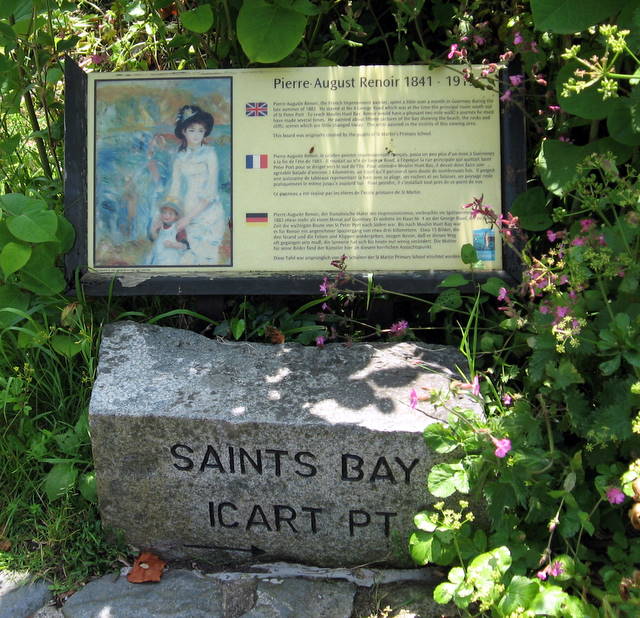
French impressionist artist Pierre-Auguste Renoir (1841-1919) created 15 paintings in Guernsey during his summer stay in 1883.

Children on the Beach at Guernsey is one of Renoir’s paintings featuring the varied landscape of Moulin Huet.

 A New York Times Bestseller 

A holiday visit inspired U.S. writer Mary Ann Shaffer to write a novel set in Guernsey during the German occupation of World War II. The Guernsey Literary and Potato Peel Pie Society, written by Shaffer and her niece Annie Barrows has sold more than 7.5 million copies worldwide.

A Breed of Cattle

A famous icon of the island, Guernsey cattle are prized for their rich creamy milk, and their meat which has a distinctive yellow fat and flavor. We saw the reddish-brown cows grazing as we were hiking the island’s public trails.

Getting to Guernsey       

We visited Guernsey on Holland America’s Heart of Bordeaux cruise aboard the ms Prinsendam in 2008. See our post detailing our visit here.  Princess, Holland America Line and Seabourn call at St. Peter Port, as well as other cruise lines.  It’s an ideal cruise stop since it’s possible to visit multiple sites of the compact island in a day.

Flights only take 45 minutes from London-Gatwick and ferries connect the island with Weymouth, Poole and Portsmouth and well as French ports.

Learn More About Guernsey with These Resoures:

Guernsey Handbook 2016: An essential Guide for Visitors to Guernsey

Guernsey Evacuees

We enjoy exploring destinations with an interesting history.   What’s your favorite destination discovery?

Interact with us on TwitterFacebookPinterest or Instagram.  

{ 3 comments }