≡ Menu

We love cruising.

Being on the ocean. Getting transported to interesting places in luxury. Eating great food.

Holland America LineBut then all of the fun of a cruise comes to an end. You have to pack, get your belongings off the ship and to the airport for your flight home.  Unless you are hand-carrying your luggage, it generally has to be packed and outside your door, the night before arrival into the disembarkation port. Once you get off the ship, you have to find your luggage among miles of other bags, and drag the bags through immigration. There is color-coding, and porters for assistance, but this process can still be a pain.

Which is why programs like Holland America Line’s Luggage Direct is so brilliant. 

Luggage DirectFor a $20 per person fee, you sign up for Luggage Direct while on your cruise, giving the paperwork to the front desk staff.  The cruise line and the luggage-handling vendor get you checked in for your flights, and deliver your boarding passes and luggage tags the afternoon before your departure.

With Holland America’s Luggage Direct service, you put the special airline tags on your bags, and put them outside of your cabin door the night before departure. The next time you see those bags is at the baggage claim in your hometown airport. 

Brilliant!

One you exit the ship, you head to customs and immigration with only your carry-on bag.  Once you are cleared, you head to your transfer bus, shuttle or taxi to the airport. Or, you can take a tour.

When you arrive at the airport, you use your boarding passes to head directly to security.  Your bags have taken to the airport and checked in with the airline by the company providing the Luggage Direct service.

Not having to deal with your bags as your depart the cruise ship and make your way to the airport eliminates a major pain point of disembarkation.

We’ve used the Luggage Direct service on Holland America three different times when getting off of a Holland America cruise in Ft. Lauderdale. We’ve also used the similar Luggage Valet program on Royal Caribbean twice.

Each time, our bags have been waiting for us on at the baggage claim in Kansas City.

A Recap on How You Use Luggage Direct on Holland America Line Cruises

  •  Enroll in Luggage Direct online while on board your cruise through the front desk at least two days before disembarkation.
  •  You will receive your boarding pass and luggage tags the night before the ship’s arrival back into port.
  • You put the luggage tags on your bags and then place them outside your stateroom door.
  • The morning of the ship’s arrival, you will disembark the ship, and go through customs with your carry-on items only. At the airport you will skip the check-in lines and go directly through airport security to your departure gate.
  • When your flight arrives at its destination, pick your luggage up at your flight’s baggage claim carousel.

Notes on the Luggage Direct Program

  • If your airline charges a fee for checked bags, the airline-assessed baggage fees will be applied to your onboard account in addition to the $20 per person fee. We always fly on Southwest Airlines out of Fort Lauderdale, and the airline doesn’t charge for the first two bags per person, so this is not an issue.
  • Generally, your flight out of Ft. Lauderdale has to be for the same day of departure between 11:30 am and 6 pm.  This varies by location, and by participating airlines.
  • Participating airlines include:
    • Southwest Airlines
    • Delta
    • JetBlue
    • United
    • Alaska Airlines
    • US Airways (not sure if this includes American flights, call to check.)
  • The Luggage Direct Service is available at these U.S. cruise ports: (NOTE: we’ve only used the service in Ft. Lauderdale.)
    • Port of Miami
    • Port Everglades (Ft. Lauderdale)
    • Port of Seattle
    • Seward, Anchorage
    • San Pedro, Los Angeles
    • Port of San Diego

Have you tried Holland America’s Luggage Direct service, or Royal Caribbean’s Luggage Valet program? How was your experience? 

Check out these other cruise and travel tips: 

Follow us on Twitter or interact with us on Facebook

Or, check out our boards on Pinterest and/or our photos on Instagram.
 

{ 1 comment }

We decided to take a transatlantic cruise this November from Barcelona to Ft. Lauderdale.

Mr. Jones was able to get us 1-way business-class frequent flier tickets through the Star Alliance.

We convinced some friends who live in Florida to consider joining us for the cruise. Purchasing 1-way airline tickets from the U.S. to Europe is generally expensive.

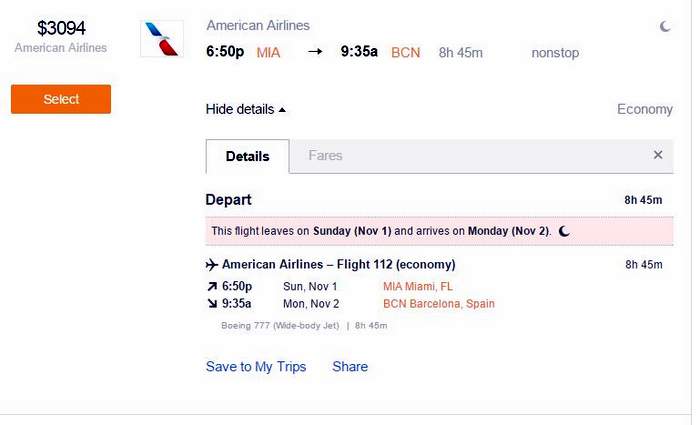
1-way fareA 1-way non-stop fare in coach from Miami to Barcelona is $3,094 per person on American Airlines.

What? That should be a first-class or business-class fare.

flights 2You could try buying a round-trip ticket to Barcelona, and throwing away the return flight, but that could cause you problems with the airline since it is technically not allowed.

Note, the round-trip ticket is $1,162, less than half of the cost of the 1-way ticket.

But wait; there is another option on Kayak.com:

flights 3-001This option is called the “Major Airline” fare.  It shows up under the 1-way flight tab.

Under the “Major Airline” fare, you do not know what airline you are booking.  But you do know the approximate time of departure and arrival, and how many connections there are for the flight. In this case, it is a non-stop flight exactly during the time window that our friends need a flight to catch the cruise.

So they booked this “Major Airline” flight.  As soon as the transaction was complete and charged to their credit card, the airline and flight # were confirmed.

It was the same American Airlines flight — for $602 per person rather than $3,094. Now, the site warns that the tickets are non-refundable. And while it does not warn you, it may be a challenge to get good seats, and/or frequent flier miles for the flight.

But if you want to take a transatlantic cruise back to the U.S. from Europe, you must get to Europe. And being able to do so for a $602 per person airfare makes this a reasonable travel option.

Have you had a reason to book a 1-way flight to Europe? How did you get a reasonably-priced fare? Please share in comments below. 

 Check out these other travel tips: 

Follow us on Twitter or interact with us on Facebook

Or, check out our boards on Pinterest and/or our photos on Instagram.


{ 1 comment }

We’ve been road warriors traveling frequently for business and fun for 20 years.

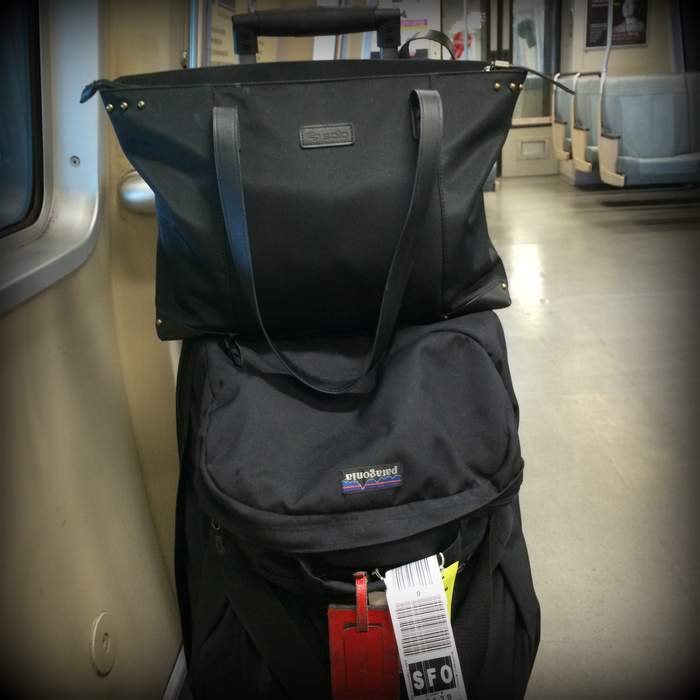
travel bags

Still, despite all of the best intentions, we’ve both have plenty of experience with forgetting something important when we travel.

Like the dress shoes Mr. Jones forgot last week during a business trip. Or the make-up bag that I’ve left on the counter at home, rather than sticking it in my carry-on.  Or the black belt that matches your black pants. Or the suit that’s perfectly folded in the dry cleaner bag inside your suitcase, but when you arrive in your hotel, you realize the wrong pants are in the bag, rather than the ones that match the suit coat.

All of these situations cause stress that is very unpleasant, especially for business and/or international travel.

Here are 3 tips to avoid forgetting things when you travel

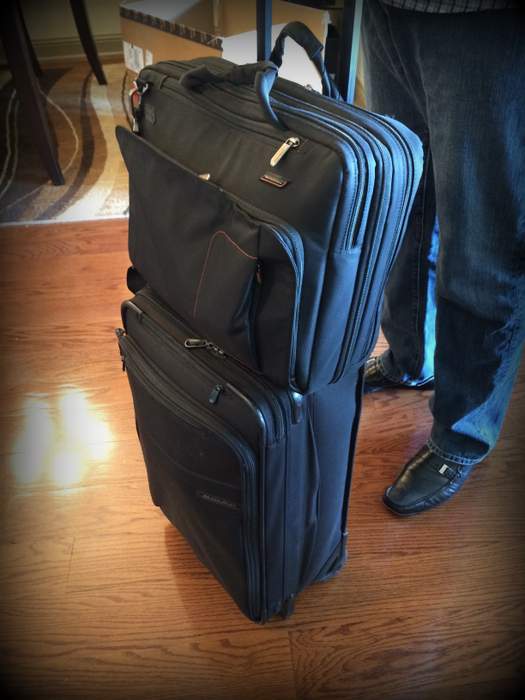
bags

1. Make a packing list, and cross off each item as it goes in the suitcase or briefcase.  This list does not have to be elaborate. Before a big trip I make a list on the notes app in my iPhone, adding to it whenever I think of something I want to take.  I also generally make a quick handwritten list on a card or a sticky note, of anything not packed the night before that I have to travel. Generally, there are things that I need to add in at the last minute in the morning before leaving the house. Examples of last minute items are jewelry, shoes, makeup, sunglasses, medicine, computer and phone charging cords, etc.  Having the last-minute sticky note lets me check off each item as it goes into my bag.

2. Keep duplicates of things you travel with regularly but tend to use until just before your departure. When you wait to put things in your bag at the last minute before you rush out the door is when things tend to get accidentally left of the counter.

Here are some examples of duplicate items that we try to keep ready for travel at all times. :

  • A quart-size plastic bag with duplicate toiletries and make-up essentials. Having a bag with duplicates means that you can keep your “liquids” in 3.4 ounce or smaller sizes always packed with your luggage– ready to go on short notice. You only need to refill as you use them up.
  • Duplicate charger cords for computer, tablet and phone. Travel versions of computer cords are often significantly lighter as well; these duplicates can stay in your briefcase at all times.
  • A dedicated travel jewelry bag packed with a pair of earrings, a necklace and /or a bracelet that goes with most outfits.
  • A copy of all of your travel documents that can be pulled up on your smartphone. We use Dropbox cloud service to store a copy of all of our travel documents for each trip.

3. If you do forget something, don’t panic. If you are traveling a day early, place an order on Amazon for next day delivery of the socks and underwear that you packed in a travel cube, but then left on the dresser. If you have Amazon Prime, you can get next day delivery of many items for just $3.99 each to your hotel.  Charging cords are frequently left at hotels; ask at the front desk if they have a spare that you can borrow. Or, do a quick Google search for the nearest mall to pick up what you forgot.

As Mr. Jones likes to say, if you’ve got your passport and credit cards, everything else is optional.

Have you forgotten an item when you were traveling? Please share with your story in comments below. 

 Check out these other travel tips: 

Follow us on Twitter or interact with us on Facebook

Or, check out our boards on Pinterest and/or our photos on Instagram.

{ 3 comments }

15 Fun Facts About Alicante, Spain

We are planning a fall transatlantic cruise, and may have a stop at the port city of Alicante, Spain. Since it is a new destination for us, we wanted to learn more before we visit. 

Map of Alicante
Alicante is the capital city of the Province of Alicante located on the southeastern coast of Spain. Map by Rodriguillo.

Alicante is a city and historic Mediterranean port on Spain’s Costa Blanca. Alicante is also the capital city of Spain’s fourth most populous province, which is also named Alicante.  Alicante is also a Spanish Denominacion de Origen (DO) for wines from the province of Alicante, which date back to the ancient Roman times.

15 Fun Facts About Alicante, Spain

Castillo de Santa Bí¡rbara, the hilltop castle overlooking the city and port of Alicante, Spain. Photo by Juan J. Martí­nez.

1. A harbor city located at the foot of Benacantil Mountain, tourists flock to Alicante for its warm climate, numerous golf courses, and tranquil beaches along the Mediterranean Sea.

2. A variety of people have been drawn to Alicante’s strategic location for more than 7,000 years, beginning with tribes of hunter gatherers who arrived from Central Europe between 5000 and 3000 BC, settling on the slopes of Mount Benacantil.

3. The area was a magnet for traders and conquerors.  The Greeks, Phoenicians, Carthaginians and the Romans all left their mark on Alicante BC, before the invading Moors brought oranges, palms trees and rice. By 1244 the city became part of Catholic Castilian territory under the Treaty of Almizra.

4. Hamilcar Barca, a Carthaginian general, established the fortified settlement of Akra Leuka, a Greek name meaning “White Mountain” where Alicante stands today. While under rule of the Romans this city was known as “Lucentum” which means “City of Light.”

5. Castillo de Santa Barbara, the hilltop castle overlooking the city from the top of Mount Benacantil is Alicante’s main sightseeing stop. It’s one of the largest medieval fortresses in Europe, and was originally built by the Moors in the 10th century.

6. The Gothic Church of Santa Marí­a from the 14th-16th centuries was built over the former main Arab mosque.

Photo by Lance and Erin.

7. The Explanada de Espana promenade, lined by 400 palm trees, is paved with 6.6 million red, black and cream marble tiles creating a wavy form extending from the Port of Alicante to the Gran Ví­a. Locals meet here for their traditional paseo (evening stroll) along the waterfront.

Photo by Fernando Pastor.

8. For months before the Las Hogueras de San Juan celebration each June, elaborate papier maché sculptures are erected throughout Alicante to be admired, before they are ceremoniously burned in a spectacular bonfire at midnight on St Johns Night around summer solstice.

9. If you cannot visit Alicante during the festival, you can still see some of the spectacle at the Museo de Fogueres (Bonfire Festivities Museum.) The museum has creations that were saved from the flames, and a room to experience the festival through video and photographs.

10. Since nearby rice fields produce 115,000 tons each year, rice takes center stage in Alicante’s cuisine. Popular dishes include arroz a banda (rice with fish), arroz negro (rice blackened in squid ink), arroz con costra (rice with an egg ‘crust’), arroz de mero y gambas, (with grouper and prawns) or arroz de magro (with lean meat and vegetables)

11. Tapas started in Alicante when travelers were given little delicacies placed on a slice of crusty bread to accompany their wine or beer.

12. Horchata – brought to the area centuries ago by the by Arabs — is a refreshing drink made from a blend of tiger nuts, sugar and water.  It has a slightly nutty flavor and is best enjoyed at small, specialized cafes.

13. The Museo de Arte de Siglo XX La Asegurada (Museum of Contemporary Art) houses one of the most important contemporary art collections existing in Spain today with paintings by Dali, Cocteau, Miro, Bacon and Picasso.

Plaza de Luceros in Alicante, Spain. Photo by Zarkos.

14. Both Spanish and “Valenciano” (similar to Catalan) languages are spoken in Alicante.

15. The name Costa Blanca, which means “white coast,” was dreamed up by British European Airways as a promotional gimmick to promote its flights between London and Valencia in the 1950s.

What fun fact can you add about Alicante?

Learn more about Alicante with these resources:

Alicante Mini Survival Guide

Alicante (Volume 1)

Insight Guides Spain

Check out these other Fun Facts posts:

Follow us on Twitter or interact with us on Facebook

Or, check out our boards on Pinterest and/or our photos on Instagram.
{ 0 comments }