≡ Menu

15 Interesting Facts About Bantry, Ireland

In June we plan to visit the coastal town of Bantry, located in West Cork County, Ireland. Our first visit to this part of Ireland will be via a 14-Day Celtic Explorer Cruise.

15 interesting facts about Bantry, IrelandThe town of Bantry, we learned, has a population of less than 3,500 people. It’s located at the head of Bantry Bay, a deep water, wind-sheltered harbor on the Atlantic Ocean with an interesting history.

15 Interesting Facts About Bantry, Ireland

The European pilchard (Sardina pilchardus)

The European pilchard (Sardina pilchardus)

1. Bantry was a small, self-sufficient hamlet of farmers and fishermen until the start of the 17th century when significant numbers of English settlers began arriving, drawn to the area by reports of vast shoals of pilchards in the bay. (Pilchards are also known as “sardines that are more than six inches long.”)

2. With the financial success of fishing, Bantry expanded rapidly with numerous ‘Fish Palaces’ around the harbor by 1725.

3. Meanwhile, the Earl of Anglesey and Cromwellian soldiers received land grants more than 96,000 acres in the Bantry area as a reward for their role in defeating the 1641 Rising. Disenchanted with farming, however, many of the newcomers sold their granted land to the White family. The White family, in turn, prospered by clearing forests, farming and running iron ore smelting operations.

This hand-colored etching by James Gillray, called 'End of the Irish Invasion' or 'the Destruction of the French Armada' depicts the French expedition to Bantry Bay, at the end of 1796.

This hand-colored etching by James Gillray, called ‘End of the Irish Invasion’ or ‘the Destruction of the French Armada’ depicts the French expedition to Bantry Bay, at the end of 1796. Pitt, Dundas, Grenville, and Windham are the four winds which blow up the storm to destroy the invaders. Charles Fox, as the carved figure at the head of the Revolution, is represented as influencing the United Irishmen. The crew of the jolly-boat are Sheridan, Liberty Hall, Erskine, M. A. Taylor, and Thelwall, who, it is insinuated, were all approvers of the Irish rebellion.

4. On December 15th, 1796, a 50-ship French Armada headed to Bantry from Brest with thousands of men in support of the Irish patriot, Wolfe Tone. Tone, a founder member of the United Irishmen, was determined to establish an Irish Republic free of British rule in Ireland.

5. Local landowner Richard White — who was loyal to the British crown — had heard about the planned invasion, and had trained a militia to oppose the landing. He provided storage for British munitions at his Bantry House estate.

6. Thanks to storms off the Irish coast, the French Armada never had a chance of landing in Bantry. As many as 10 ships sank. One of these, the ‘Surveillante‘ remained on the bottom of Bantry Bay for almost 200 years. The French mission failed and the remaining seaworthy ships returned to France.

Anchor from the French frigate "La Surveillante," part of the French Armada force in 1796, which sank near Bantry, Ireland. The anchor was discovered and recovered in 1981.

Anchor from the French frigate “La Surveillante,” part of the French Armada force in 1796, which sank near Bantry, Ireland. The anchor was discovered and recovered in 1981.

7. For his efforts in helping repelled the French Invasion of 1796 at Bantry Bay, Richard White was made Baron of Bantry in 1797, Viscount Bantry in 1800 and the 1st Earl of Bantry in January 1816.
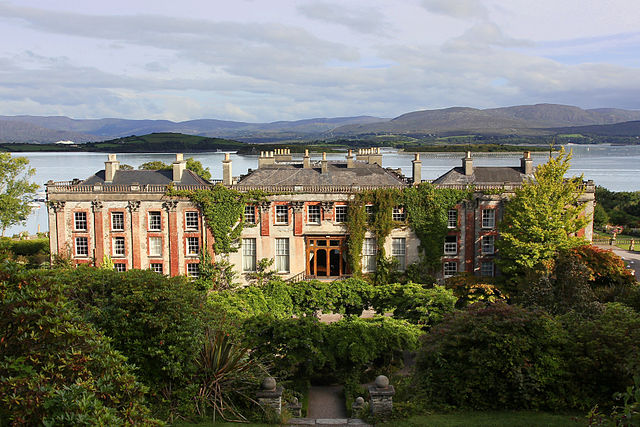
The Bantry House is the ancestral home of the White family who became the Earls of Bantry. Photo by Jörg Bittner Unna.

The Bantry House is the ancestral home of the White family who became the Earls of Bantry. The home has been open to visitors since 1946. Photo by Jörg Bittner Unna.

8. Bantry prospered in the early 1800’s as the 1803–1815 Napoleonic Wars created a huge demand for fish and other agricultural products. By 1831, the population of Bantry had grown to 4,275 people, with many involved in fishing.

A Curtiss H-16 flying boat of the US Navy, used at the U.S. Naval Air Station Whiddy Island near Bantry, Ireland during the final months of World War I.

A Curtiss H-16 flying boat of the US Navy, used at the U.S. Naval Air Station Whiddy Island near Bantry, Ireland during the final months of World War I.

9. Whiddy Island, near the town on Bantry, became the site of U.S. Naval Air Station Whiddy Island during the last months of World War I. Bantry Bay Station was used for anti-submarine patrols by Curtiss Model H flying boats. These air crews patrolled shipping lanes for submarine activity south of Kinsale, Ireland.  (This area where the RMS Lusitania had been sunk by German submarine in May, 1915.) The aircraft took off and landed in Bantry Bay; they were pulled up a concrete ramp for servicing and storage. The short-lived seaplane base became operational on September 25,  1918 and closed in February 1919 after the war ended.

10. Following the Irish Potato Famine between 1845 and 1852 — during which more than a million people in Ireland died and another million left the country for the United States, Canada, Australia and New Zealand — the population of Bantry dropped drastically to about 1200.

11. The 5th Cork Brigade of the Irish Republican Army was active in Bantry during the 1919 -1921 Irish War of Independence and the subsequent Civil War.

Names of those who died “In Defense of the Republic” between 1920 and 1923 are listed in Wolfe Tone Square, Bantry, Ireland12. Names of those who died “In Defense of the Republic” between 1920 and 1923 are listed in Wolfe Tone Square in Bantry.
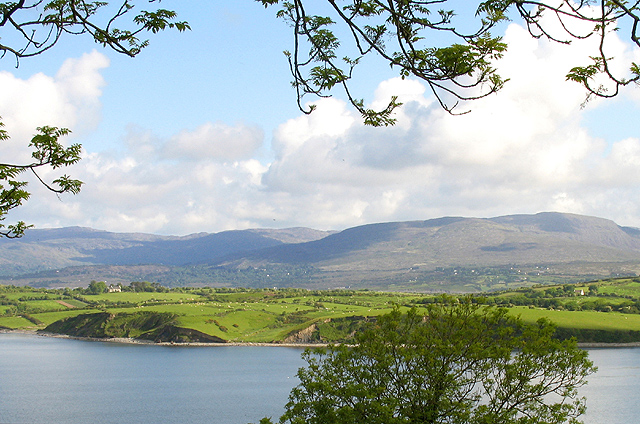
Whiddy Island viewed from the south shore of Bantry Bay, Ireland. Photo by Pam Brophy.

Whiddy Island viewed from the south shore of Bantry Bay, Ireland. Photo by Pam Brophy.

13. In 1969, the Gulf Oil Company established a crude oil tank farm on Whiddy Island in Bantry Bay. A fleet of giant oil tankers brought the crude oil from Kuwait to Bantry via the Cape of Good Hope for re-shipment to refineries throughout Europe. Bantry became a boom town, but this revival was short lived.

14. On January 8, 1979,  the oil tanker Betelgeuse exploded in Bantry Bay. The explosion and resulting fire claimed the lives of 50 people. The Oil Terminal closed, costing Bantry economic hardship and the the loss of more than 250 jobs. During the use of sonar sweeps during the cleanup effort, the French frigate “La Surveillante,” part of the French Armada force in 1796, which sank near Bantry was discovered and recovered in 1981.

15. In more recent years, Bantry has become Ireland’s leading area for mussel-farming.  Fishing remains a key industry with herring, hake, whitefish, salmon, lobster and crab. The town is also a popular destination for tourists and surfers.

Learn more about the history of Bantry and Ireland with these resources:


A Bay of Destiny: A History of Bantry Bay and Bantry


The French Are in the Bay: The Expedition to Bantry Bay, 1796


The Writings of Theobald Wolfe Tone 1763-98: Volume II: America, France, and Bantry Bay, August 1795 to December 1796 (Volume 2)

Have you visited Bantry, Ireland? What interesting fact can you add?

Interact with us on TwitterFacebookPinterest or Instagram.

{ 0 comments }

22 Fun Facts About Milford Haven, Wales

We will be visiting Milford Haven, Wales, in the United Kingdom for the first time in June. In anticipation of our first visit via a cruise ship, we did a little research.

Fun Facts about Milford Haven, Wales, United Kingdom1. The town of Milford Haven (population 13,900) is part of Pembrokeshire County in western Wales. One can reach the town by driving approximately 250 miles from London, England.

2. While the town of Milford Haven wasn’t founded until 1793, the surrounding inlet waterway with its natural harbor was used by the Vikings seeking shelter from 790 until the Norman Invasion in 1066.

3. Formed by a ‘ria’ or ‘drowned valley’ flooded at the end of the last Ice Age, the 22-mile-long  Milford Haven inlet (or waterway) runs from where the Pembroke River and the Daugleddau estuary converge west to the Irish Sea.

 Milford Haven harbor in 1776. painting by George Attwood.

A George Attwood painting of the Milford Haven harbor in 1776. Fleet assembled may be carrying reinforcements to the American War of Independence. The hamlet of Hakin Hubberston is visible, which would form part of the later town of Milford Haven, Wales.

4. With its naturally deep harbor, the Milford Haven Waterway was labeled as “one of the world’s greatest harbors.”

5. In 1790, Sir William Hamilton obtained an Act of Parliament to establish the port at Milford on the north bank of the waterway.  He had inherited the land from his wife Catherine Barlow of Slebech when she died.

6. Charles Francis Greville — Sir William Hamilton’s nephew — was in charge of building the port town. Greville persuaded two leading American Quaker whaling families – the Folgers and Starbucks – to relocate from Nantucket in the United States in 1792 to become the first settlers of Milford.

7. Led by the Starbucks and Folgers, the Quaker families from Nantucket arrived in Milford with the intention of developing a whaling fleet to service the growing demand for whale oil to fuel street lights. These families had been the backbone of the American whaling industry; when the American War of Independence ended in 1783, they had to seek other opportunities.

8. Since its first residents were from Nantucket, the streets of Milford Haven followed an American grid system, and buildings were built in the same their architectural style found in New England.


9. Starbuck Road in Milford Haven was named after one of the original whaling families from Nantucket. The same family was said to be the inspiration for Moby Dick, Herman Melville’s 1851 novel. In the book, The Pequod is a fictional 19th-century Nantucket whaling ship with a young chief mate called Starbuck who is a Quaker from Nantucket.

10. The name of Starbucks Coffee Company was inspired by the character in Moby Dick. The closest Starbuck’s to Milford Haven, however, appears to be more than 60 miles away in Llanelli, Wales.

11. The whaling venture in Milford Haven was short-lived but the new town did become a thriving fishing port from 1888. Fishing boats from the entire British coast were drawn to Milford Haven’s sheltered anchorage near quality fishing grounds and direct rail links to London and other fish markets.

General view of the town and the haven in 1895 – Milford Haven, Wales

12. By 1906 Milford Haven was Britain’s sixth largest fishing port employing more than 500 people.

13. The fishing fleet continued to thrive in Milford Haven until the 1950’s when Atlantic fish stocks began to vanish.

14. Just as fishing was declining in Milford Haven oil came to the rescue. Led by the Suez Crisis and the temporary loss of the Suez Canal as a trade route, Milford Haven assumed a strategic importance when it became an imperative to bring oil from the Middle East around the tip of Africa. Milford Haven, with its deep water harbor, was chosen as a secure base for the huge deep-water oil tanker ships.

15. In 1960 the Esso oil company opened their refinery just outside the town of Milford, closely followed by other refineries and pumping stations. By 1970 Milford Haven was the leading oil port in Britain, and the second largest in Europe.

16. The Milford Haven “oil boom” disappeared in the early 1980s. Esso closed down in 1983 after just 20 years of operation. Gulf and BP facilities hung on until 1997-1998.

17. Open daily, the Milford Museum documents the events that impacted the area throughout its history. The small museum is housed in one of Milford Haven’s oldest buildings, originally created to store whale oil awaiting shipment to in London.

18. Although it is the most westerly point Wales and furthest from the English border, fewer than 8 percent of Milford residents are fluent the Welsh language, as English was the predominate language for many centuries.

19. Parts of the Milford Haven are within the Pembrokeshire Coast National Park, home to the popular Pembrokeshire Coast Path.

View of Fort Hubberstone, located on the west side of Milford Haven Waterway. Photo by Alvear24.

View of Fort Hubberstone, located on the west side of Milford Haven Waterway. Photo by Alvear24.

20. Fort Hubberstone, built in 1863 to defend the Milford Haven Waterway, was used in World War I and World War II. While on a scenic location, the fort site is not currently open to the public and is considered dangerous to trespassers. The land occupied by the historic fort is owned by Milford Haven Port Authority.

Panorama of Pembroke Castle's outer ward. Photo by Mark Jones.

Panorama of Pembroke Castle’s outer ward. Photo by Mark Jones.

21. Pembroke Castle, located on a rocky promontory by the Milford Haven Waterway, was the birthplace of King Henry VII of England. He became the King of England on August 22, 1485 by defeating King Richard III at the end of the Wars of the Roses. Henry ruled 24 years until his death in April, 1509, when he was succeeded by his son, Henry VIII. Henry VII was the last king of England to win his throne on battlefield.

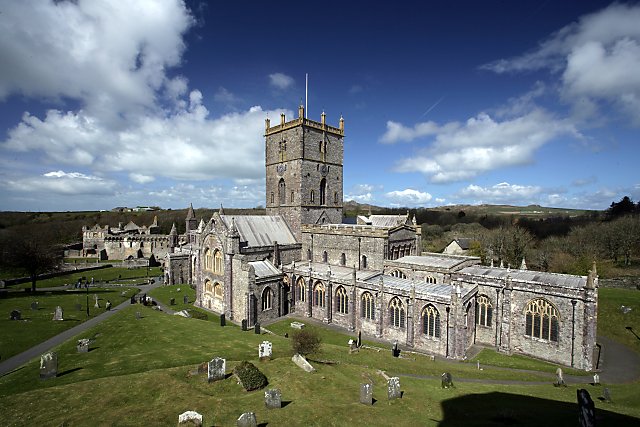
St David?s Cathedral, a site of worship since around 600 AD, is the centerpiece of the smallest city in the United Kingdom. Photo by Alan Thomas.

St David?s Cathedral, a site of worship since around 600 AD, is the centerpiece of the smallest city in the United Kingdom. Photo by Alan Thomas.

22. A popular side trip from Milford Haven is the 23 mile drive to St. Davids, the smallest city in the United Kingdom that is home to the stunning St. David’s Cathedral.

Learn more about Milford Haven, Wales with these resources:

Milford Haven Through Time

Milford Haven: Waterway and Town

Have you visited Milford Haven? What interesting fact can you add?

Interact with us on TwitterFacebookPinterest or Instagram.

{ 0 comments }

Chinatown, Chicago, IL,USAOn a recent rainy Sunday in Chicago, we walked and tasted our way through the city’s Chinatown neighborhood. To learn about this “new-to-us” area of Chicago, we booked the Chinatown Adventure with Chicago Food Planet Food Tours.

It was easy to reach Chinatown from the Wit, our downtown Chicago Loop hotel. We took the Red Line ‘L’ train from the Lake station, five stops south to the Cermak/Chinatown station. Just out of the station we found South Wentworth Ave, and walked to the “Welcome to Chinatown” sign.

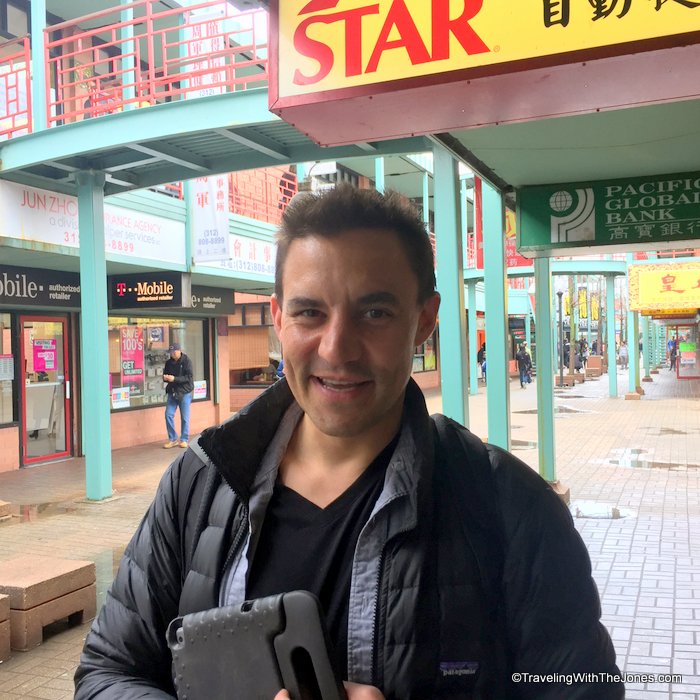
Philip, tour guide for Chicago Food Planet Food ToursWe met Philip, our tour guide at the appointed Chinatown location. This was our third food tour with Chicago Food Planet; we think they do a good job teaching about the history and culture of a specific part of Chicago, as well as showcasing the areas’ best foods. (See this post about our first tour through Chicago’s Gold Coast and Old Town neighborhoods.)

Chinese immigrants first arrived in Chicago, we learned, after the completion of the First Transcontinental Railroad in 1869. Looking to escape the anti-Chinese violence that had broken out on the west coast, they first settled in Chicago’s Loop along Clark Street. Thanks to overcrowding, increasing rent and discrimination the Chinese began moving south to Armour Square in 1912, the start of today’s Chinatown in Chicago.

Our Chinatown Adventure tour started at the Triple Crown Restaurant on South Wentworth Avenue.  We love dim sum, so we were excited to taste some of this restaurant’s specialties.

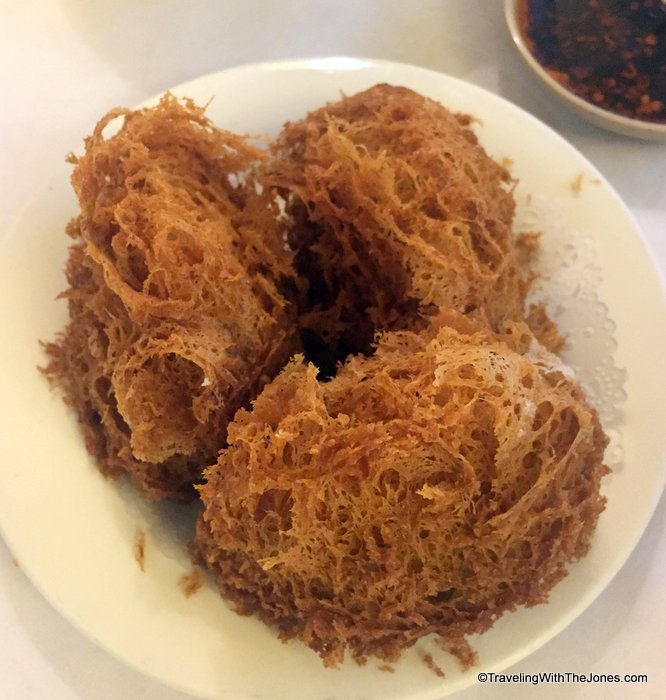
Deep Fried Taro Puff, Triple Crown Dim Sum Restaurant, ChicagoOne of our favorite things about food walking tours is getting introduced to new foods. The Deep Fried Taro Puff, pictured above, is not something we would have chosen off of a dim sum cart or menu, but it was tasty and fun to learn about from our guide.

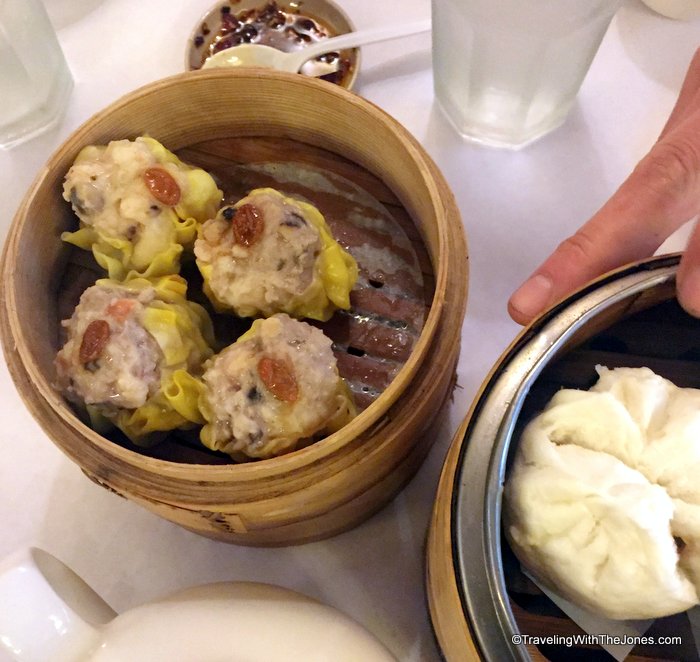
Siu Mai and Steamed BBQ Pork Bun, Triple Crown Dim Sum Restaurant,in Chicago's ChinatownOur group also tried the more usual Siu Mai (pork and shrimp dumplings) and Steamed BBQ Pork Buns at the Triple Crown Dim Sum Restaurant. This represented Cantonese-style food from Hong Kong and other southern regions of China close to the sea.

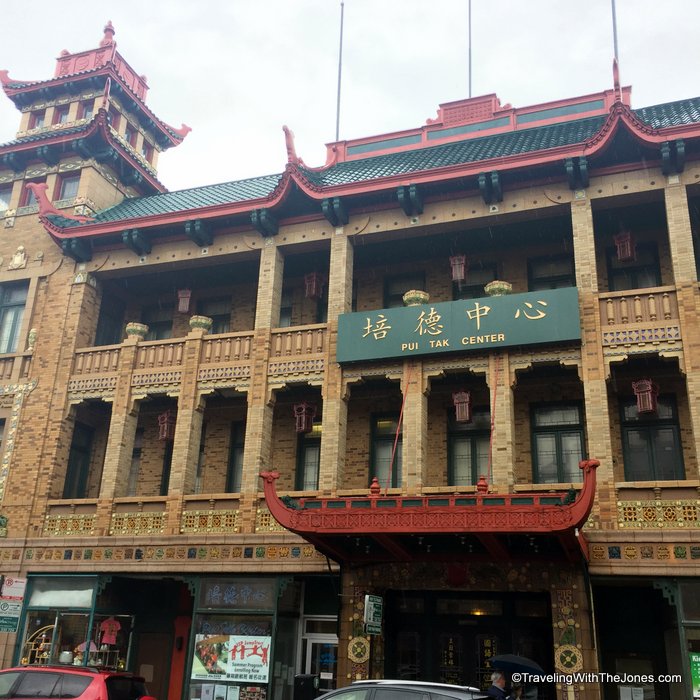
Pui Tak Center, Chinatown, Chicago, ILJust across the street from the Triple Crown Restaurant is the building that was once known as Chinatown’s “city hall”.  The ornate Pui Tak Center was originally opened in 1928 as the On Leong Merchants Association Building, a place to help new Chinese immigrants assimilate to Chicago. In 1988, as part of a federal racketeering investigation, the FBI and Chicago Police raided the building, finding a casino hidden on the building’s second floor, with significant cash in its vault. The US federal government seized the building that same year.

The building fell into disrepair until 1993, when the government sold the building to the Chinese Christian Union Church (CCUC) for $1.4 million.  The church renamed the building the Pui Tak Center, and it is used for religious, community, and educational programs for the Chinatown community.

After visiting a bakery and a Buddhist Temple on South Wentworth Ave, our tour headed to Chinatown Square, a two-level mall north of Archer Avenue built in the late 1980’s. This area – purchased from the Santa Fe Railway — has been developed into a shopping and residential area known as “new” Chinatown.


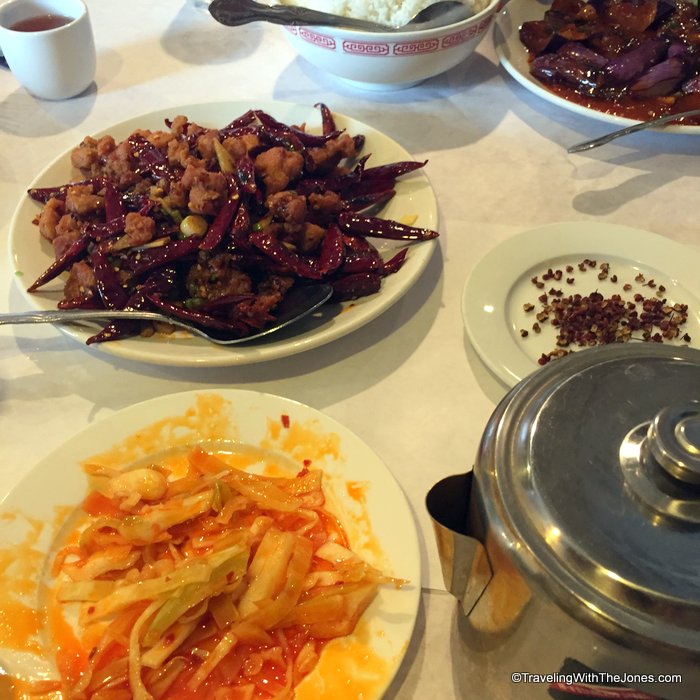
At the Lao Sze Chuan Restaurant we were introduced to the citric flavor and the tingly numbing sensation of Szechuan Peppercorns.

Szechuan delights at Lao Sze Chuan Restaurant, in Chicago's new ChinatownOur group tried spicy chicken, Szechuan Style Spicy Cabbage and Chinese Eggplant in Garlic Sauce which was surprisingly enjoyed even by avowed eggplant haters.

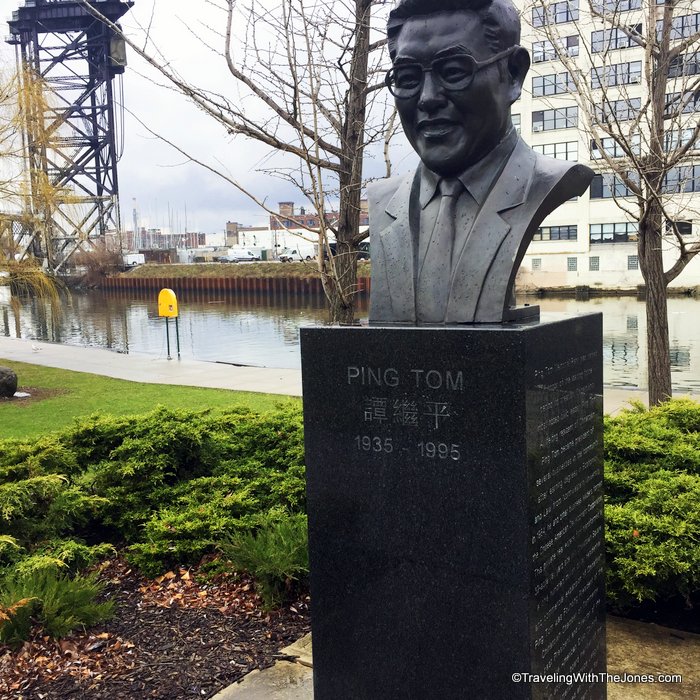
Ping Tom Memorial Park and Chicago Water Taxi Station, ChicagoWe walked through the new Chinatown residential area to the Ping Tom Memorial Park and Chicago Water Taxi Station. The 12-acre park was originally a Chicago and Western Indiana Railroad yard located along the edge of the South Branch of the Chicago River. The park is named after businessman and civic leader Ping Tom who formed the private firm that developed Chinatown Square and the surrounding area.

We first saw this park and its beautiful pagoda-style pavilion two years ago sailed by on the Chicago Architecture River Tour.

Peking Duck, BBQ King House, Chicago's ChinatownBack in Chinatown Square, we visited a traditional Chinese pharmacy, and then enjoyed Peking Duck.

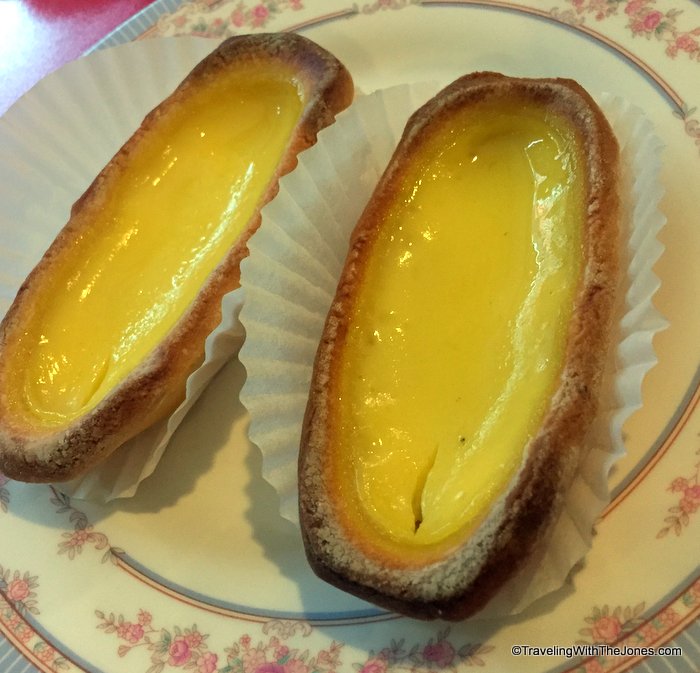
Portuguese-Style Milk Egg Tart, Saint Anna Bakery and Pastry Shop, Chinatown, Chicago, ILOur final stop included milk tea and the delicious Portuguese-Style Milk Egg Tart at Saint Anna Bakery and Pastry Shop.  This was our second bakery stop of the tour; earlier we enjoyed trying more traditional Chinese pastries such as the Red Bean Paste Cake at Chiu Quon, the oldest Chinese bakery in Chinatown.

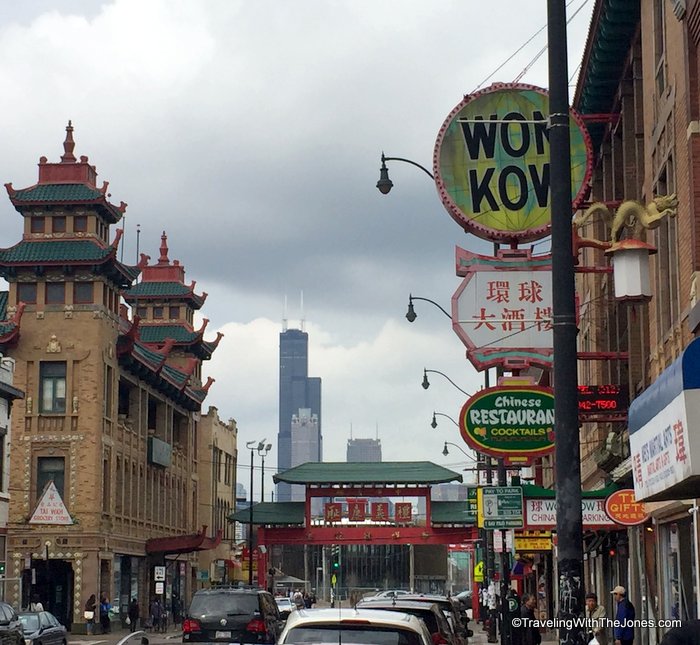
looking down South Wenthworth Ave in Chicago's ChinatownAfter we finished the tour we headed to South Wentworth Avenue for one last look at Chicago’s Chinatown. Since the weather had improved enough to see Chicago’s skyscrapers in the distance, we decided to walk back to our Downtown Loop hotel.

Learn more about the history of Chicago’s Chinatown:


Chinese in Chicago: 1870 – 1945

Planning to visit Chicago? Here are two books worth reading:

DK Eyewitness Travel Guide: Chicago


The Third Coast: When Chicago Built the American Dream

Interact with us on TwitterFacebookPinterest or Instagram.

Other Chicago-related content:

A Look Inside the Renaissance Chicago Downtown Hotel

A Look Inside the Hotel Chicago Downtown, Autograph Collection

Fabulous Thin Crust Pizza in Chicago

A Peek Inside Chicago’s Palmer House Hilton Hotel

{ 0 comments }
Packing for a Mediterranean Cruise

We love reader questions. Here is a question from Robin:

“What clothes do you suggest for a 21-day cruise on Princess from Barcelona to Athens April 15- May 6th?”

Princess 21-day Western Med and Greek Isles cruise on Majestic Princess

While Robin did not specify which Princess ship or specific itinerary she will be sailing on, we are guessing that it might be this one: a 21-day “Collectors” cruise that sails to the Western Mediterranean and Greek Isles on the on the Majestic Princess.

If you’d like a short list of general tips, check out this prior post: Cruising the Mediterranean? 10 Tips to Make Your Cruise More Enjoyable. For a more comprehensive guide to packing for this cruise, read on below.

What to pack for a 21-day Mediterranean Cruise in mid-April and early May? 

Amalfi Coast, Italy

Whenever we are thinking about packing for a cruise or any vacation, we start with four questions. 

  1. What might the weather be like? What are average temperature ranges for the time of year we are traveling?
  2. How easy will it be to do laundry or get laundry done?
  3. How many bags can we check on the flight without paying extra, and what is the weight limit?
  4. What kind of activities and/or events do we need to dress for?

What might the weather be like? What are average temperature ranges for the time of year?

While the weather is generally favorable around the Mediterranean Sea throughout the year, average temperatures are significantly different in April than in August.  We checked the weather in the cruise starting point (Barcelona, Spain in April) and ending point (Athens, Greece in May.)

During the average April in Barcelona, it rains five days out of the month while the high temperature is 65 degrees F and the low temperature is 51 degrees F.

For Athens, in May, the average high temperature is 77 degrees F while the average low temperature is 60 degrees F, and rainfall typically occurs on four days.

Athens, Greece
Athens, Greece

How easy will it be to do laundry or get out laundry done?

All Princess cruise ships offer on-board laundry, pressing and professional cleaning service for a fee. If you are traveling in a full suite, or are an Elite Captain’s Circle member, you get complimentary laundry and professional cleaning service with a 48-hour turn-around.

All Princess vessels also have self-service launderettes where washers, dryers and laundry products are available for a small charge. If you plan to go this route, consider your cruise itinerary, as there are only three sea days out of a 21-day cruise. Most cruise vacationers will not want to miss time in port to do laundry, nor spend their few days at sea in a packed laundry room. (If we must do self-service laundry on a ship, we try to do it during an off-peak time for the laundry such as during early-seating dinner.)

How many bags can we check on the flight without paying extra, and what is the weight limit?

Airlines differ significantly on luggage allowance for international flights. Be sure to check your carrier in the class of ticket purchased as to the amount, size, and weight of luggage that you can check and/or carry on the flight.

In general, if you are flying internationally between the United States and Europe on a U.S. legacy airline such as Delta, United or American, each passenger can check one bag weighing up to 50 pounds free of charge. In addition, you can carry two items onto the flight: a small roller bag that fits in the overhead, plus a personal item such as a purse, briefcase or small backpack that fits under your seat. In Business Class, you might get two or up to three bags per person, perhaps even weighing up to 70 pounds each.

Be sure to check with your air carrier as you do not want a surprise charge for an overweight bag.

What kind of activities and/or events do we need to dress for?

Think about the kinds of activities you plan to do, and what clothing is needed for each. Many Mediterranean cruise destinations are ancient, and that means comfortable walking shoes that are supportive for uneven surfaces. Do you plan to use the ship’s gym, spa, or pools? What clothing will you need?

What will you wear for dinner? On a 21-day cruise on Princess, you may have four formal nights. What clothes, accessories and shoes will you need for those? A hint for men who want to dress up for formal or gala nights but do not want to take a suit and ties to Europe: rent a tuxedo through the ship.

We cannot tell you what clothes are right for you to pack. We can tell you what we would pack for such a trip.

luggage for 21-day Mediterranean Cruise

First, these are the bags we would take:


1. Two extra-large wheeled duffel bags, one each. Ours are from Patagonia and Eddie Bauer — we’ve traveled with these all over the world. They hold a ton of stuff, are easy to maneuver, and are light but tough. We would check these bags on flights, weighing them with our Digital Luggage Scale to make sure they are not over the 50 pound limit, either on the way over, or for the return when we invariably have acquired more stuff. To help organize items in these duffels, we use packing cubes, mesh bags, quart-size plastic bags

2. One carry-on size roller-bag. Mr. Jones’ is from Briggs & Riley. If we are flying in a day early or even arriving the day of departure, we do not want to get on the ship with no clothes. So, we carry one roller-bag with our essentials to cover us for a few days. This bag expands, if we get crazy buying stuff and need to check it on the flight home.


3. Our carry-on backpack and briefcase to hold our computers, tablets, phones, charger cords, key travel documents, medicine, and for Mrs. Jones, her make-up in quart-size plastic bag and a small cross-body purse.

4. A lightweight, Stowaway Packable Daypack for carrying camera, water bottle, maps, etc. during day trips and shore excursions. (I do not want to carry a purse most places.)

For packing, we think about the clothing and shoes we will need by how we will be spending our days. In this case, there are four main categories:

1. Day-time active wear: clothes to wear each day as we are exploring in ports.

For springtime in the Med, we would follow the adage to “Dress like an onion – in layers so you can add-on or peel off as the weather of the moment dictates.”

We would plan for three layers that can mix and match:

  • A t-shirt or light top (take 5-7)
  • A sweater, sweatshirt, hoodie, a button-down type shirt and/or a vest. (take 3-5 to rotate)
  • A waterproof jacket, shell or raincoat with a hood (take 1)

With these toppers we would wear jeans, khakis, or other comfortable, casual pants, taking 4-5 pairs for each of us. And, we would throw in 1-2 pairs of walking shorts.

2. Evening dinner wear which we would get laundered/pressed as need as rotate during the 21 days:

  • I would take 6-7 dresses and 2 pair of black dress slacks with 3-4 tops. At least three outfits would be suitable for formal nights.
  • For Mr. Jones, we would pack a dark suit, 2 dress shirts and ties, 3-4 pair of dress slacks or khakis, 3-4 long-sleeved button-down shirts and 3-4 polo shirts.

3. Other Clothing/Toiletries/Electronics/Misc.:

  • Exercise wear for workout on the ship
  • Underwear for 10-14 days (still assuming some laundry but you can always take old and toss as you wear), plus any special garments for formal wear
  • Hose, tights
  • Nightwear for sleeping
  • 1 swimming suit each, plus a cover-up and flip-flops or other shoes to wear to the pool/hot tub.
  • Sunglasses
  • Packets of sunscreen, Insect Repellent Towelettes, and sanitizing hand wipes (by carrying the kind in foil packets, they are lighter and don’t count as liquids in your flight carry-on bag)
  • Foil packets of Shout Stain Remover Wipes to clean up spots
  • Two dual plug-in charger cords
  • Two Collapsible Travel Trays (we each have one to keep items such our keys, jewelry, etc. organized in one place.)
  • Travel size packets of tissue and cloth handkerchiefs for Mr. Jones
  • Each of us packs our laptop computers, mouse, computer power cord, iPad and iPhone and dual charge cord — we tend to keep up on work even when traveling
  • For camera’s we use our iPhone but if you take a camera be sure to include chargers, back-up batteries and photo cards.
  • We used to carry books, puzzle books, DVDs for entertainment on flights, buses, and trains. Now, we load our iPads with games, movies/television shows from Apple and Amazon Prime. If you don’t have Amazon Prime, you can try a Free 30-Day Prime Trial.
  • We access our favorite guidebooks and other books we’ve bought via our Kindle app. If you have a tablet or smartphone, you can try Kindle Unlimited free for 30 days.
  • We each take two sets of tiny inexpensive, earbud headphones . (We find this item easy to lose or misplace so we keep one with our phone and one spare packed in our carry-on bag.)
  • We carry a lightweight plastic wine corkscrew with us – the Mediterranean is a fantastic place to find a local bottle of wine.

4. Shoes

I have a hard time limiting my shoes. I would take these:

  • 1 pair formal dress heels (black)
  • 1 pair of dress sandals (light color)
  • 1 pair of black flats (wear on plane)
  • 1 pair of tennis shoes suitable for gym /exercise

If our bags are overweight, this is where I will edit.

Mr. Jones is a shoe minimalist.

What would you pack for a 21-day spring cruise in the Mediterranean? 

Interact with us on TwitterFacebookPinterest or Instagram.

{ 0 comments }