≡ Menu

by JANIS on JULY 10, 2020 EDIT

If you missed part 1 of 99 Interesting Facts About Omaha, click here to start at the beginning. Click here for Part 2.

A postcard (circa 1930-1945 ) from Boys Town, Nebraska, founded by Father Flanagan.

61. In 1917, Father Edward J. Flanagan, a young Irish priest in Omaha, borrowed $90 to rent a boarding house for orphaned and troubled boys. All boys –regardless of race or religion– were welcome at Father Flanagan’s Home for Boys.

1938 Photo of Boys Town founder Father Edward Joseph Flanagan

62. In 1921, Father Flanagan purchased Overlook Farm — located on the outskirts of Omaha — and relocated his Boys’ home there. Under Flanagan’s direction, Boys Town grew to be a large community with its own boy-mayor, schools, chapel, post office, cottages, gymnasium, and other facilities where boys between the ages of 10 and 16 could receive an education and learn a trade. Flanagan did not believe in the reform school model, and stated, “there’s no such thing as a bad boy“. In 1936, Boys Town became an official village in the state of Nebraska.

Boys Town Men Of Boys Town

63. News of Father Flanagan’s work spread worldwide after the 1938 movie Boys Town. Actor Spencer Tracy won an Academy Award for his portrayal of Father Flanagan. In 1941, Spencer Tracy reprised his performance as Father Flanagan opposite a young Mickey Rooney in the sequel Men of Boys Town.

Today Boys Town is a non-profit organization dedicated to the care, treatment, and education of at-risk children and their families at nine locations throughout the United States. It’s headquartered in the village of Boys Town, a suburb of Omaha with a population of 745.

https://www.instagram.com/p/pKWpvIp2kP/

64. The Boys Town Visitors Center has the world’s largest ball of stamps, measuring the 32 inches in diameter, consisting of 4,655,000 stamps, and weighing 600 pounds.

65. Malcolm X — an African American civil rights activist — was born as Malcolm Little in Omaha on May 1, 1925. Due to Ku Klux Klan threats, the Little family moved from Omaha to Milwaukee, Wisconsin in 1926, when Malcolm was just a year old.

Malcolm X House Site historical marker in Omaha. Photo by Ammodramus

While the house where Malcolm X first lived with his family in North Omaha is long gone, a historical marker notes its location at the 10-acre Malcolm X birthplace site, listed on the National Register of Historic Places since 1984. The Malcolm X Memorial Foundation is headquartered here.

66. Costing more than $1 million to build, the upscale Hotel Fontenelle opened in 1915 at 1806 Douglas Street in downtown Omaha. In 1920, Gene Eppley acquired the Fontenelle, making it the flagship of his Eppley Hotel Company, which was headquartered in Omaha.

Omaha’s legendary Hotel Fontenelle hosted many celebrities and politicians including Lou Gehrig, Babe Ruth, and President Harry S. Truman. Senator John F. Kennedy and his wife Jacqueline stayed at the hotel during his 1960 Presidential election campaign.

67. By the 1950s, the Eppley Hotel Company owned 22 hotels across six states — the largest privately held hotel company in the US. In 1956, Eppley sold his hotel empire to Sheraton Hotels $30 million –equivalent to $282 million in 2019. The Fontenelle Hotel closed in 1971, and was demolished in 1983.

68. Upon his death in 1958, Eugene Eppley donated $1.0 million towards upgrading the Omaha Municipal Airport for jet aircraft. The federal government matched Epply’s contribution, and in 1960 the upgrade to handle jets was complete. The airport was renamed Eppley Airfield, which served more than five million passengers in 2019.

Ginger Rogers and Fred Astaire in Top Hat (1935).

69. Fred Astaire — known as the most influential dancer in the history of film — was born in Omaha on May 10, 1899. His father had moved his family to Omaha to work as a brewer at the Storz Brewing Company.

Fred Astaire, and his sister Adele in 1906

70. In 1905, when their father lost his job at the brewery, the family moved to New York City where Fred Astaire and his sister Adele became a “brother and sister act”. This was the start of Fred’s stage, film and television career that spanned 76 years.

Actor Marlon Brando was born in Omaha in 1924. Photo by Lou Wolf49.

71. Actor Marlon Brando — known for his performances in A Streetcar Named Desire, On the Waterfront and The Godfather, among many others — was born in Omaha on April 3, 1924.

72. Dodie Brando, Marlon Brando’s mother, starred in The Enchanted Cottage, the first play put on by the Omaha Community Playhouse when it was founded in 1924. Today, 96 years later, the Omaha Community Playhouse is the largest, one of the most famous, and one of the best-endowed community theaters in the United States.

This image has an empty alt attribute; its file name is 362px-Henry_Fonda_in_Warlock.jpg
Actor Henry Fonda in Warlock, 1959.

73. Back in 1924, when the Playhouse’s needed a young man to play the lead for You and I, Mrs. Brando suggested twenty-year-old Henry Fonda, her friend Herberta Fonda’s son. Fonda was cast as Ricky.

On Golden Pond

74. Fonda went on to Hollywood where his acting career spanned five decades. He won the Oscar for Best Actor for his final film role in the 1981 movie On Golden Pond, which also starred Katharine Hepburn and his daughter Jane Fonda.

75. Actor Nick Nolte was born in Omaha in 1941. He attended Omaha’s Westside High School where he was the kicker on the football team, graduating in 1959. Nolte moved to Los Angeles, and got his big break in lead role in the 1976 miniseries “Rich Man, Poor Man.” Nolte used his football skills in the 1979 movie North Dallas Forty.

76. Nolte won the Golden Globe award for Best Drama Actor for his 1991 performance in the Prince of Tides with Barbra Streisand.

77. Gale Sayers, a NFL Pro Hall of Fame football player for the Chicago Bears, grew up in Omaha and graduated from Omaha Central High School where he starred in both football and track and field.

Brian’s Song I Am Third

78. In 1967 Sayers and his Bears teammate Brian Piccolo became the first interracial roommates in the NFL. Sayers’ friendship with Piccolo and Piccolo’s struggle with cancer became the subject of Brian’s Song, a made-for-TV movie. The movie was adapted from Sayers’ account of this story in his 1970 autobiography, I am Third.

79. Oscar-nominated director, producer and screenwriter Alexander Payne – best known for the films Election (1999), About Schmidt (2002), Sideways (2004), The Descendants (2011), and Nebraska (2013) — often sets his films in and around his hometown of Omaha.

80. Payne, the youngest of three boys, grew up in what is now known as Omaha’s Dundee-Happy Hollow Historic District, the same neighborhood as billionaire Warren Buffett.

Click here to continue to Part 4 of 99 Interesting Facts to Know About Omaha, Nebraska.

What interesting fact about Omaha surprises you most?

Please share your comments or questions via TwitterFacebookPinterest or Instagram.

{ 0 comments }

If you missed part 1 of 99 Interesting Facts About Omaha, click here.

Logo of Omaha Steaks. Photo by Bill McChesney aka bsabarnowl
Photo by Bill McChesney aka bsabarnowl

35. Omaha Steaks International, Inc — one of America’s largest marketers of beef today — is a fifth generation, privately held, family business. In 1917, J.J. Simon and his son, B.A. — immigrants from Riga Latvia — founded the company in Omaha. It was a butcher shop called Table Supply Meat Co.

36. In the 1940s, B.A.’s son, Lester Simon, convinced the Union Pacific Railroad to serve Omaha Steaks in its dining cars. The national exposure to train passengers led the company to launch its first mail order ventures in 1952, with meat was shipped in wax-lined cartons filled with dry ice.

Omaha Steaks Bacon-Wrapped Filet Mignon  Photo by LindsaySos
Omaha Steaks Bacon-Wrapped Filet Mignon Photo by LindsaySos

37. Today, Omaha Steaks is the largest direct shipper of gourmet foods in the U.S. offering more than 400 items and shipping more than four million packages a year. In 2018, the Omaha- based company employed 2000 people (not counting seasonal employees) and had annual sales exceeding $480 million.

38. Mary Lucretia Creighton left $200,000 in her will to establish a college in honor of her husband, Omaha banker Edward Creighton. On September 2, 1878, five Jesuits and two lay teachers taught 120 students at the newly established Creighton College. Edward’s brother, John A. Creighton, then fostered Creighton College’s early growth by donating $2 million between 1878 and his death in 1907. In 1958, the college split into a prep school and the present-day Creighton University.

This image has an empty alt attribute; its file name is 640px-Creighton_mall_west.JPG
View of Creighton University in Omaha, Nebraska. Photo by Bluejayscholar.

39. Today Creighton University, a private Jesuit university, offers nine undergraduate, graduate, and professional schools with 8,393 graduate and undergraduate students on a 140-acre campus in downtown Omaha. In 2020, Creighton ranked #104 in the National Universities category of U.S. News & World Report’s 2020 list of “Best Colleges.” The Creighton Bluejays sports teams compete in the NCAA Division I Big East Conference.

40. Five Fortune 500 companies are headquartered in Omaha in 2020, which are detailed below:

41. Ranked #6, Berkshire Hathaway, a multi-national conglomerate holding company, owns more than 60 diverse companies, including Geico, Duracell, Dairy Queen, BNSF, Helzberg Diamonds, See’s Candies, Pampered Chef and many more. The company’s website has a surprisingly simple, 1-page, all type homepage. (One of the all-type links does take you to the 2020 Berkshire Activewear sales page.)

 Poster for the Union Pacific Railroad opening-day.

42. Ranked #149, Union Pacific Corporation is the United States’ largest rail network serving 23 Western states. Union Pacific covers 32,200 route miles with 37,000 employees and 7,700 locomotives.

A fun fact: you can download a “railroad ringtone” for your phone from the Union Pacific website.

Mutual of Omaha’s Wild Kingdom – The African Wild

43. Ranked #306, Mutual of Omaha is an insurance and financial firm, known for its popular “Wild Kingdom” television series with Marlin Perkins that ran from 1963-1988. You can watch 323 original shows on Mutual of Omaha’s Wild Kingdom YouTube channel.

Mutual of Omaha was founded in 1909 by Dr. C.C. Criss and his wife Mabel, while he was medical student at Omaha’s Creighton University.

Kiewit Corporation

44. Ranked #307, Kiewit Corporation — one of the world’s largest employee-owned companies — is focused in the construction, engineering, and mining industries. The company has 23,000 employees in offices through the United States, Mexico, and Canada.

45. Ranked #486, TD Ameritrade Holdings is a Omaha-based brokerage that offers investment advisory services and an online trading platform for individual investors. In November 2019, the company agreed to be acquired by Charles Schwab for $26 billion; the acquisition is expected to close in the second half of 2020.

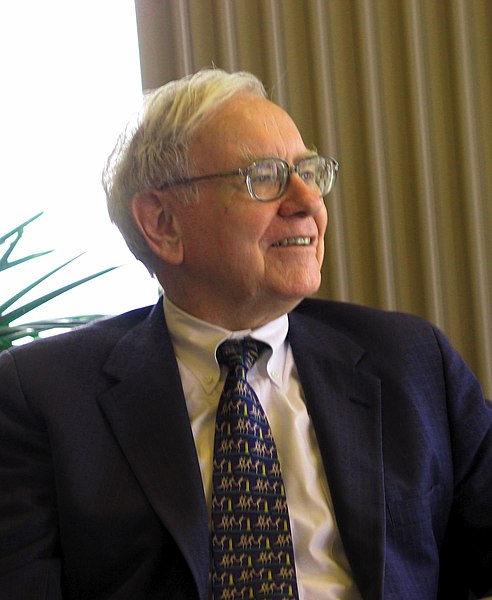
46. Berkshire Hathaway is headed by CEO Warren Buffett, the 89-year-old “Oracle of Omaha” who is considered one of the most successful investors of all time. When Forbes released its annual world’s billionaires list in March of 2020, Mr. Buffett was considered the world’s fourth-wealthiest person with a net worth of $67.5 billion. As of early July 2020, Mr. Buffett’s net worth has increased to $70.2 billion but his ranking on the world’s billionaires list has dropped to eighth place. Check Forbes “real-time” billionaires rankings here.

Warren Buffett in 2005. Photo by Mark Hirschey

47. Mr. Buffett has promised to give away more than 99 percent of his fortune. In 2009 he founded The Giving Pledge with Bill and Melinda Gates, encouraging billionaires to publicly pledge to give away at least half of their fortunes.

48. As of 2020, 210 the world’s wealthiest individuals and families from 23 countries have made the commitment to dedicate the majority of their wealth to philanthropy.

This image has an empty alt attribute; its file name is 640px-Dundee_HD_Omaha_NE.JPG
Warren Buffett’s house in Omaha’s Dundee-Happy Hollow Historic District.

49. Known for living frugally, Mr. Buffett eats McDonald’s for breakfast most mornings and still lives in the same gray stucco home in Omaha he bought in 1958 for $31,500. It is now worth an estimated $652,619.

50. During the first weekend in May each year, 40,000 Berkshire Hathaway shareholders travel to Omaha to attend what is often described as “Woodstock for Capitalists.” Investors head to Omaha to hear company chairman Warren Buffett and vice chairman Charles Munger’s talk about Berkshire’s performance, share their economic insights, and then answer attendees’ questions.

https://youtu.be/MDYJWIWsgBA

In 2020, the live Berkshire Hathaway shareholders event in Omaha was canceled due to the COVID-19 pandemic; instead, the May 2 meeting live-streamed by Yahoo Finance.

51. According to 2019 rankings, Omaha is home to three of the 12 largest architecture/engineering firms in the United States including HDR, Inc., the DLR Group, and Leo A Daly.

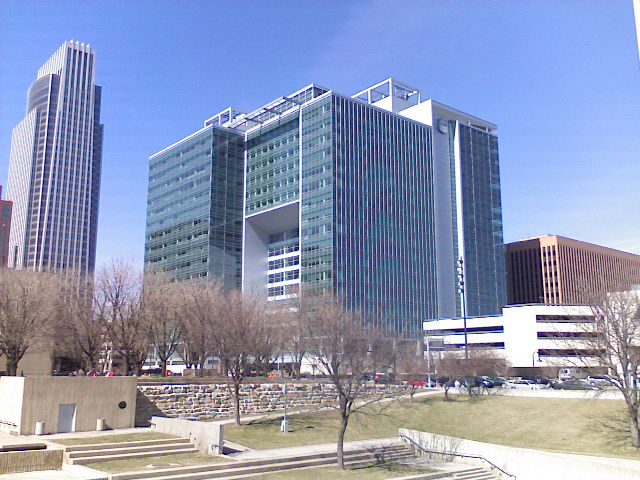
52. First National Bank Omaha –a subsidiary of First National of Nebraska – is the largest privately held bank in the U.S. with $17 billion in assets and 500 employees.

 First National Bank Tower - the tallest building in Nebraska. Photo by Collinulness
First National Bank Tower – the tallest building in Nebraska. Photo by Collinulness

The bank is headquartered at the First National Bank Tower in downtown Omaha. Completed in 2002, the 634 ft, 45-story high rise is currently the tallest building in the state of Nebraska.

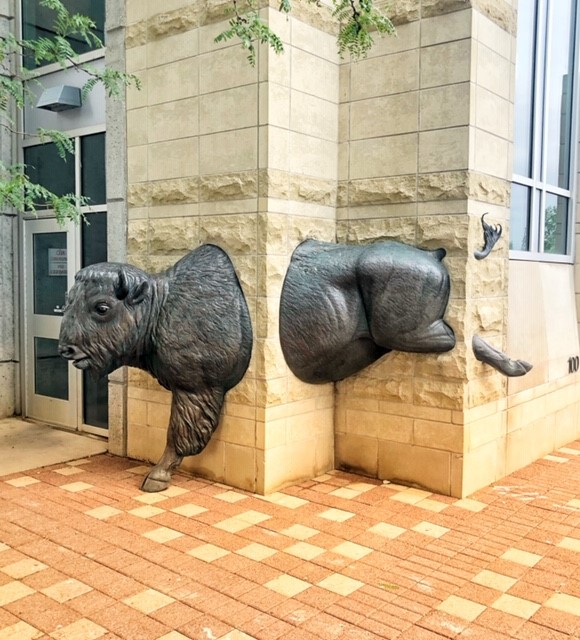
53. First National Bank sponsored two sculpture parks in downtown Omaha. The Pioneer Courage Park at 14th & Capital depicts a wagon train leaving Omaha while the Spirit of Nebraska’s Wilderness Park at 16th and Dodge features more than 50 bronze and steel sculptures of Canada geese.

Bison sculpture in downtown Omaha

In between the two parks, sculptures of five bison head down Omaha’s 15th Street, traversing sidewalks, and buildings.  One animal is in the side of a building.

54. In 1988 Gallup, Inc.— an American analytics and advisory company known for its Gallup Poll – was acquired by Selection Research, Inc (SRI) of Omaha. SRI took over the better-know Gallup name. 

While Gallup, Inc is headquartered in Washington, D.C., the Gallup Riverfront Campus in Omaha is the research and consulting company’s largest location with 575 employees.

First, Break All The Rules: What the World’s Greatest Managers Do Differently

In 1999, Gallup analysts wrote First, Break All the Rules, a bestselling book on management. The book, authored by Marcus Buckingham and Curt Coffman, is based on 80,000 interviews conducted by the Gallup Organization over 25 years.

55. Although she was a registered Republican at the time, Omaha etiquette expert and author Letitia “Tish” Baldrige, known as the “Doyenne of Decorum,” worked with the Kennedy family following John F. Kennedy’s Democratic primary victory in 1960.

56. After Kennedy won the Presidential election, Baldrige served in the post of White House Social Secretary from 1960 to 1963, coordinating aspects of the Inauguration, receptions, and state dinners. Baldrige had been friends with Jacqueline Bouvier Kennedy since they both attended Miss Porter’s School in Farmington, Connecticut as well as Vassar College.

57. Offutt Air Force Base—located just south of Omaha — is the headquarters of the U.S. Strategic Command (USSTRATCOM), the 557th Weather Wing, and the 55th Wing (55 WG) of the Air Combat Command (ACC).

Gen. Curtis E. LeMay Building, U.S. Strategic Command Headquarters south of Omaha.
Gen. Curtis E. LeMay Building, U.S. Strategic Command Headquarters south of Omaha.

58. Originally named Fort Crook, the base was renamed in honor of World War I pilot and Omaha native 1st Lt. Jarvis Offutt in 1924.

59. During World War II, the Enola Gay and Bockscar, the planes that dropped atomic bombs Little Boy and Fat Man over Hiroshima and Nagasaki in World War II, were built at the Glenn L. Martin Aircraft Plant at what is now Offutt Air Force Base.

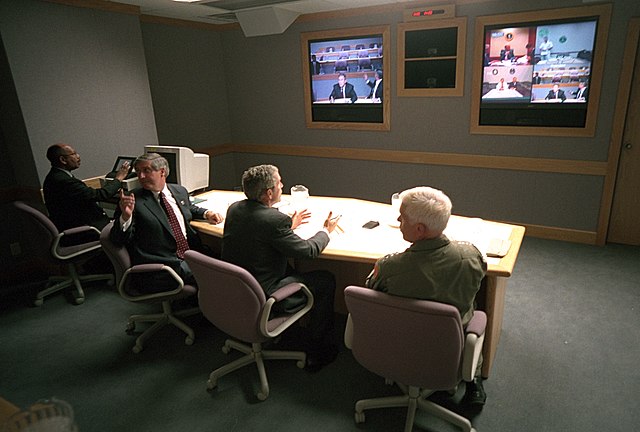
On 9/11, President George W. Bush, White House Chief of Staff Andy Card (left), Donald Richards (far left) and Admiral Richard Mies conduct a video conference at Offutt Air Force Base just outside of Omaha, Nebraska.
On 9/11, President George W. Bush, White House Chief of Staff Andy Card (left), Donald Richards (far left) and Admiral Richard Mies conduct a video conference at Offutt Air Force Base just outside of Omaha, Nebraska.

60. After the attacks on September 11, 2001, President George W. Bush was flown to Offutt. He was taken into an underground bunker designed to withstand a nuclear blast. While there, he conducted one of the first major strategy sessions for the U.S. response to the September 11 attacks.

Click here to continue to Part 3 of 99 Interesting Facts to Know About Omaha, Nebraska.

What interesting fact can you add about Omaha?

Please share your comments or questions via TwitterFacebookPinterest or Instagram.

{ 0 comments }

After spending way too many hours going down internet rabbit holes while researching Why We Had to Drive Through Iowa to Get to the Omaha, Nebraska Airport, I discovered an overabundance of intriguing tidbits about the city of Omaha, Nebraska.

99 Interesting Facts About Omaha, Nebraska

1. Located on the Missouri River on the eastern edge of the state of Nebraska, the city of Omaha has played a major role in the movement of people and goods from the east to the western part of the United States.

2. In 2020, the city of Omaha has 470,702 residents, making it the state of Nebraska’s most populated city. In addition, 1.3 million people live within a 50-mile radius of downtown Omaha, including 62,421 people living across the Missouri River in Council Bluffs, Iowa.

3. Long before the Europeans arrived, bison roamed the prairie and semi-nomadic tribes of Native Americans including the Pawnee, Otoe, Sioux, and Ioway all variously occupied the land that makes up the city of Omaha today.

Tribal territory of Pawnee, Ponca, Omaha, Oto, Kansa peoples (labeled in green) and contemporary Indian Reservations (labeled in orange)

4. By the early 18th century, the Omaha tribe from the lower Ohio valley arrived in the area. Translated, the word “Omaha” (actually U-Mo’n-Ho’n) means “dwellers on the bluff.”

5. In 1803, the Omaha area was part of the Louisiana Purchase — 828,000 square miles of territory that the United States bought from France. Most of this land was inhabited by Native Americans; what the United States really got from the purchase was the “preemptive” right to obtain Native American lands by treaty or by conquest.

6. In 1854, a treaty was negotiated with Logan Fontenelle and the Omaha Tribe to sell four million acres of their tribal land to the United States for less than 22 cents an acre. This allowed the settlement of Nebraska Territory and the founding of Omaha City.

7. On May 30, 1854 Nebraska Territory was organized under the Nebraska-Kansas Act, based on the condition that it remain slave-free.

$1 City of Omaha 1857 uniface banknote, signed by Jesse Lowe as Mayor of Omaha City. It was issued as scrip in 1857 to help fund a territorial capitol building at Omaha.

8. The first session of the Nebraska Territorial Legislature convened at Omaha in 1855; acting Governor Cuming approved the bill locating the territorial seat of government at Omaha. Later, in 1867 — when Nebraska became a state — its capital was relocated to Lincoln, 53 miles south-west of Omaha.

9. In 1857, the city of Omaha was incorporated and had its first City Council meeting.

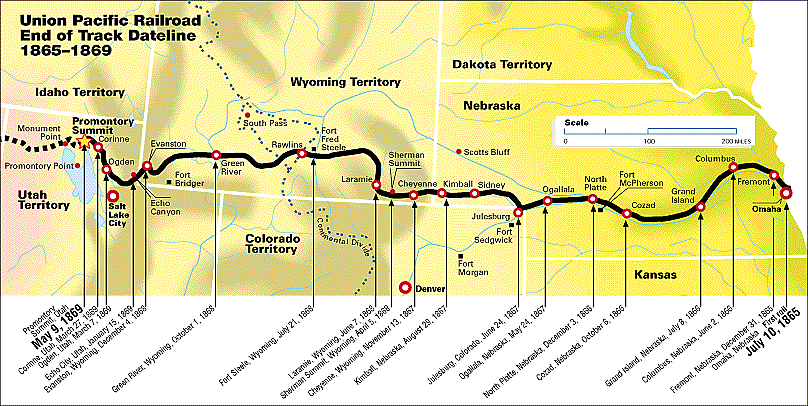
10. On July 1, 1862, President Lincoln signed the Pacific Railway Act, authorizing two companies to build a transcontinental railroad to: Central Pacific, an existing California railroad, and Union Pacific, a new railroad chartered by the Act.

11. Central Pacific would start at the Pacific Ocean and head east, and while Union Pacific would start in Omaha — at beginning of the undeveloped frontier — and head west.

The 1865 to 1869 construction timeline of the original Union Pacific train route from Omaha, Nebraska to Promontory Summit, Utah.

12. Union Pacific broke ground in Omaha in December, 1863. Due to many delays –the U.S. Civil War was raging–the first rails were not laid until July 1865, three months after President Lincoln’s death.

13. The Union Pacific Railroad built 1,085 miles of track westward from Omaha to Promontory Summit, Utah, where — on May 10, 1869 –it was connected to the Central Pacific Railroad.

Driving of the golden spike at Promontory Summit, Utah on May 10, 1869 to celebrate the completion of the First Transcontinental Railroad.

14. The First Transcontinental Railroad provided an essential development boom for Omaha, particularly after the city’s first railroad bridge over the Missouri River to Council Bluff, Iowa opened on March 27, 1872. This bridge connected the First Transcontinental Railroad to the eastern United States, without the train’s cars having to be ferried across the Missouri River.

An aerial view of the 1898 Trans-Mississippi and International Expo in Omaha, Nebraska.

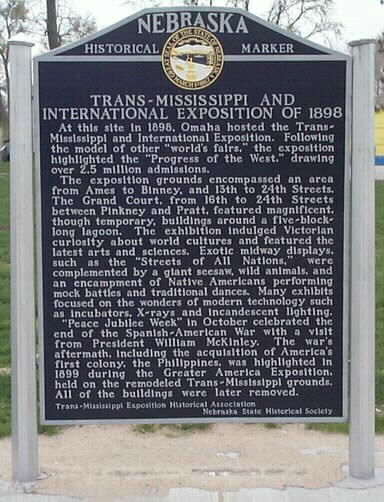
15. Another boom for Omaha occurred in 1898 when the city hosted a massive, five month-long world’s fair called the Trans-Mississippi and International Exposition.

A 2,000 ft lagoon with gondolas and swan boats circled by classical buildings housing exhibits from around the world — all created for the 1898 Trans-Mississippi Expo in Omaha, Nebraska.

16. Designed to showcase the development of the West from the Mississippi River to the Pacific Coast, the Trans-Mississippi Expo covered 180-acres in North Omaha. There was a 2,000 feet lagoon encircled by 21 classical buildings housing nearly 5000 exhibits from around the world.

17. More than 2.6 million people attended the Expo in Omaha, including President William McKinley and Buffalo Bill Cody with his Wild West Show.

A sign in North Omaha’s Kountze Park marks the site of the 1898 exposition.

18. The Indian Congress — held in conjunction with the Trans-Mississippi Expo in Omaha –took place August 4 to October 31, 1898. More than 500 American Indians representing 35 different tribes from across the United States attended.

Yellow Shirt, a Hunkpapa Sioux chief of the Lakota tribe photographed by Frank A. Rinehart.

19. Commissioned to photograph the 1898 Indian Congress and the Trans-Mississippi Expo, Omaha-based photographer Frank A. Rinehart became famous for his photos capturing Native American personalities, especially the portrait settings he took of leaders and members of the delegations attending the 1898 Indian Congress in Omaha. The collection of Rinehart Indian Photographs is currently preserved at Haskell Indian Nations University in Lawrence, Kansas.

20. In 1859, German immigrant Frederick Krug established Omaha’s first brewery with an output of one and a half barrels a day. By 1880 Krug Brewery was producing 25,000 barrels a year. Krug supported an amateur baseball team called Luxus –named after one of the company’s beer brands. The team made it to the Amateur Baseball World Championship in 1915.

21. Soon Omaha had more breweries. Frederick and Philip Metz founded the Metz Brothers Brewing Company in 1861. Gottlieb Storz purchased the brewery where he worked, renaming it Storz Brewery in 1884. Willow Springs Distilling Company relocated to Omaha in 1866. These were Omaha’s “Big 4” brewers — which grew dramatically as the city grew, until 1919 when Prohibition stopped production of alcoholic beverages in the U.S.

22. In 1882, Alexander Swan, a Wyoming rancher, urged Omaha business leaders to create a stockyard, pointing out that shipping his cattle the additional 500 miles to Chicago caused them to lose weight and lowered his profits.

Alex Swan and the Swan Companies

23. Swan was convincing, and 1884 a group of investors opened the Union Stockyards on ten acres in South Omaha. Meatpackers, starting with G. H. Hammond in 1885, began building processing plants adjacent to the yards; and the Omaha stockyards grew quickly.

24. In 1886 the Livestock Exchange building opened, and more meatpacking companies set up shop, including the Fowler Brothers in 1886 and Armour-Cudahy and Swift in 1887.

25. Omaha was said to be the fastest-growing city in the United States during the 1880s, with thousands of immigrants from central and southern Europe coming to Omaha to work in the Union Stockyards and the meat packing industry in South Omaha.

26. These immigrants created Omaha’s original ethnic neighborhoods, with names such as Sheelytown, Greek Town, Little Italy, Little Bohemia and Little Poland. Meanwhile, Germans, Jewish immigrants and the first groups of African Americans developed communities on Omaha’s Near North Side.

27. By the 1920s, the “Big Four” major meatpackers – Swift, Armour, Cudahy, and Wilson — were all operating in Omaha with a near monopoly on beef production.

Cattle arrive at the Omaha Union Stockyards by rail car. Source: Library of Congress

28. Before World War II, Omaha meatpackers had successfully resisted union efforts to organize their workers. But in 1948, Omaha workers joined in a national strike against the Big Four, leading to a twenty-year struggle in Omaha between management and labor.

29. A postwar hunger for beef drove the growth. In 1949 the average American was consuming 144 pounds of meat per year, which increased to 160 pounds by 1950.

30. In 1956, Omaha eclipsed Chicago as the largest meat producing city in the world. The stockyards ran 24 hours per day 7 days a week, sometimes processing more than 50,000 animals in a day.

31. By 1957, half of Omaha’s workforce was employed by the livestock industry – – including the stockyards, 19 different meatpacking companies, 40 commission firms, a special railroad just for livestock, and other related companies. On any given market day, more than $2.5 million dollars’ worth of livestock was handled in Omaha – roughly $18 million in today’s dollars.

32. While meatpacking was integral to Omaha’s 20th century growth and prosperity, the industry became ripe for disruption.

33. In 1961 Iowa Beef Packers (IBP), opened a single beef processing plant in Denison, Iowa, a small town near cattle producers. The idea was to open packing plants close to livestock producers, and buy directly from them, eliminating the need for a stockyard. Processing cattle closer to where they were raised shortened transportation time and reduced shrinkage. Plus, IBP could cut labor costs by hiring local non-unionized workers. This new trend was the beginning of the end for the Omaha Stockyards.

34. By 1975, Omaha’s once bustling stockyards and packing plants — that only twenty years earlier had been the largest in the world — were all but gone.

In 1973 the Union Stock Yards Company of Omaha was sold to New York investment group Canal Capital; in 1989 it was sold again to the United Marketing Services. The facilities fell into disrepair.

In 1996 the City of Omaha bought 50 acres of land for an office park, and condemned the rest of the facilities, except the Livestock Exchange Building, which was slated for renovation.

In 1999 the Union Stockyards were closed by the City of Omaha, and replaced with a business park.

The Livestock Exchange building, now converted to apartments and an event center,  is the only part of Omaha's Union Stockyards remaining in 2020.
The Livestock Exchange building, now converted to apartments and an event center, is the only part of Omaha’s Union Stockyards remaining in 2020. Photo by Jared Winkler.

Luckily, the city of Omaha persevered.

Click here to continue to Part 2 of 99 Interesting Facts to Know About Omaha, Nebraska.

Have you visited Omaha? Which of these facts surprised you?

Please share your comments or questions via TwitterFacebookPinterest or Instagram.

{ 0 comments }
List of flights out of Omaha's Epply Field airport

Last weekend, we flew in and out of Omaha, Nebraska on Southwest Airlines.

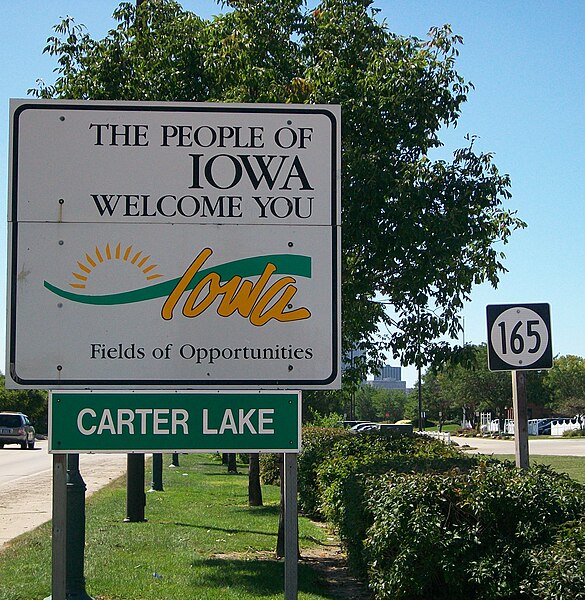
As we were driving the 2.4 miles from downtown Omaha to the city’s Epply Airfield (OMA), I was surprised to see a “Welcome to Iowa” sign. Omaha’s airport is located in Nebraska.

Curious, I had to investigate.

Iowa welcome sign on Abbott Drive (Hwy 165), the road between downtown Omaha and Eppley Airfield. Photo Ctjf83

I learned that we passed through Carter Lake, Iowa, a city of 3,784 residents that is surrounded by Omaha, Nebraska and the Missouri River.

This map shows the town of Carter Lake, Iowa, (in yellow) surrounded by Omaha, Nebraska.

It turns out that a flood in 1877 redirected the course of the Missouri River by 1.25 miles, suddenly leaving the Saratoga Bend– land that had been a part of Iowa – now on the Nebraska side of the Missouri River.

Omaha developers were quick to claim the land and resulting oxbow lake that had been “cut off” from the Missouri river –calling it Cutoff Lake. They constructed hotels, vacation cabins and a boathouse that attracted rowing and fishing parties, and eventually became the town of Carter Lake.

The state of Iowa, however, was not willing to cede the land. In 1892, after extensive litigation between the two states, the U.S. Supreme Court ruled that Carter Lake belonged to Iowa. In Nebraska v. Iowa, 143 U.S. 359 (1892), the court found that when rivers gradually change course, state lines should shift, except when a river avulses or suddenly changes its course overnight.

On July 2, 1930, Carter Lake was incorporated as a city in the state of Iowa.

City Offices in Carter Lake, Iowa. Photo by Jared Winkler

Although it is not connected by land, Carter Lake is a part of Iowa’s Pottawattamie County. The city covers a total area of 2.02 square miles, of which 1.87 square miles is land and 0.15 square miles is water.

Jeopardy! legend Ken Jennings has written about this complicated Iowa-Nebraska border for CondeNast Traveler.

In his book Maphead: Charting the Wide, Weird World of Geography Wonks Jennings shares his love affair with geography and explores why maps have always been so fascinating to him and to fellow enthusiasts.

There’s even a book on the subject Carter Lake: A Slice of Iowa in Nebraska

After going down many internet rabbit holes while researching this border issue, I learned many interesting things about the city of Omaha, Nebraska — from its railroad and meatpacking history to its unique attractions.

Coming Soon: 99 Interesting Facts to Know About Omaha, Nebraska

Have you visited Omaha? Did you fly out of Epply Field?

Please share your comments or questions via TwitterFacebookPinterest or Instagram.

{ 0 comments }